
即食鸽汤

Search documents
博士团队“把脉”鸽产业 22亿元产值背后的科技兴农路
Huan Qiu Wang Zi Xun· 2025-12-12 02:52
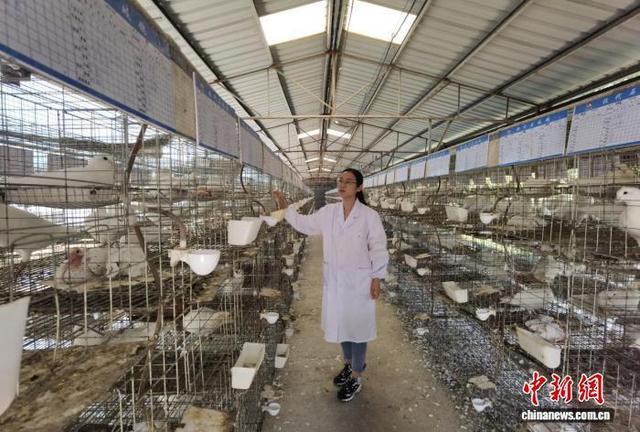
Core Insights - The article discusses the technological upgrades in the pigeon breeding industry in Yueyang, Hunan, led by a team of doctoral researchers from Yueyang Vocational and Technical College, addressing challenges such as genetic degradation and inefficient farming practices [1][6]. Group 1: Technological Integration - The introduction of QR-coded leg bands for breeding pigeons serves as an "electronic ID" to track lineage, growth data, and egg production [1]. - The doctoral team has developed a digital breeding software platform that utilizes molecular marker-assisted selection, resulting in a 30% improvement in breeding efficiency over several years [3]. Group 2: Farmer Engagement and Economic Impact - Initial resistance from local farmers to new technologies was overcome by demonstrating the benefits through practical applications, leading to increased efficiency and reduced disease among pigeons [5]. - The "233 model" was introduced, where a couple manages 3,000 breeding pairs, yielding an annual income exceeding 300,000 yuan, optimizing the scale of operations [5]. Group 3: Industry Chain Development - The integration of the entire industry chain from breeding to processing and tourism has been promoted, resulting in over 30 processed products and annual sales exceeding 100 million yuan [6]. - The establishment of five standardized breeding bases has led to an annual output of 47 million pigeons, with a product quality rate of 99% [8]. Group 4: Future Prospects - The Yueyang pigeon industry is projected to reach a comprehensive output value of 2.2 billion yuan by 2024, marking a 120% increase since 2020, benefiting over 20,000 households [8]. - The team aims to enhance the genetic resources of local pigeon breeds and secure a place in the national livestock genetic resource catalog, contributing to rural revitalization and agricultural modernization [8].

蛋鸽产业+政策支持,吸引青年返乡创业
Sou Hu Cai Jing· 2025-08-26 23:15
Core Insights - The event in Nanjing's Liuhe District focused on promoting the "Pigeon Egg Industry Incubation Park Project" to support returning youth entrepreneurs, highlighting the industry's growth potential, policy benefits, and collaboration opportunities [1] Industry Overview - The pigeon industry in China produces 1.8 billion pigeon eggs annually, generating over 8 billion yuan in value, with the meat pigeon industry exceeding 60 billion yuan and maintaining a stable annual growth rate of 8%-10% [1] - Jiangsu Province accounts for 20% of the national pigeon egg production, with Liuhe District being a leader in the East China pigeon industry, projected to hold 60% of Nanjing's pigeon stock and 80% of the city's pigeon egg output by 2024 [1] Project Development - The first phase of the Ma Tuo Mountain Village project has established 7 standardized pigeon houses, housing 65,000 breeding pigeons, creating over 20 jobs with an average annual income of approximately 60,000 yuan per person [1] - A case study presented indicated that an investment of 1,000 pairs of dual-mother pigeons could yield a total return of about 450,000 yuan over 3.5 years, with an average annual income exceeding 120,000 yuan [1] Policy Support - Liuhe District offers substantial subsidies for the construction phase, covering up to 80% of total investment, and additional support for new pigeon breeding operations up to 30,000 yuan [2] - The "Nanjing Liuhe District Implementation Plan for High-Quality Development of the Pigeon and Meat Chicken Industry Chain" outlines a comprehensive support framework for breeding, standardization, green production, and brand development [2] Entrepreneurial Assistance - The East Morning Pigeon Industry Company provides comprehensive support for entrepreneurs, including factory design, equipment installation, and technical services, along with guaranteed product buyback for the first year [2] - The event facilitated the distribution of over 200 promotional materials and collected more than 30 entrepreneurial intentions, demonstrating significant engagement and interest from returning youth [3]
