可拉伸OLED

Search documents
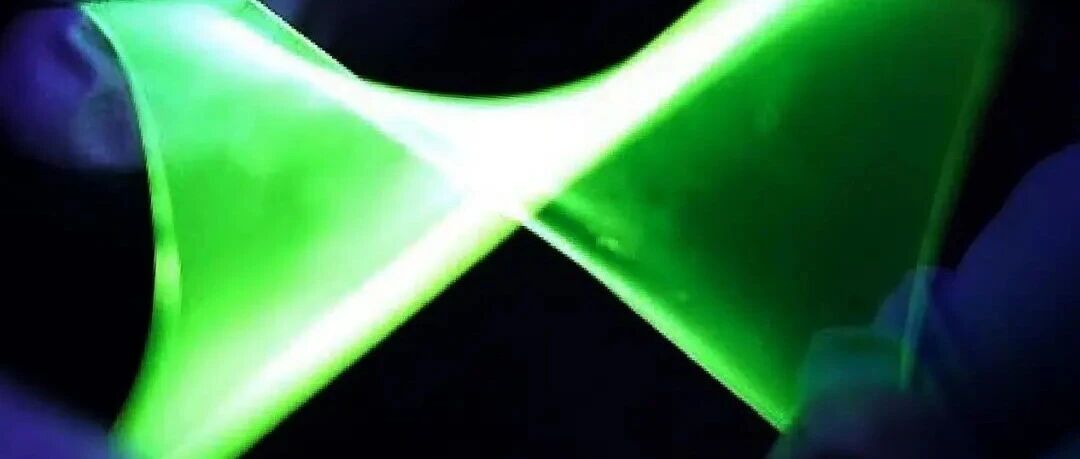
可拉伸OLED迎来重大升级:保持亮度同时可拉伸200%
WitsView睿智显示· 2026-01-16 09:07
Core Viewpoint - A research team from Seoul National University and Drexel University has developed a new type of stretchable OLED that maintains brightness and durability even when stretched to 1.6 times its original length, addressing long-standing issues in the field [1][4]. Group 1: OLED Technology Overview - OLED is a thin "sandwich" structure that emits light when electricity is applied, involving organic materials sandwiched between two electrodes [2]. - The flexibility of OLEDs requires deposition on plastic-like substrates, but repeated bending and stretching can damage the electrodes or organic layers, leading to decreased brightness and efficiency [2]. Group 2: Innovations in Stretchable OLEDs - The research team redesigned the light-emitting layer to enhance the efficiency of exciton formation and light emission, achieving over 57% of excitons used for light compared to the traditional 12% to 22% [3]. - A thermoplastic polyurethane was used to improve the stretchability of the light-emitting layer, making it less prone to breakage during stretching [3]. Group 3: Advancements in Electrode Materials - The team utilized MXene, a two-dimensional nanomaterial, combined with silver nanowires to create transparent and highly stretchable electrodes, ensuring efficient charge transport [4]. - The new OLED prototype demonstrated a performance drop of only 10.6% when stretched to 60% of its maximum deformation, and maintained 83% of its luminous efficiency after 100 cycles of 2% deformation [4]. Group 4: Future Applications and Developments - The research team has created a full-color stretchable display and aims to optimize the OLED's lifespan and manufacturing processes for large-scale production [5]. - Potential applications include skin-like display sensors and advancements in physical artificial intelligence [5].