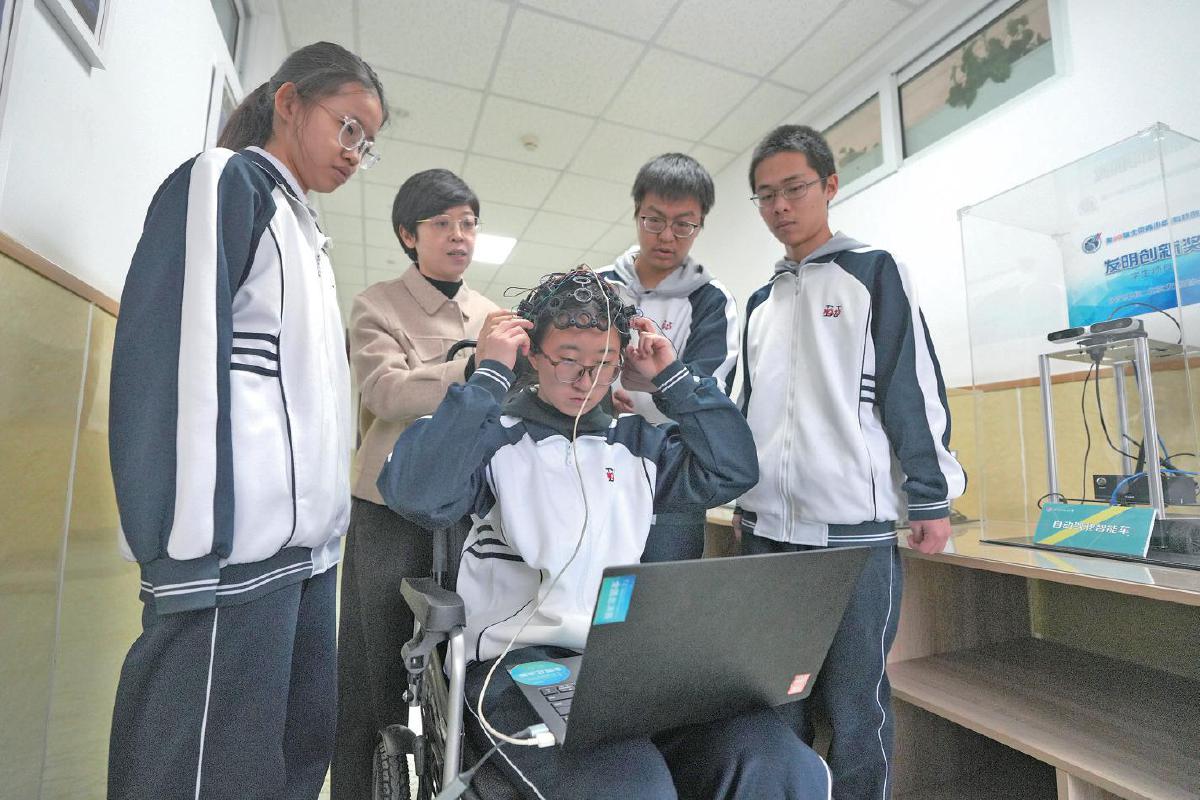
基于ADS脑电控制AI智慧轮椅系统

Search documents
北京中学生在米兰为渐冻症群体发声
Xin Lang Cai Jing· 2026-02-26 17:41
Core Viewpoint - The article highlights the innovative project "Brain-Controlled Smart Wheelchair" developed by a high school student, Wang Chenyue, aimed at assisting patients with ALS and severe disabilities, showcasing the potential of youth-led technological solutions in addressing social issues [3][5]. Group 1: Project Overview - The "Brain-Controlled Smart Wheelchair" is designed specifically for early-stage ALS patients and individuals with severe disabilities, allowing them to control the wheelchair using brain signals [3][4]. - The system utilizes an eight-channel EEG sensor to collect brain signals, enhancing command accuracy through facial micro-movements, enabling users to move the wheelchair forward, turn, reverse, and stop using their thoughts [4][6]. Group 2: Development Process - Wang Chenyue's journey in the project evolved from an initial interest in EEG technology to becoming a core team member responsible for system optimization, emphasizing the importance of teamwork and collaboration [4][10]. - The project was inspired by the experiences of Zhang Dingyu, a former hospital director diagnosed with ALS, highlighting the need for meaningful contributions to the lives of ALS patients [5][6]. Group 3: Cultural Exchange and Impact - Wang represented her school as one of ten global ambassadors at the "Solve for Tomorrow" program, which promotes youth empowerment through STEM education and cultural exchange [3][11]. - The initiative aims to foster international dialogue among youth from various countries, enhancing cultural understanding and collaboration in technology and innovation [4][12]. Group 4: Future Aspirations - The Beijing Municipal Education Commission plans to launch a series of "Youth Ambassadors" activities in 2026, focusing on AI, technology, arts, and sports to facilitate cross-cultural exchanges [4][15]. - Wang emphasizes the importance of sustaining the project and exploring its social impact, encouraging future innovators to focus on real-world problems and the societal value of their projects [15][16].