大型振动台

Search documents
国内首个!北京加紧建设商业航天产品“试炼场”
Xin Lang Cai Jing· 2026-01-23 10:42
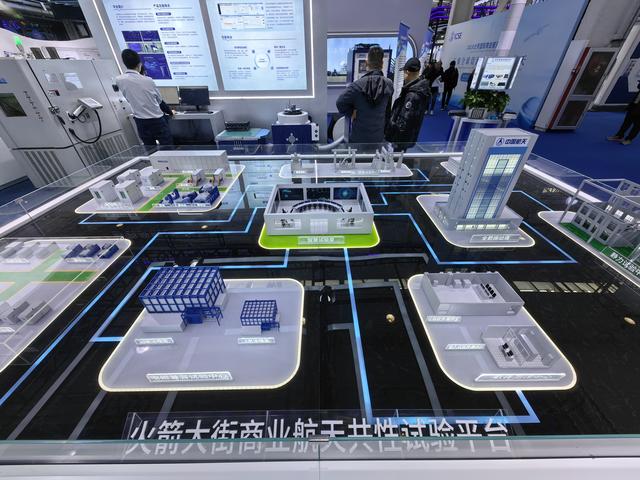
Core Viewpoint - The establishment of China's first commercial aerospace common testing platform in Beijing aims to address the challenges faced by the commercial aerospace industry, such as the lack of large testing equipment and unified standards, thereby enhancing the efficiency and reliability of testing processes [1][3][4]. Group 1: Platform Capabilities - The platform features various testing capabilities, including an environmental reliability test center, aerospace product test center, and electromagnetic compatibility test center, serving as a "testing ground" for commercial rockets and satellites [1][3]. - It includes advanced equipment such as a large vibration table and comprehensive environmental test chamber, capable of simulating various natural conditions like temperature, humidity, mold, salt spray, freezing rain, and dust [3]. - The platform will support a product matrix covering the entire lifecycle of spacecraft, focusing on reusable rockets and new aerospace products, with the capacity to test commercial rockets with a diameter of 5 meters and a takeoff weight of 1,000 tons, as well as satellites under 2 tons [3]. Group 2: Industry Challenges and Solutions - The commercial aerospace sector currently faces significant challenges in testing and verification, including long queue times for external collaborations, difficulties in data recognition, and high safety risks [3]. - The platform is positioned as a key solution to these challenges, providing breakthrough testing technologies and comprehensive service guarantees for enterprises [3]. Group 3: Strategic Importance - According to the "Beijing Action Plan for Accelerating the Innovative Development of Commercial Aerospace (2024-2028)," the city aims to lead the nation in achieving reusable rocket recovery and flight, thereby developing low-cost, high-reliability satellite and rocket products [4]. - The completion and operation of this platform are expected to significantly accelerate the development of Beijing's commercial aerospace sector, preparing products for launch [4].