天马射电望远镜

Search documents
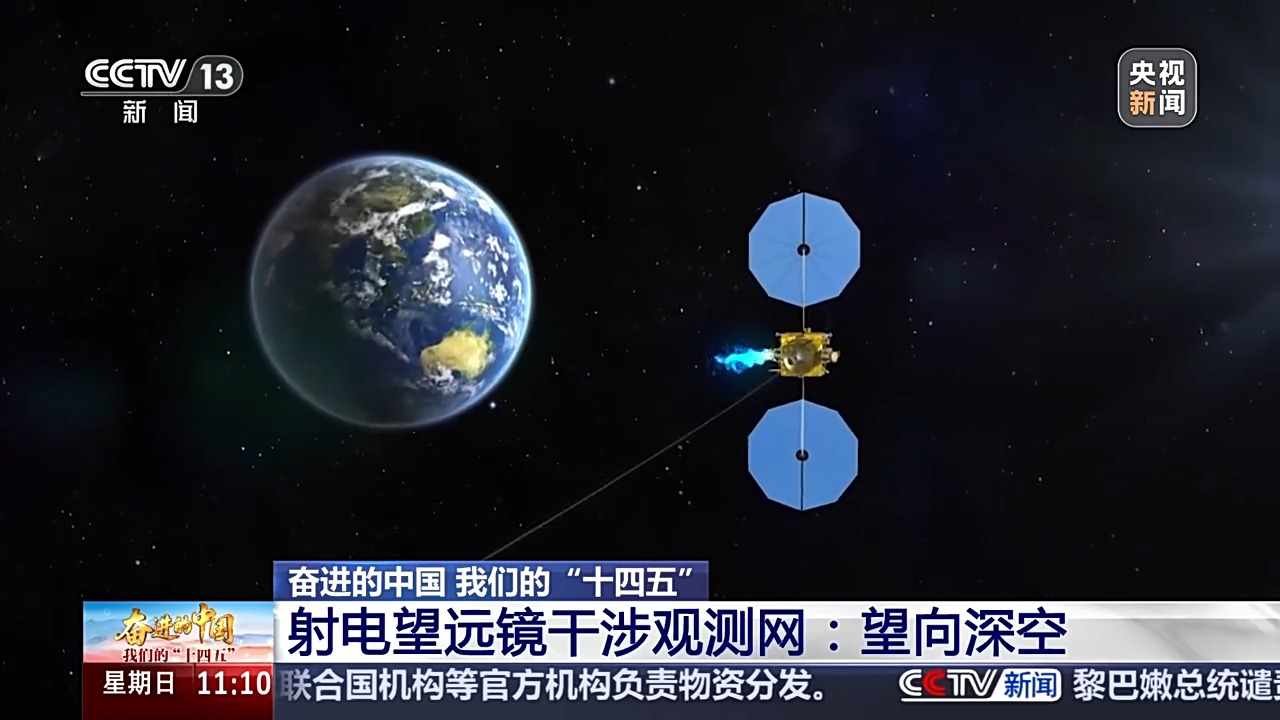
分布在祖国天南地北 这是人类观测宇宙深处的“慧眼”
Yang Shi Xin Wen· 2025-10-12 06:31
Core Insights - The article discusses the advancements and contributions of China's radio telescopes, particularly in relation to the Tianwen-2 asteroid probe, which has been operational for 125 days as of October 1 [3]. Group 1: Radio Telescope Network - China has a network of six radio telescopes, which, while not as large as the FAST telescope, collectively have an effective aperture equivalent to the size of the country's land area [1]. - This network enhances the precision of spacecraft tracking and positioning, significantly improving navigation for deep space exploration [1]. Group 2: Tianwen-2 Mission - The Tianwen-2 probe is designed to sample a near-Earth asteroid and return the samples to Earth [3]. - The radio telescopes located in various regions, including Jilin, Xinjiang, Tibet, and Shanghai, are actively participating in the observation and data processing for the Tianwen-2 mission [6]. Group 3: Collaborative Observations - The simultaneous observations from multiple distant radio telescopes allow for clearer and more distant observations, similar to the collaboration seen in the Event Horizon Telescope project that captured the first image of a black hole [8]. - Recent findings regarding black holes have shown significant changes, indicating ongoing advancements in understanding these cosmic phenomena [11]. Group 4: Public Engagement and Tourism - The Tianma Radio Telescope in Shanghai, with a diameter of 65 meters, not only contributes to scientific research but also promotes local tourism, becoming a popular destination for astronomy enthusiasts [12][14]. - The surrounding area has developed into a "Tianma Starry Sky Village," offering various activities that blend science and nature, attracting visitors and fostering public interest in astronomy [14]. Group 5: Future Prospects - The article emphasizes the rapid development of radio astronomy in China and the anticipation of future missions in aerospace and deep space exploration, aiming to secure a leading position in the field of astronomy technology [14].