宁夏手工毯

Search documents
文化中国行 | 宁夏手工毯:600年非遗“织”就国际范儿
Zhong Guo Qing Nian Bao· 2025-09-26 05:43
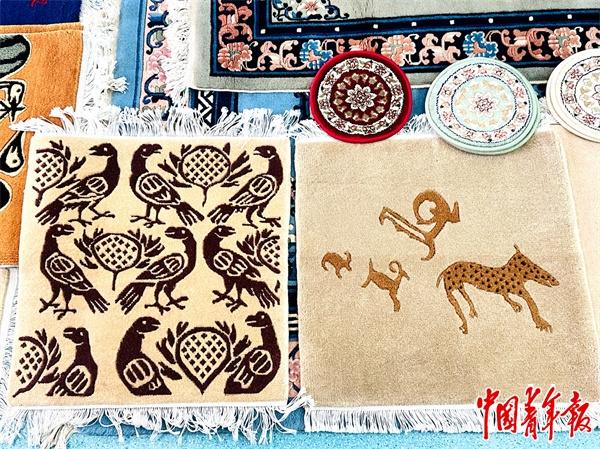
Core Viewpoint - The article highlights the revival and promotion of Ningxia handwoven carpets, which are recognized as a national intangible cultural heritage, showcasing the craftsmanship and cultural significance of the region's traditional textile art [2][4][12]. Group 1: Heritage and Craftsmanship - Ningxia handwoven carpets have a history dating back to the Ming Dynasty, originally serving as royal tributes and religious items, reaching their peak during the Qing Dynasty [4]. - The production process involves 14 intricate steps, with the "eight-character knot" weaving technique being central to the craftsmanship, requiring 1-2 months to complete a single carpet [4][5]. - The raw material, Ningxia fine wool, is noted for its high fiber content and luster, contributing to the quality of the carpets [4][5]. Group 2: Economic Impact and Employment - The handwoven carpet industry has become a new source of income for local villagers, with training programs initiated to teach the craft to over 20 local residents [10][11]. - The production capacity has increased from 10,000 square feet to 30,000 square feet annually, expanding the market reach to several provinces [7]. - The income model for artisans combines a base salary with piecework, providing financial stability and encouraging participation in this traditional craft [11]. Group 3: Innovation and Market Adaptation - Efforts are being made to modernize the designs and appeal of Ningxia handwoven carpets, incorporating contemporary cultural elements to attract younger consumers [12][14]. - The company has participated in various exhibitions to promote the carpets, enhancing visibility and recognition of this intangible cultural heritage [12]. - New product lines, including home decor items, have been developed to cater to modern tastes, with 20% of annual production now consisting of these innovative designs [13][14].