非物质文化遗产

Search documents
感悟春节的非遗意义(博古知今)
Ren Min Ri Bao· 2026-02-28 00:26
Core Viewpoint - The Spring Festival has been recognized as a shared intangible cultural heritage of humanity since December 2024, leading to a surge in cultural pride and responsibility for its preservation and transmission in society [1][2]. Group 1: Cultural Heritage and Preservation - The Ministry of Culture and Tourism has organized initiatives such as "Intangible Heritage Celebrating the New Year" to promote local intangible cultural heritage products and tourism routes, enhancing public engagement with the festival [1]. - The recognition of the Spring Festival as an intangible cultural heritage has sparked significant enthusiasm for integrating traditional customs into daily life, with various local intangible heritage projects being showcased [1]. Group 2: Cultural Consumption and Tourism - The cultural consumption market surrounding the Spring Festival has expanded unprecedentedly, with cities like Langzhong leveraging historical ties to the festival to attract tourists through cultural heritage tours [1]. - Activities related to the Spring Festival in Langzhong, starting from the Laba Festival and continuing through the Lantern Festival, have drawn increasing numbers of visitors seeking to experience the festive atmosphere [1]. Group 3: Evolution of Intangible Cultural Heritage Projects - The focus of China's application to UNESCO for intangible cultural heritage has shifted from merely protecting endangered projects to promoting sustainable and creatively rich cultural practices [2]. - The scope of intangible cultural heritage projects has evolved from individual skills to comprehensive projects that encompass broader cultural practices, reflecting significant achievements in heritage protection [2].
面塑“守艺人”与一座城的十年 | 返乡见闻
Guo Ji Jin Rong Bao· 2026-02-27 11:02
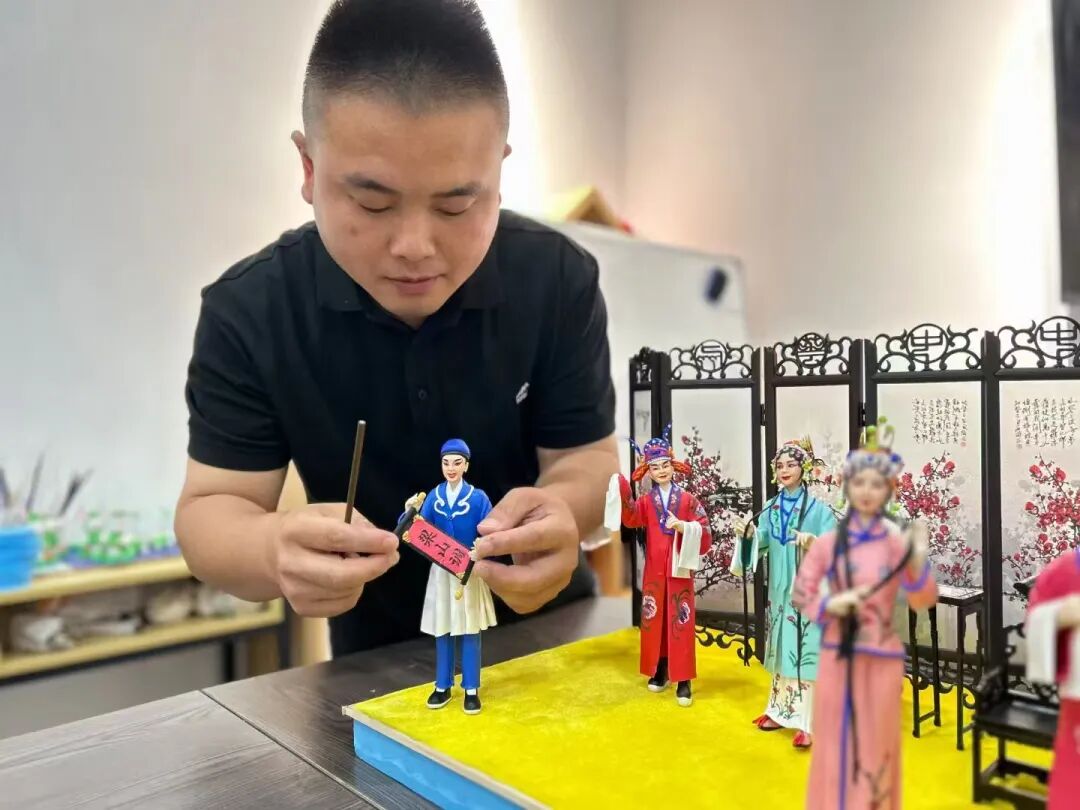
Core Viewpoint - The article highlights the efforts of Zhang Han, a young artisan dedicated to preserving and promoting the traditional craft of "Jingpai Mian Su" (Jing-style dough figurines), emphasizing the cultural significance and potential for broader recognition and commercialization of this art form [1][3][16]. Group 1: Artisan Background and Craft - Zhang Han, a 90s-born artisan from Chongqing, has dedicated ten years to establishing "Jingpai Mian Su" in Jingmen, aiming to preserve and pass on this century-old family craft [3][8]. - The shop, located in a historical cultural street, showcases traditional and modern interpretations of dough figurines, attracting numerous visitors and tourists [10][14]. - The craft, known as "Mian Su," involves creating intricate figures from flour and glutinous rice flour, reflecting local cultural heritage [6][14]. Group 2: Cultural Significance and Innovation - Zhang's work incorporates local cultural elements, such as the "Liangshan Diao" opera, to create pieces that resonate with contemporary aesthetics while preserving traditional values [10][13]. - The artisan has innovated the preservation methods of dough figurines, making them more durable and less prone to spoilage, thus enhancing their marketability [15][16]. - Zhang aims to educate younger generations about the craft, fostering a team to explore diverse creative expressions within the art form [16]. Group 3: Commercialization and Future Goals - To ensure the sustainability of the craft, Zhang is developing unique edible products, such as "Chinese-style cakes," to return the art to its original purpose as consumable items [16]. - "Jingpai Mian Su" was recognized as a representative project of intangible cultural heritage in December 2024, reflecting growing public interest and support for traditional crafts [16]. - Zhang's long-term vision includes expanding the reach of "Jingpai Mian Su" beyond Jingmen, aiming for national and international recognition [16].

传承四百余年的省级非遗
Xin Lang Cai Jing· 2026-02-25 18:57
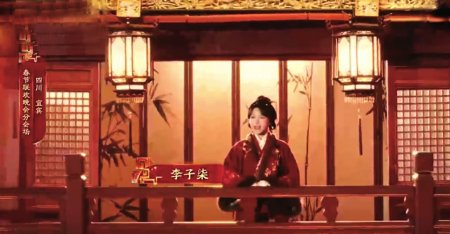
Core Viewpoint - The article highlights the cultural significance of "Qing Chun Jiu," a traditional spring banquet in southern Sichuan, which has been celebrated for over 400 years and was featured in the 2026 CCTV Spring Festival Gala, showcasing its importance as a cultural heritage and social gathering event [11][12]. Summary by Sections Cultural Significance - "Qing Chun Jiu" is a provincial-level intangible cultural heritage in Sichuan, recognized in 2018, and is celebrated from the Spring Festival to the Lantern Festival, embodying a cultural feast that integrates rituals, emotions, and blessings [12][13]. - The tradition is documented in various local chronicles, indicating its historical roots and the customs associated with it, such as family gatherings and offerings to deities [12][13]. Celebration Process - The banquet consists of three main courses: the first course includes tea and sweets, the second features alcoholic beverages paired with cured meats, and the third serves a main meal with various steamed dishes [13][14]. - The practice of "Qing Chun Jiu" is not unique to southern Sichuan; similar customs exist across China, often referred to by different names, indicating a widespread cultural phenomenon of inviting friends and family to celebrate the new year [14][15]. Regional Variations - Various regions in China, including Taiwan, have their own interpretations of "Qing Chun Jiu," with local customs and practices that reflect the same underlying theme of gathering and celebration during the spring season [15][16]. - The essence of "Qing Chun Jiu" lies in the act of inviting people rather than just serving alcohol, emphasizing the importance of reconnecting with friends and family during the festive season [15].
“搭材作”:藏在脚手架里的非遗技术
Xin Lang Cai Jing· 2026-02-25 17:54
Core Viewpoint - The article highlights the historical significance and evolution of "搭材作" (scaffolding technique) in Chinese architecture, emphasizing its craftsmanship and adaptation to modern materials while retaining its fundamental principles. Group 1: Historical Significance - Scaffolding has a long history in China, dating back to the Zhou Dynasty when it was used for building city walls [1] - The technique matured over time, reaching its peak during the Qing Dynasty, where it was recognized as one of the "Eight Major Crafts" in construction [1] - In 2009, "搭材作" was included in the national intangible cultural heritage list, showcasing its importance beyond mere construction [1] Group 2: Technical Aspects - Key components of "搭材作" include vertical and horizontal members such as立杆 (vertical rods), 顺水 (horizontal connectors), 排木 (cross members), and 戗 (diagonal braces) [2] - The vertical rods bear the weight of the scaffolding and workers, while horizontal components prevent instability [2] - Diagonal braces are crucial for maintaining the overall stability of the scaffolding structure [2] Group 3: Craftsmanship and Adaptation - The craftsmanship of "搭材作" is exemplified by the reconstruction of the Taihe Gate after a fire in 1888, which was indistinguishable from the original [3] - Traditional materials like杉篙 (bamboo) and麻绳 (hemp rope) have been gradually replaced by modern materials such as steel pipes and iron fittings, yet the underlying mechanical principles remain unchanged [3] - The technique has adapted to modern needs without being completely replaced, demonstrating resilience and evolution in the face of changing times [3]
火牛阵为何如此“火”“牛”
Xin Lang Cai Jing· 2026-02-24 19:19
Core Viewpoint - The article highlights the cultural significance and vibrant performance of the Xinjing Fire Bull Array, a traditional folk art that combines historical elements with local customs, showcasing the community's spirit and heritage during festive occasions [9][10][14]. Group 1: Performance Details - The Fire Bull Array requires over 70 participants, including 20 performers manipulating 10 "flower-faced bulls," which are lightweight and agile despite their appearance [11]. - The performance is characterized by the dynamic interplay of traditional Sichuan opera drums, with varying rhythms that dictate the movement and energy of the "bulls" and warriors [11][12]. - The event is marked by a lively atmosphere, with cheers and applause from the audience, creating a communal experience that embodies local culture [10][14]. Group 2: Historical Background - The Fire Bull Array evolved from the "Bull Lantern," a simpler folk tradition in which small groups would create and display lanterns shaped like bulls during the New Year [12][13]. - In the 1990s, local artisans expanded the concept into the larger and more elaborate Fire Bull Array, inspired by historical tales of valor [12][13]. - The bull symbolizes hard work and resilience in the agricultural context of Sichuan, reflecting the cultural values of the community [13]. Group 3: Cultural Significance - The Fire Bull Array was recognized as an intangible cultural heritage in Chengdu in 2006, increasing its visibility and appreciation [14]. - It is a staple at major local festivals such as the Dragon Boat Festival, Pear Blossom Festival, and Spring Festival, drawing large crowds and fostering community engagement [14]. - Recently, the Fire Bull Array has begun to reach broader audiences beyond Xinjing, integrating into urban settings and connecting with city dwellers [14].
湖南城步:龙狮群英汇沸腾苗乡
Xin Lang Cai Jing· 2026-02-24 13:12
Core Viewpoint - The "Dragon and Lion Gathering" event in Chengbu, Hunan, successfully showcased the unique charm of national intangible cultural heritage, attracting thousands of citizens and tourists to celebrate the Lunar New Year together [1][8]. Group 1: Event Highlights - The event featured 15 golden dragons and 16 colorful lions, along with various performances, creating a vibrant atmosphere at the cultural center [3][5]. - The parade that followed transformed the streets into a lively spectacle, with citizens eagerly participating and capturing memories [5][7]. Group 2: Cultural Significance - The "Dragon and Lion Gathering" is a key part of Chengbu's Spring Festival cultural activities, revitalizing traditional customs and enhancing cultural identity among the local population [8]. - The event reflects Chengbu's commitment to preserving and renewing its rich intangible cultural heritage, with extensive preparations made by local teams [5][8]. Group 3: Tourism Impact - During the Spring Festival, Chengbu County received a total of 1.2068 million tourists, marking an 11.69% increase year-on-year [8]. - The tourism revenue reached 608 million yuan, representing a 10.9% growth compared to the previous year [8].
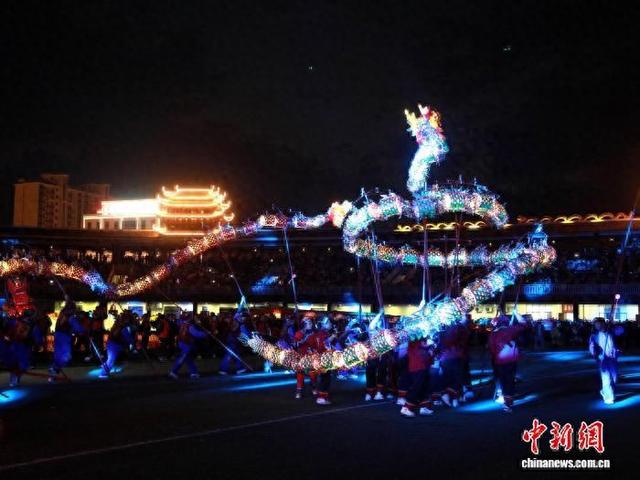
酒泉市2个非遗项目荣登2026年非遗晚会
Xin Lang Cai Jing· 2026-02-24 09:04
Core Points - Two intangible cultural heritage projects from Gansu Province have been selected for the 2026 Intangible Cultural Heritage Gala, showcasing the region's rich cultural heritage and artistic charm [1] - The selected projects include the national-level carpet weaving technique from Tianshui City and the provincial-level Dunhuang stone powder painting technique, along with the city-level Dunhuang ancient dance and the classic Chinese dance drama "Silk Road Flower Rain" [1] - This selection is a significant recognition of Gansu's achievements in the protection of intangible cultural heritage and serves as a cultural invitation to a national audience [1] Summary by Categories Cultural Heritage Recognition - Gansu Province's intangible cultural heritage projects have gained national recognition by being selected for the 2026 gala, highlighting the province's cultural achievements [1] - The inclusion of these projects reflects the successful systematic protection of Gansu's intangible cultural heritage [1] Project Details - The projects featured include: - National-level: Carpet weaving technique (Tianshui silk carpet weaving technique) - Provincial-level: Dunhuang stone powder painting technique - City-level: Dunhuang ancient dance - Classic dance drama: "Silk Road Flower Rain" [1] Cultural Confidence and Development - The gala serves as a platform to present Gansu's cultural heritage, showcasing the province's confidence and openness in sharing its historical narratives [1] - The projects are seen as cultural treasures that embody the wisdom and craftsmanship of the local people, contributing to a strong sense of cultural confidence through innovative development [1]
非遗馆里,找到过年的“打开方式”
Ren Min Ri Bao· 2026-02-24 03:04
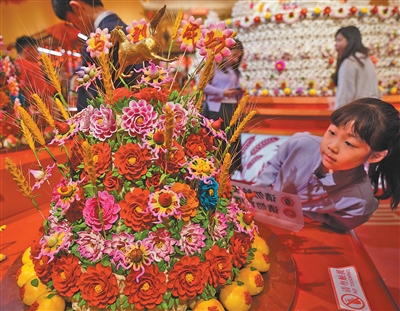
Core Viewpoint - The "Over Year - Bingwu Spring Festival Series Theme Exhibition" at the China Intangible Cultural Heritage Museum has attracted over 360,000 visitors since its opening on January 20, showcasing various aspects of traditional Chinese culture and customs related to the Spring Festival [2]. Group 1: Exhibition Overview - The exhibition is divided into four thematic areas: "Historical Sequence," "Galloping on the Journey," "Food is Heaven," and "Light Turning Spring Radiance," each highlighting different cultural elements and traditions associated with the Spring Festival [3]. - "Historical Sequence" focuses on the evolution of traditional calendars and New Year celebration customs, engaging visitors with intriguing facts about the Spring Festival [3]. - "Galloping on the Journey" features intangible cultural heritage projects related to horses, showcasing artistic representations and cultural significance [3]. - "Food is Heaven" emphasizes the relationship between food security and Spring Festival customs, displaying intricate food art from various regions [3]. - "Light Turning Spring Radiance" presents beautiful lantern displays that create a festive atmosphere, enhancing the celebratory spirit of the exhibition [3]. Group 2: Market and Cultural Activities - The exhibition includes a market area designed to resemble a traditional fair, featuring unique intangible cultural heritage products from different provinces, such as Zhejiang's Longquan celadon and Yunnan's Pu'er tea [4]. - Interactive activities, including games and food events, have been added to the exhibition, with half of the museum's space dedicated to Spring Festival-related displays, aiming to fulfill visitors' expectations for the holiday [5].
云南龙陵:多彩非遗闹新春
Zhong Guo Xin Wen Wang· 2026-02-23 04:16
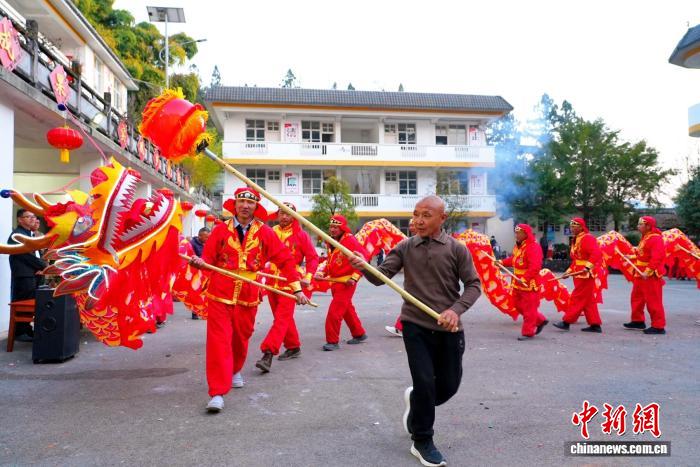
Core Viewpoint - The 37th Spring Festival Cultural Activity Week in Longling County, Yunnan, integrates 17 intangible cultural heritage projects into over 30 festive activities, creating a vibrant cultural celebration for locals and tourists alike [1][5]. Group 1: Event Highlights - The opening ceremony featured a grand dragon dance performance, accompanied by traditional music, setting a festive tone for the event [3]. - A variety of 17 artistic performances, including local dialect skits, folk bands, and intangible cultural heritage stage plays, were showcased, enhancing the festive atmosphere [3]. - The event attracted over 40,000 visitors in the first two days, with expectations to exceed 60,000 throughout the Spring Festival [5]. Group 2: Cultural Engagement - The traditional sports activity "Dudada," a unique skill involving throwing a grass ball made from bamboo leaves, engaged many participants, highlighting the charm of intangible cultural heritage [3][5]. - Visitors expressed their enjoyment of the local customs and the rich cultural experience, with many returning to celebrate the festival in their hometowns [3]. - The event included a fireworks display that illuminated the night sky, contributing to the celebratory atmosphere [5].
湖南慈利:板板龙灯闹新春 “水陆空”联动展千年非遗
Xin Lang Cai Jing· 2026-02-22 08:41
Core Viewpoint - The fourth Cili Banan Dragon Lantern Art Season showcases the traditional Cili Banan Dragon Lantern as a national intangible cultural heritage, presenting a three-dimensional experience that attracts tourists and promotes cultural heritage [1][3]. Group 1: Event Overview - The opening ceremony featured the traditional Banan Dragon Lantern in a "Dragon Horse Spirit" formation, symbolizing good fortune and determination for the new year [3]. - The event includes a series of immersive visual performances, with land and water dragon lanterns creating a stunning spectacle along the Li River, enhanced by LED lights [3][5]. - The art season is organized by the Cili County Party Committee and the Cili County People's Government, running from February 1 to March 3, with various activities planned [5][7]. Group 2: Activities and Engagement - The art season features diverse activities, including the first "Xiangziyuan Qili" basketball invitation tournament, showcasing the city's vitality through sports [7]. - The Cili County Museum hosts themed activities that allow the public to engage with cultural heritage through exhibitions, paper-cutting, and calligraphy [7]. - On Lantern Festival day, traditional folk activities such as a stone-throwing competition and lantern riddles will be held, alongside a nationwide photography and short video collection initiative [7].