
富荣中短债A份额基金

Search documents
固收类产品四日累计跌超7.4%!“稳稳的幸福”华宸未来稳健添利债券遇挑战
Zhong Guo Zheng Quan Bao· 2025-12-04 23:59
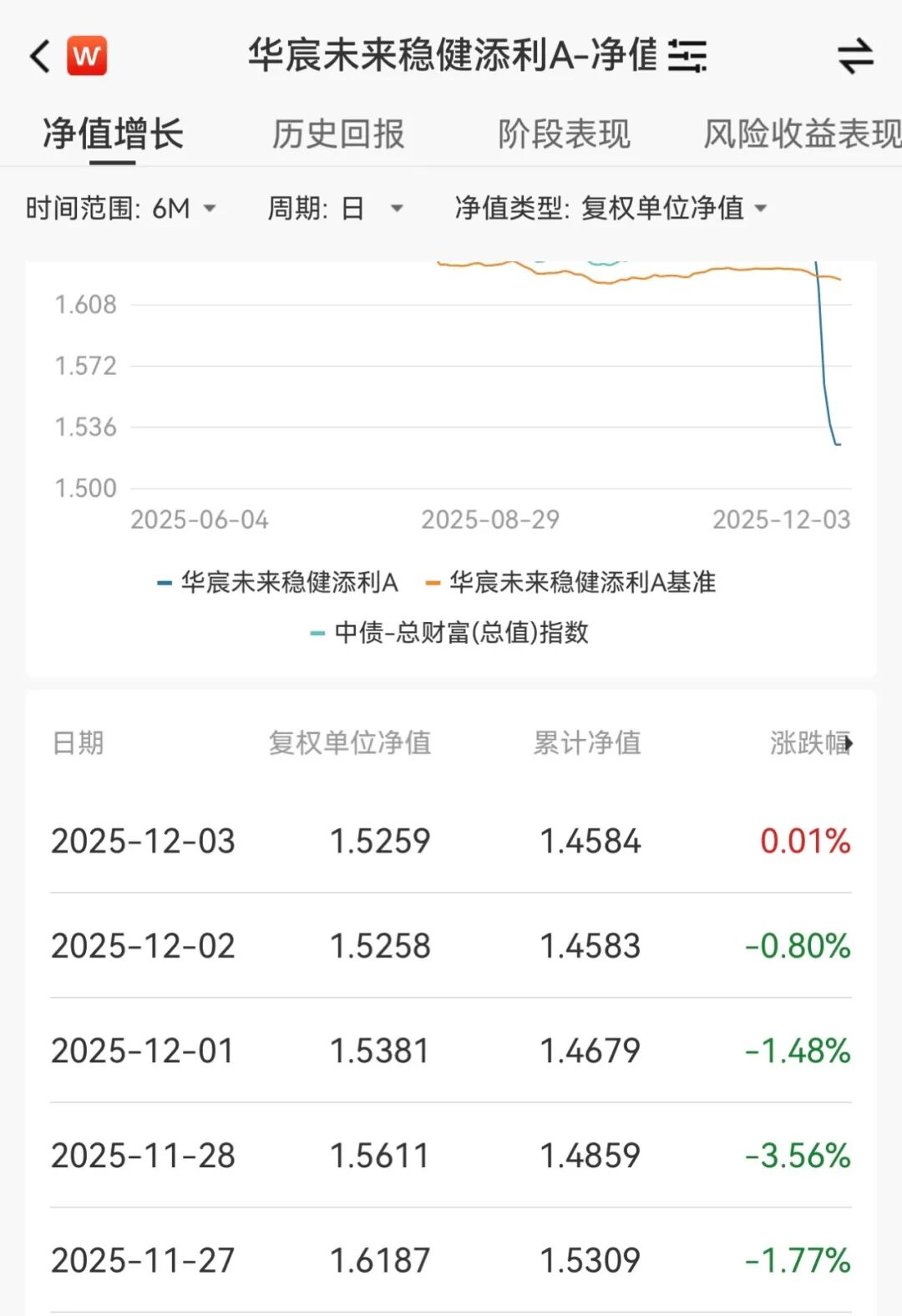
Core Viewpoint - The recent significant decline of over 7.4% in the Huachen Future Stable Income Bond Fund has raised concerns about the stability of fixed-income products, particularly those managed by smaller fund companies [1][2][3] Group 1: Fund Performance - From November 27 to December 2, the Huachen Future Stable Income Bond Fund experienced a cumulative decline of over 7.4%, marking it as one of the worst-performing bond funds in the market during this period [2][3][4] - On November 28, the fund's A share unit net value dropped by more than 3.5%, with daily declines exceeding 1% on November 27 and December 1 [2][4] - The fund's net value has reverted to levels seen in the third quarter of 2023, erasing gains accumulated over the past two years [2][4] Group 2: Causes of Decline - The decline is attributed to significant adjustments in certain bonds held by the fund due to market conditions, as well as a surge in large redemptions that exacerbated net value fluctuations [3][4][5] - The fund's management has acknowledged the need for time to digest the negative impacts of these redemptions and is actively working to optimize the investment portfolio [4][5] Group 3: Industry Insights - The situation highlights potential contradictions in investment strategies and product strategies among smaller fund companies, which may lack the resources and research depth compared to larger firms [6][8][19] - Smaller fund companies often face challenges in risk management and may be more susceptible to liquidity pressures during periods of concentrated redemptions [6][19] Group 4: Investor Considerations - Investors are advised to consider multiple factors when selecting fixed-income products, including the management capabilities of the fund, the sustainability of long-term performance, risk-return characteristics, and fee structures [1][12][20] - It is recommended to prioritize funds managed by larger firms with established research and risk management systems, as well as to focus on long-term investment strategies rather than short-term trading [20][21]

四日累计跌超7.4%!“稳稳的幸福”遇挑战
Zhong Guo Zheng Quan Bao· 2025-12-04 15:05
Core Viewpoint - The recent significant decline in the net value of the Huachen Future Stable Income Bond Fund highlights vulnerabilities in smaller fund companies, particularly in their investment strategies and product management [1][5]. Group 1: Fund Performance - From November 27 to December 2, the Huachen Future Stable Income Bond Fund experienced a cumulative decline of over 7.4%, marking it as one of the worst-performing bond funds in the market during this period [2][3]. - On November 28, the fund's A share unit net value dropped by more than 3.5%, with single-day declines exceeding 1% on November 27 and December 1 [2]. - The fund's net value has reverted to levels seen in the third quarter of 2023, erasing nearly two years of accumulated returns [2]. Group 2: Causes of Decline - The decline in net value is attributed to significant adjustments in certain bonds held by the fund, influenced by market conditions [1][3]. - A surge in large redemptions in recent trading days has exacerbated the volatility of the fund's net value, necessitating time for the negative impacts to be absorbed [3][4]. Group 3: Industry Insights - Smaller fund companies often face challenges in managing stable income products due to limited resources, which can lead to aggressive investment strategies that increase risk [5]. - The lack of comprehensive research capabilities and robust risk management systems in smaller firms can result in delayed responses to market fluctuations and individual bond risks [4][5]. Group 4: Investor Considerations - Investors are advised to consider multiple factors when selecting fixed-income products, including the fund manager's capabilities, long-term performance sustainability, and fee structures [6][7]. - It is recommended to prioritize funds managed by larger firms with established research and risk management frameworks, as well as to focus on long-term investment strategies rather than short-term trading [6][7].