
基金

Search documents
3月本土机构投资者调查-A股-地缘-油价怎么看
2026-04-01 09:59
Summary of Conference Call Notes Industry Overview - The conference call discusses the A-share market and investor sentiment in the context of geopolitical tensions and inflation concerns [1][2]. Key Points and Arguments 1. **Market Consensus on Index Bottom**: The consensus among investors is that the Shanghai Composite Index's bottom is between 3,700 and 3,800 points, aligning with the annual line at approximately 3,740 points, indicating a prevailing "bullish mindset" [1][2]. 2. **Investor Positioning**: Overall investor positions are low, with a stronger inclination among absolute return investors to increase their positions compared to relative return investors [2][3]. 3. **Concerns Affecting Investment Decisions**: Investors express concerns about geopolitical conflicts and potential stagflation or recession, which dampen their willingness to increase positions despite a neutral outlook on the market [3][4]. 4. **Economic Growth Expectations**: The GDP growth target for 2026 is projected to be between 4.6% and 4.7%, with annual return and profit growth expectations concentrated in the 5% to 10% range [1][3]. 5. **Liquidity and Oil Price Expectations**: The market anticipates that the Federal Reserve will likely cut interest rates at least once in 2026, with oil prices expected to stabilize between $90 and $100 per barrel [1][4]. 6. **Investment Style and Focus**: There is a consensus on balanced asset allocation with an emphasis on value, focusing on "new and old energy" sectors, including upstream resources and new manufacturing [5][6]. 7. **Performance Expectations for Q1 2026**: AI computing power, particularly in North America and domestic chains, is viewed as the most certain sector for exceeding performance expectations, along with certain upstream resources and non-ferrous metals [7]. 8. **Investor Sentiment on Hong Kong Market**: Most investors believe that the Hong Kong stock market will struggle to outperform the A-share market in 2026, with a low willingness to increase allocations to Hong Kong stocks [8]. Additional Important Insights - The survey included over 260 fund managers and researchers from more than 140 domestic core institutions, with a significant representation from public funds and insurance asset management [2]. - Despite concerns about geopolitical risks, the prevailing view is that these factors are short-term disturbances rather than significant threats to the fundamentals [3][4]. - There is a notable expectation of a divergence in performance between sectors perceived as defensive and those expected to exceed earnings forecasts, particularly in the context of geopolitical tensions [7].
ETF及指数产品网格策略周报-20260401
HWABAO SECURITIES· 2026-04-01 08:48
Group 1 - The report outlines a grid trading strategy that capitalizes on price fluctuations rather than predicting market trends, making it suitable for volatile markets [3][13] - Characteristics of suitable grid trading targets include being exchange-traded, having stable long-term trends, low transaction costs, good liquidity, and high volatility, with equity ETFs being particularly appropriate [3][13] - The report highlights key ETFs for grid trading, including the New Energy Vehicle ETF, which is expected to see significant growth as China's car sales surpass Japan's by 2025, with exports projected to double [4][14] Group 2 - The Cloud Computing ETF is noted for its substantial growth in daily token usage, which has increased over a thousand times in two years, supported by robust computing infrastructure [4][17] - The Asia-Pacific Selected ETF aims to diversify asset allocation across the region, with an expected economic growth rate of 4.5% in 2026, enhancing the potential for investment returns [6][18] - The Sci-Tech Comprehensive Index ETF is positioned to benefit from China's focus on technological self-reliance and innovation, as indicated by significant government investment in R&D and digital economy sectors [7][20]
欧美股基结束长周期流入,中国市场逆势获外资回补——全球资金流动周报第2期
一瑜中的· 2026-03-31 12:51
Global Fund Flows Overview - In the week of March 19 to March 25, 2026, global stock funds experienced a significant net outflow of $28.68 billion, ending a seven-week streak of inflows, and this outflow is at the 3.1% percentile level since 2025 [2][11] - Global bond funds maintained a continuous inflow for 48 weeks, but the inflow decreased significantly to $2.94 billion, which is at the 4.7% percentile level since 2025 [4][11] - Money market funds saw a net outflow of $43.04 billion, marking a shift from the previous week's inflow, and this outflow is at the 4.7% percentile level since 2025 [4][12] Core Market Insights - In the U.S. market, stock funds saw a net outflow of $27.02 billion, marking a significant change from the previous week's inflow of $49.84 billion, which is at the 3.1% percentile level since 2025 [5][15] - European stock funds ended a 32-week inflow streak, with a net outflow of $3.45 billion, which is at the 1.6% percentile level since 2025 [5][18] - Japanese stock funds recorded a net inflow of $0.36 billion, but the inflow decreased from the previous week's $3.69 billion, which is at the 35.9% percentile level since 2025 [5][26] China Market Deep Dive - Chinese stock funds reversed from a net outflow to a net inflow of $0.69 billion, which is at the 50.0% percentile level since 2025 [6][31] - Domestic funds recorded a net outflow of $0.69 billion, while overseas funds saw a strong reversal from a net outflow of $1.22 billion to a net inflow of $1.38 billion, which is at the 76.6% percentile level since 2025 [6][31] - Passive funds in China recorded a net inflow of $0.98 billion, contrasting with the previous week's net outflow of $2.61 billion, indicating a significant shift in fund flows [6][34]

ETF生态周报(2026.03.23-03.27)——ETF市场整体综合面板
华宝财富魔方· 2026-03-31 09:45
Market Overview - As of March 27, 2026, the total market size of ETFs is approximately 5.04 trillion yuan, with a contraction driven mainly by market declines, although net subscriptions indicate a positive contribution from funds [2][7] - The performance of broad-based and thematic ETFs has declined, while strategy ETFs showed slight positive contributions; bond ETFs saw a minor increase in shares, but the overall scale was affected by market conditions [2][3] Performance Disparity - The domestic equity market experienced a slight pullback, with the CSI 300 index dropping to a valuation percentile of 77.51%, indicating a reduction in high valuation pressure [2][25] - Structural highlights were observed in cyclical resources and defensive sectors, with the chemical ETF rising by 3.65% and the power ETF by 2.88%, while the securities ETF faced the largest decline of -3.88% [2][26] Fund Flows - There was a continued trend of funds migrating from equity broad-based ETFs to fixed income, with AAA Sci-Tech bonds leading with a net inflow of 107.83 billion yuan [3][34] - Strategy ETFs saw a net inflow of 46.02 billion yuan, indicating strong support for dividend and free cash flow strategies [3][37] Trading Activity - The trading intensity of bond ETFs showed a decline in turnover rates, with the short-term bond ETF from Hai Fu Tong maintaining a high transaction volume but lower turnover [4][58] - In the stock ETF market, large-cap ETFs dominated trading volumes, while small-cap ETFs led in turnover rates, indicating a preference for larger, more stable investments [4][60] Issuance Dynamics - The issuance market saw a marginal contraction, but the reserve of upcoming ETFs expanded significantly, with 61 ETFs waiting for issuance, indicating a robust pipeline for future offerings [5][66] - The agricultural and fishery sectors are currently active in trading, with new products expected to perform well due to existing subscription support [5][67]

广东迎来百亿智能机器人基金落地 | 科促会母基金分会参会机构一周资讯(3.25-3.31)
母基金研究中心· 2026-03-31 09:01
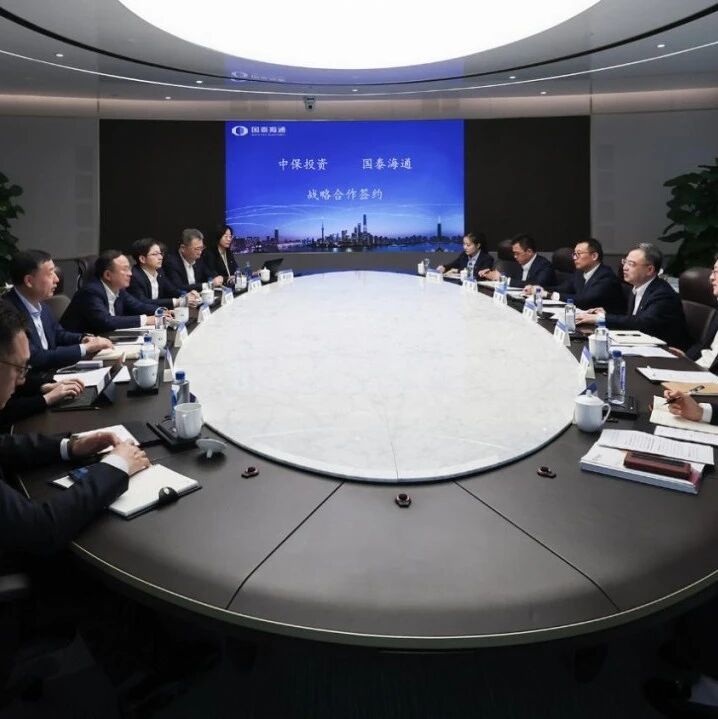
Group 1 - The establishment of the "China International Science and Technology Promotion Association Mother Fund Branch" aims to enhance the role of mother funds in China's capital market, promoting social capital towards innovative enterprises and the real economy [2][17]. - The Guangdong Intelligent Robot Industry Investment Fund, initiated by Hengjian Holdings, has been registered with a total scale of 10 billion yuan, with an initial subscription of 2 billion yuan, to support the high-quality development of the AI and robotics industry in Guangdong [3][4][5]. Group 2 - The Jiangsu Huanghai Financial Holding Group's AIC sub-fund has been successfully registered, focusing on green low-carbon industries with a total scale of 1 billion yuan, targeting new energy, semiconductor, and new materials sectors [6][7]. - The Baoding Industrial Development Group conducted research and discussions on energy storage technology innovation and project incubation, emphasizing the importance of capital empowerment in the energy storage industry [8][9]. Group 3 - Zhongbao Investment and Guotai Junan signed a strategic cooperation agreement to deepen collaboration in various financial services, aiming for mutual benefits and high-quality development [10][12][13]. - Hunan Caixin Guarantee Company, in collaboration with Zhongdai Credit, successfully issued a 300 million yuan technology innovation bond, utilizing a "central-local cooperation" credit enhancement model to support long-term investments in technology innovation [14][15].
海外创新产品周报20260330:GlobalX发行NYSE100ETF-20260331
Shenwan Hongyuan Securities· 2026-03-31 05:46
1. Report Industry Investment Rating No information is provided regarding the industry investment rating in the report. 2. Core Viewpoints of the Report - Global X issued the NYSE 100 ETF last week, selecting the 100 stocks with the largest market capitalization and most prominent innovation from exchanges such as the New York Stock Exchange, NASDAQ, and CBOE BZX, with a fee rate of only 0.09%. This product can diversify risks and capture more opportunities under current development trends [2][10]. - The capital flow of leading ETF managers has shown an overall increase. In the past week, domestic stock products in the US have seen outflows again, while bond products have seen inflows, and commodity ETFs have continued to see outflows. The capital flow of S&P 500 ETFs has been highly volatile recently [2][11]. - The performance of single - stock leveraged products varies significantly. Leveraged and inverse products linked to individual stocks have been issued intensively in the past two years. Products linked to Tesla and NVIDIA have the largest scale but have seen significant declines this year, while products linked to Micron Technology (MU) and SanDisk Corporation (SNDK) have entered the top ten in terms of scale as the stocks have risen [2][18]. - In January 2026, the total amount of non - money public funds in the US was $24.07 trillion, an increase of $0.43 trillion compared to December 2025. From March 11th to March 18th, domestic stock funds in the US saw outflows of $9.3 billion, international stock products maintained a low level of outflows, and the inflow of bond products further narrowed to $0.8 billion [2][18]. 3. Summary by Directory 3.1 US ETF Innovation Products: Global X Issues NYSE 100 ETF - Last week, there were 20 newly issued products in the US, including multiple single - stock leveraged and inverse products and target - maturity bond products. Tradr and Direxion issued 8 single - stock leveraged and inverse products, with Direxion's products corresponding to leading stocks and Tradr's including smaller - market - cap companies [7]. - Wellesley Asset Management issued a convertible bond ETF, and BlackRock issued 8 target - maturity ETFs covering various bond types. Janus Henderson issued an active stock - picking + Covered Call product, and Pareto issued an asset - allocation product [8][10]. - Global X issued the NYSE 100 ETF, which selects 100 stocks from multiple exchanges. It covers various fields, can diversify risks, and capture more opportunities. Its top ten heavy - weighted stocks have a high overlap with QQQ but different weights, and there are significant differences in the 11th - 20th stocks [2][10]. 3.2 US ETF Dynamics 3.2.1 US ETF Capital: The Capital Flow of Leading Managers Shows an Overall Increase - In the past week, domestic stock products in the US saw outflows again, bond products saw inflows, and commodity ETFs continued to see outflows. The capital flow of S&P 500 ETFs has been highly volatile recently. BlackRock's IVV continued to see the largest inflows, SPY also saw inflows again, while VOO saw significant outflows, and many other products of Vanguard were also among the top in terms of outflows [2][11][14]. 3.2.2 US ETF Performance: The Performance of Single - Stock Leveraged Products Varies Significantly - Leveraged and inverse products linked to individual stocks have been issued intensively in the past two years. Products linked to Tesla and NVIDIA have the largest scale but have seen significant declines this year, while products linked to Micron Technology (MU) and SanDisk Corporation (SNDK) have entered the top ten in terms of scale as the stocks have risen, with significant differences in product returns [2][18]. 3.3 Recent Capital Flow of US Ordinary Public Funds - In January 2026, the total amount of non - money public funds in the US was $24.07 trillion, an increase of $0.43 trillion compared to December 2025. According to Wind data, the S&P 500 rose 1.37% in January, and the scale of domestic stock products in the US increased by 1.23%, with a small impact from redemptions. - From March 11th to March 18th, domestic stock funds in the US saw outflows of $9.3 billion, international stock products maintained a low level of outflows, and the inflow of bond products further narrowed to $0.8 billion [2][18].
迎接二季度 基金经理“防守一波”还是“放手一搏”
天天基金网· 2026-03-31 03:18
Core Viewpoint - Institutional investors are eager to recover excess returns, but the volatile market environment does not provide the same sense of security as early 2026 [1] Group 1: Market Sentiment and Performance - The performance of active equity funds has significantly declined, with many funds returning to their early-year levels, indicating a loss of excess returns [2] - Fund managers are focusing on recovering losses in the second quarter, with market conditions being a critical factor in determining whether the market has bottomed out [2] - A survey indicates that 93.75% of fund managers favor growth sectors, while 62.5% are optimistic about HALO strategies [3] Group 2: Investment Strategies - There is a divergence in strategies among institutional investors, with some focusing on defensive positions while others are looking for rebound opportunities [4] - Fund managers are adjusting their portfolios towards defensive assets, indicating a search for new safety margins [4] - The upcoming period is seen as a decision point, with expectations of clearer geopolitical situations and corporate earnings providing new investment insights [4] Group 3: Sector Focus and Opportunities - The market narrative is centered around AI and oil, with institutions exploring these areas for potential returns [7] - The semiconductor industry is facing supply chain challenges due to geopolitical tensions, which could impact AI-related growth [7] - Growth stocks are being viewed as potential hedging tools against economic uncertainties, with AI seen as a solution to rising costs in traditional manufacturing [7] Group 4: Broader Market Trends - Other narratives in the A-share market include rising oil prices, innovation in pharmaceuticals, and the transition from traditional energy to lithium batteries [8] - Some institutions are focusing on niche areas such as logistics, new consumption, and fiber optics to seek excess returns and act as a safe haven [8]

渤海证券研究所晨会纪要(2026.03.31)-20260331
BOHAI SECURITIES· 2026-03-31 00:28
Group 1: Fund Research - The equity market experienced a downturn, with all major indices declining, particularly the ChiNext Index, which fell by 1.68%. Among 31 Shenwan primary industries, 9 sectors saw gains, with the top five being non-ferrous metals, public utilities, chemicals, pharmaceuticals, and textiles and apparel [2][3] - The public fund market saw significant growth, with the total scale of public funds surpassing 38 trillion yuan, while private funds reached 22.60 trillion yuan [2] - In terms of fund performance, equity funds had the smallest decline, averaging a drop of 0.31%, with a positive return ratio of 32.20%. Fixed income + funds rose by 0.05%, with a positive return ratio of 58.03% [3] Group 2: Company Research - Western Mining (601168) - Western Mining reported a revenue of 61.687 billion yuan for 2025, marking a year-on-year increase of 23.31%. The net profit attributable to shareholders was 3.643 billion yuan, up 24.26% year-on-year [5] - In Q4 2025, the company experienced a quarter-on-quarter revenue decline of 21.27% and a net profit drop of 35.21%. The decrease was attributed to increased asset impairment losses and reduced investment income [7] - The company plans to produce 172,026 tons of copper, 63,419 tons of lead, and 127,640 tons of zinc in 2026, with several projects expected to contribute to future performance growth [8] Group 3: Industry Research - Light Industry Manufacturing & Textile Apparel - The paper and paper products industry achieved a total profit of 5.04 billion yuan in January-February 2026, reflecting a year-on-year growth of 6.1% [13] - Major domestic sports apparel brands, including Anta Sports and Li Ning, reported revenue growth of 13.26% and 3.22% respectively for 2025, indicating resilience in the sports apparel sector despite increased competition [13] - The outdoor market is projected to grow at a compound annual growth rate of over 15% in the next three years, driven by rising temperatures and increased interest in outdoor activities [13]

创新药对外授权交易超600亿美元,如何布局?
Datong Securities· 2026-03-30 23:47
Market Overview - The equity market saw most major indices decline, with only the Wind Micro Index rising by 1.54% during the week. The North Securities 50 index fell by 3.40%, while the ChiNext Index and the Shanghai Composite Index decreased by 1.68% and 1.09%, respectively [4][5] - In the bond market, both short and long-term interest rates declined, with the 10-year government bond yield falling by 1.27 basis points to 1.817%. The credit spreads for both short and long-term bonds also narrowed [7][8] Equity Product Allocation Strategy - Event-driven strategy highlights include: - China's innovative drug licensing transactions exceeding $60 billion, with recommended funds such as Harvest Mutual Selection A (006603), ICBC Health A (006002), and Penghua Medical Technology A (001230) [12][13] - Attacks on two major aluminum plants in the Middle East, suggesting a focus on funds like Harvest Resource Selection A (005660) and Huaxia Prosperity Driven A (017598) [13] - The official naming of "Token" as "词元," indicating potential investment opportunities in computing power and chip sectors, with recommended funds including Nord New Life A (006887) and Harvest Frontier Innovation (009993) [14] - Asset allocation strategy recommends a balanced core with a barbell strategy, focusing on dividend and technology/high-end manufacturing sectors. Suggested funds include Anxin Dividend Selection A (018381) and Harvest Military Industry Theme A (004698) [16][17] Stable Product Allocation Strategy - Market analysis indicates a net injection of 281.9 billion yuan by the central bank, maintaining a balanced and loose funding environment. The 2025 China International Balance of Payments Report shows a current account surplus of $735 billion, representing 3.7% of GDP [20][22] - Industrial profits for large-scale enterprises grew by 15.2% in the first two months of 2026, indicating a positive economic outlook [22] - Recommended products include short-term bond funds like Nord Short Bond A (005350) and Guotai Lian A (016947), with a focus on maintaining liquidity while managing risk [23][24]