小米17 Air

Search documents
小米17 Air,被砍
猿大侠· 2026-01-13 04:11
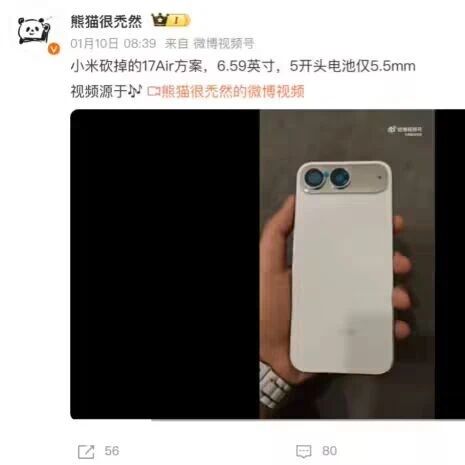
Group 1 - The article discusses a leaked engineering prototype of a smartphone, speculated to be the Xiaomi 17 Air, featuring a horizontal dual-camera design and a polished metal frame, resembling the Apple iPhone Air [1][4] - The phone is reported to have a 6.59-inch display, a thickness of 5.5mm, and a battery described as "5 series" [1] - It is equipped with a 200-megapixel dual rear camera and powered by the Qualcomm Snapdragon 8 Elite Gen 5 processor, with a battery capacity reportedly below 6,000mAh and a weight around 160g [3] Group 2 - The article mentions that the internal assessment suggests the ultra-thin smartphone may not have a viable market, leading to its cancellation [3] - The Honor Magic 8 Pro Air is highlighted as the only true ultra-thin flagship among the top five manufacturers, raising questions about its market performance [3] - There is speculation about the identity of the manufacturer behind the canceled Air phone, with hints pointing towards Xiaomi based on recent internet rumors [4]

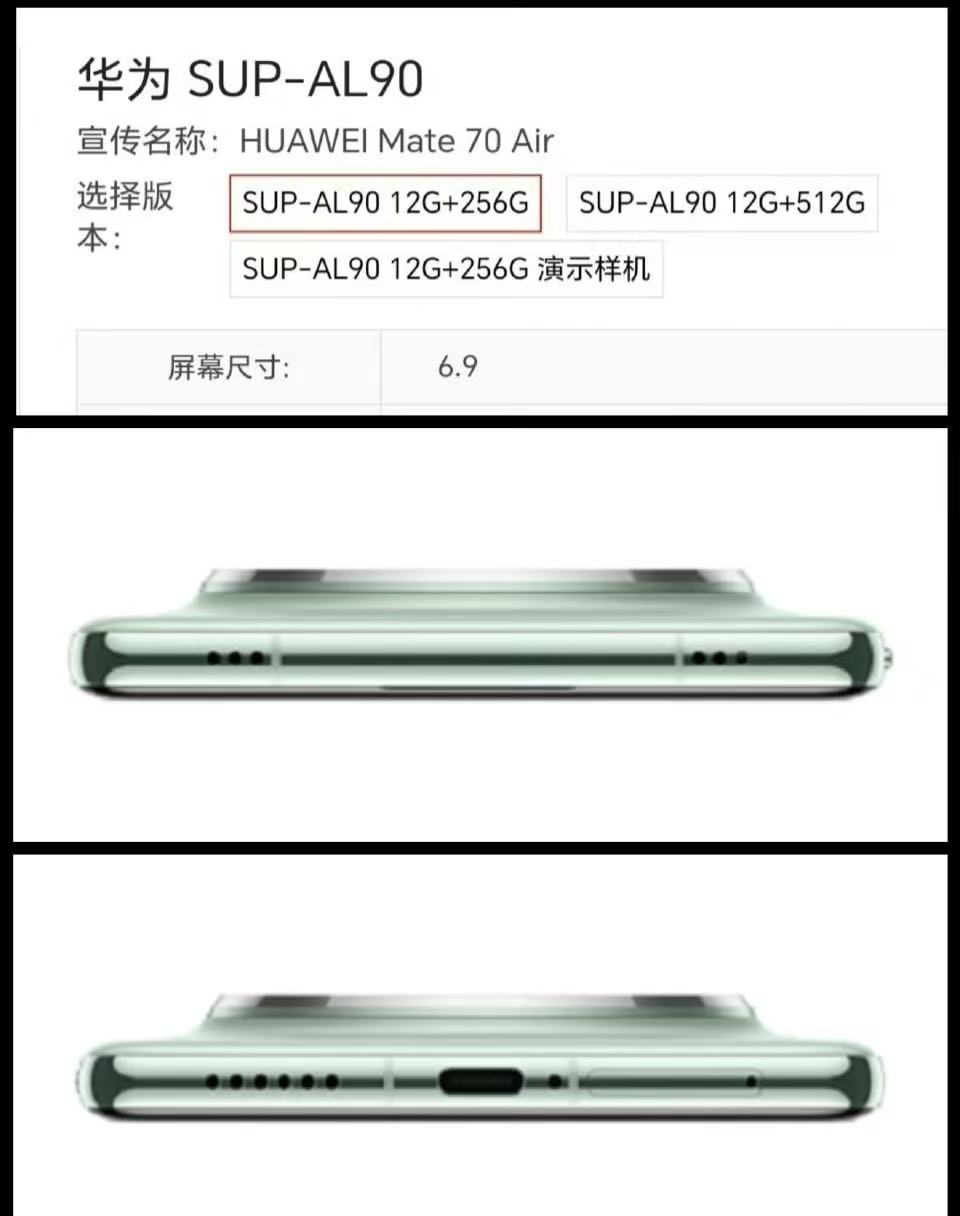
小米华为入局轻薄赛道,Air手机团战即将开启?
3 6 Ke· 2025-10-30 00:19
Core Viewpoint - The introduction of the iPhone Air has sparked a trend in the smartphone industry towards lightweight designs, despite lacking significant performance upgrades or new imaging systems [1][3][11]. Group 1: Market Response - The term "Air" has revitalized discussions around lightweight smartphones, prompting major manufacturers like Huawei, Xiaomi, OPPO, and Vivo to develop their own versions [2][3][10]. - The shift towards lightweight designs is a response to consumer preferences, with over 70% of users indicating that performance is sufficient, while weight and feel are critical factors in their purchasing decisions [4][12]. Group 2: Challenges Faced - Despite the hype, lightweight models like the iPhone Air and Samsung Galaxy S25 Edge have not met sales expectations, facing criticism for compromised features such as battery life and audio quality [7][8][14]. - The iPhone Air's design sacrifices battery capacity and speaker quality, leading to a less complete user experience, which has resulted in a delay in production for subsequent batches [7][14]. Group 3: Future Outlook - The lightweight trend is seen as a potential design revolution, with advancements in technology such as silicon-carbon batteries and titanium frames offering new solutions for achieving meaningful lightweight designs [16][18]. - The industry may see 2026 as a pivotal year for lightweight flagship models, as the goal shifts from merely achieving thinness to integrating lightweight features across all devices [18].