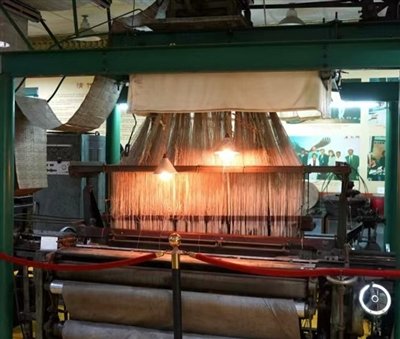
庐山纱

Search documents
丝绸业的“四班三运转”时代
Xin Lang Cai Jing· 2026-02-26 22:50
Core Viewpoint - The article discusses the historical significance and evolution of the silk industry in Huzhou, highlighting the challenges faced by the industry and the labor force, particularly the implementation of the "four shifts and three rotations" work system in the 1980s, which aimed to improve productivity and worker conditions but ultimately faced various challenges and led to the decline of the industry in the 1990s [3][11][12]. Group 1: Historical Context - Huzhou is known as the "Silk Capital," with the silk industry being a major economic pillar in the 1980s, generating over 30 million USD in export revenue in 1984 [3][4]. - The "four shifts and three rotations" system was introduced to improve working conditions and productivity, allowing for better rest periods for workers [6][7]. - The implementation of this system led to significant changes in labor dynamics, with a notable influx of rural workers into the silk factories [4][10]. Group 2: Labor Challenges - The silk industry faced severe labor shortages as traditional workers left due to the demanding nature of the job, leading to the recruitment of rural contract workers who received similar benefits to urban workers [4][9]. - The working conditions remained challenging, particularly for night shifts, which disrupted workers' biological clocks and led to fatigue and accidents [8][9]. - Despite the challenges, the introduction of the new work system initially resulted in increased production and higher wages for workers, with bonuses and additional benefits being provided [6][10]. Group 3: Economic Decline - By the early 1990s, the silk industry faced significant economic challenges due to rising costs and decreased demand, leading to a decline in profitability and increased competition [11]. - The market was flooded with low-quality silk products, further damaging the reputation of Chinese silk in international markets [11]. - The Huzhou silk industry saw a rapid decline, with many companies, including the Huzhou Yongchang Silk Weaving Factory, declaring bankruptcy by 1997, marking the end of the "four shifts and three rotations" system [11][12].