
丝绸纺织

Search documents
太湖雪(920262):北交所信息更新:线上线下融合提效,2025扣非归母净利润+70%
KAIYUAN SECURITIES· 2026-03-01 08:13
Investment Rating - The investment rating for the company is "Outperform" (maintained) [2][5] Core Insights - The company reported a revenue of 600 million yuan for 2025, representing a year-on-year growth of 16.37%. The net profit attributable to the parent company was 39.17 million yuan, up 39.63% year-on-year, while the net profit excluding non-recurring items was 41.15 million yuan, reflecting a significant increase of 70.45% year-on-year [5][6] - The company is actively enhancing its online and offline integration to improve marketing efficiency and create a new consumer experience. The online channel has become a core growth engine, leveraging live streaming and AI technology to optimize operations and enhance user experience [6][7] - The company is constructing the "Future Factory" project, with a total contract amount of 110 million yuan, expected to start construction on January 28, 2026, and complete by January 5, 2027 [7] Financial Summary - The total revenue for 2023 is projected at 531 million yuan, with a year-on-year growth of 56.1%. For 2024, revenue is expected to decrease to 516 million yuan, followed by a recovery to 600 million yuan in 2025, and further growth to 750 million yuan in 2026 and 907 million yuan in 2027 [8][11] - The net profit attributable to the parent company is forecasted to be 34 million yuan in 2023, decreasing to 28 million yuan in 2024, then increasing to 39 million yuan in 2025, 50 million yuan in 2026, and 65 million yuan in 2027 [8][11] - The company's gross margin is expected to improve from 37.9% in 2023 to 40.8% in 2027, while the net profit margin is projected to rise from 6.5% in 2023 to 7.2% in 2027 [12]
丝绸业的“四班三运转”时代
Xin Lang Cai Jing· 2026-02-26 22:50
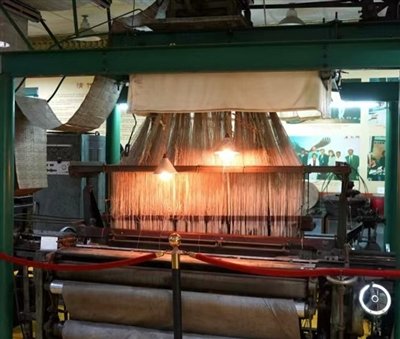
Core Viewpoint - The article discusses the historical significance and evolution of the silk industry in Huzhou, highlighting the challenges faced by the industry and the labor force, particularly the implementation of the "four shifts and three rotations" work system in the 1980s, which aimed to improve productivity and worker conditions but ultimately faced various challenges and led to the decline of the industry in the 1990s [3][11][12]. Group 1: Historical Context - Huzhou is known as the "Silk Capital," with the silk industry being a major economic pillar in the 1980s, generating over 30 million USD in export revenue in 1984 [3][4]. - The "four shifts and three rotations" system was introduced to improve working conditions and productivity, allowing for better rest periods for workers [6][7]. - The implementation of this system led to significant changes in labor dynamics, with a notable influx of rural workers into the silk factories [4][10]. Group 2: Labor Challenges - The silk industry faced severe labor shortages as traditional workers left due to the demanding nature of the job, leading to the recruitment of rural contract workers who received similar benefits to urban workers [4][9]. - The working conditions remained challenging, particularly for night shifts, which disrupted workers' biological clocks and led to fatigue and accidents [8][9]. - Despite the challenges, the introduction of the new work system initially resulted in increased production and higher wages for workers, with bonuses and additional benefits being provided [6][10]. Group 3: Economic Decline - By the early 1990s, the silk industry faced significant economic challenges due to rising costs and decreased demand, leading to a decline in profitability and increased competition [11]. - The market was flooded with low-quality silk products, further damaging the reputation of Chinese silk in international markets [11]. - The Huzhou silk industry saw a rapid decline, with many companies, including the Huzhou Yongchang Silk Weaving Factory, declaring bankruptcy by 1997, marking the end of the "four shifts and three rotations" system [11][12].

协同推进180个重点项目建设 累计形成161项制度创新成果 长三角示范区GDP年均名义增速7.3%
Jie Fang Ri Bao· 2026-01-30 01:49
Core Insights - The Yangtze River Delta Ecological Green Integrated Development Demonstration Zone has achieved an average nominal GDP growth rate of 7.3% since its establishment in November 2019, with a projected GDP of 571.6 billion yuan by 2025 [1] - The demonstration zone's industrial output and investment growth rates are above the average levels of the Yangtze River Delta region, indicating strong economic performance [1] Group 1: Economic Performance - Qingpu District is expected to achieve a GDP growth of 7.3% by 2025, ranking second in Shanghai [1] - During the 14th Five-Year Plan period, Qingpu's GDP is projected to grow at an average rate of 5.9%, with retail sales increasing by 6.8% annually and total fixed investment reaching 320 billion yuan [1] - Wujiang District's GDP is anticipated to exceed 270 billion yuan by 2025, with a year-on-year growth of 5.7%, maintaining a leading position in Suzhou [1] Group 2: Innovation and Development - The demonstration zone has seen a significant increase in high-tech enterprises, with the number rising to 3,713, which is 2.4 times the number at its inception [2] - The region has established key innovation platforms, including a national key laboratory for water pollution control and resource recycling, enhancing its innovation capabilities [2] - The collaboration between innovation and industry has been strengthened, with over 53.3% of service contracts from the Xiangfu Laboratory's pilot projects serving cross-regional clients in Shanghai and Jiangsu [2] Group 3: Project Development and Future Plans - The demonstration zone is advancing 180 key projects, having completed investments of 56.43 billion yuan last year, exceeding the annual plan by 111.3% [3] - A total of 161 institutional innovation results have been formed, with 61 experiences being replicated nationwide, showcasing the zone's commitment to reform and innovation [3] - The focus for 2026 will include deepening reform and innovation, enhancing ecological advantages, ensuring resource support for key projects, promoting technology and industry integration, and improving public services [3]
一场2600亿的同频对话!吴江企业家致“湘超冠军”:“你的奋斗,我们都懂!”
Yang Zi Wan Bao Wang· 2026-01-10 01:23
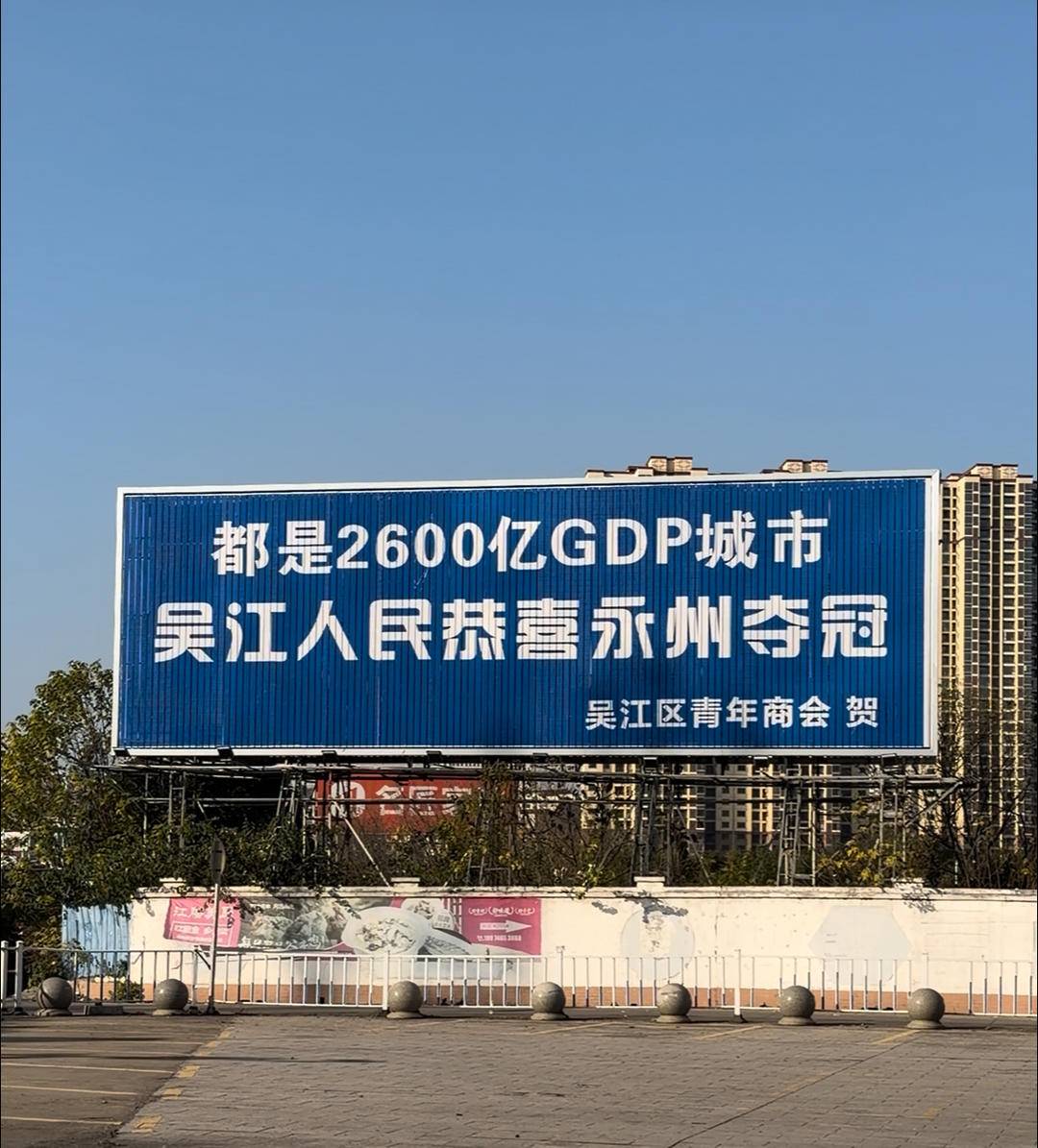
Core Viewpoint - The article discusses a unique advertising initiative by a Wujiang entrepreneur, which celebrates the economic achievements of both Wujiang and Yongzhou, highlighting their equal GDP of approximately 260 billion, and aims to foster a sense of identity and cultural confidence among the communities [1][3][9]. Group 1: Economic Comparison - The GDP of Wujiang for 2024 is projected to be around 260 billion, which is comparable to Yongzhou's GDP, creating a narrative of economic parity between a district and a city [3][9]. - The advertising campaign uses GDP data as a focal point to stimulate interest and recognition of both regions' economic standings, emphasizing their shared journey of growth and resilience [3][9]. Group 2: Community Response - The initiative received mixed reactions, with local residents of Yongzhou expressing gratitude and support, contrasting with external critics who questioned the appropriateness of comparing a district to a city [7][9]. - The campaign has sparked discussions about county-level economies, with Wujiang being recognized as a leader in this sector, supported by its robust manufacturing and private sectors [9][11]. Group 3: Cultural Significance - The advertising effort has evolved from a personal gesture to a collective expression of pride among Wujiang entrepreneurs, showcasing a strong sense of identity and cultural confidence [4][6]. - The initiative aims to create new avenues for inter-city dialogue, using light-hearted topics to engage in deeper discussions about economic and cultural connections [11][13]. Group 4: Broader Implications - The campaign reflects a growing trend of sports and economic narratives transcending geographical boundaries, fostering a sense of unity and shared values among different cities [13]. - The potential for future collaborations and interactions between Wujiang and Yongzhou is being explored, indicating a shift from online discussions to tangible community engagement [11].
万事利丝绸董事长李建华:无水印花定制技术实现新突破 个性化定制缩短至5分钟
Zhong Zheng Wang· 2025-12-19 00:57
Core Viewpoint - The company has developed a unique instant customization technology that allows personalized silk scarf production in just five minutes, significantly reducing the previous time of two hours [1] Group 1: Technology and Innovation - The instant customization technology is based on AI flexible customization, enabling consumers to upload photos or messages through a mini-program for immediate design generation [1] - This technology enhances the innovation, experience, and interactive fun of silk scarf customization [1] Group 2: Product Development - The company has created several silk cultural products themed around the Year of the Horse for the 2026 Spring Festival, including the "Qiji Chicheng" silk scarf and a calendar gift box [1] - The AI flexible customization technology has been applied to these products, contributing to the cultural creativity for the Spring Festival [1] Group 3: Cultural Significance - The use of red silk for the Spring Festival is highlighted as a meaningful expression of New Year traditions, allowing the festival to be experienced not just visually and audibly, but also tangibly [1] - The company emphasizes the importance of integrating Chinese silk into the cultural memory and customs of the Spring Festival [1] Group 4: Company Background - As the first publicly listed silk cultural company in China, the company has over 50 years of industry experience and has served major national events such as the Beijing Olympics and the G20 Hangzhou Summit [1]

打造百年企业 需要长期主义
Mei Ri Shang Bao· 2025-11-27 12:12
Core Insights - Wan Shili Group celebrated its 50th anniversary, marking it as a successful enterprise that has navigated through significant historical changes in China [1][2]. Group 1: Company Longevity and Achievements - The average lifespan of global SMEs is about 7 years, while top 1000 companies last around 30 years, and top 500 companies about 40 years; only 2% of companies exceed 50 years [1]. - Wan Shili is recognized as a "Hangzhou Old Brand," meeting the criteria of being established for over 40 years, with only 238 such brands recognized since 2009 [1]. - The company has evolved from a small township enterprise to a publicly listed company, contributing nearly 50,000 jobs to society over its 50-year history [1]. Group 2: Key Development Strategies - The company emphasizes talent development, having introduced university graduates for overseas training as early as the 1990s, recognizing the long-term value of human resources [2]. - The founder, Shen Aiqin, invested nearly a decade in preparing her daughter for succession, exemplifying successful generational transition in private enterprises [2]. - Wan Shili has strategically focused on its core business by simplifying operations and avoiding the pitfalls of excessive diversification, positioning itself as an industry leader [2]. - The company anticipated the cultural and technological trends, launching the "Silk+" initiative in 2016 and establishing a comprehensive database for AI applications in design [2]. Group 3: Lessons from Longevity - Successful long-standing companies share common traits, such as seizing fleeting opportunities and maintaining a long-term perspective, recognizing the importance of technology and talent [3]. - In an era of rapid technological change, the ability to focus on core competencies and adapt to market demands is crucial for survival and growth [3]. - The resilience of private enterprises, which have weathered significant challenges since the reform and opening-up period, suggests that the pursuit of longevity remains a viable goal despite technological advancements [3].
2025四川丝绸博览会启幕 这场丝韵之约 为何花落南充?
Si Chuan Ri Bao· 2025-11-20 03:20
Core Insights - The 2025 Sichuan Silk Expo will be held from November 20 to 23 at the Nanchong International Convention Center, showcasing local silk products and innovative manufacturing solutions [5][10] - Nanchong is recognized as the only "Silk Capital" in Central and Western China, leading the province in silk production with 16 million meters of silk fabric and 600,000 silk quilts annually [6][7] - The silk industry in Nanchong is increasingly incorporating modern technology and research, enhancing the quality and efficiency of silk production [8][12] Industry Overview - Nanchong has over 40,000 households engaged in sericulture, with a high-quality mulberry base covering 300,000 acres, and ranks first in the province for the number of silk and textile enterprises [7] - The region's sericulture is supported by advanced research collaborations with institutions like Southwest University, ensuring high-quality mulberry leaves and disease-resistant silkworm breeds [8] - The silk clothing export value from Nanchong has surpassed 200 million yuan annually, indicating a strong market presence in Europe and the United States [12] Event Highlights - The Silk Expo will feature six major activities aimed at fostering collaboration among government, industry, academia, and investment sectors [9] - A key focus will be on addressing the challenges of the silk supply chain, particularly the disparity between the eastern and western regions of China [9] - The event will also include a consumer engagement initiative, offering hands-on experiences with silk crafts and significant discounts through consumption vouchers [11] Technological Advancements - New production facilities, such as the 3,100 square meter dust-free workshop in the Jialing Industrial Concentration Area, have been established to enhance production efficiency by approximately 10% [8] - Innovations in silk products, such as a silk quilt with a rebound rate exceeding 92%, demonstrate the industry's commitment to quality improvement through technology [8] Future Prospects - The Silk Expo aims to create a national platform for the silk industry, promoting high-quality development and investment opportunities [9] - Nanchong is actively working to upgrade its silk industry by integrating the entire value chain from mulberry cultivation to silk processing and garment export [13]
两只牛股停牌核查;今日一只新股申购……盘前重要消息还有这些
Zheng Quan Shi Bao· 2025-11-18 00:54
Group 1: New Stock Offering - Jingchuang Electric will start subscription on November 18, with an issue price of 12.10 yuan and a price-to-earnings ratio of 13.47 times. The total fundraising is expected to be 175 million yuan [1] Group 2: Financial Market Cooperation - The fourth China-Germany high-level financial dialogue welcomed qualified Chinese and German enterprises to participate in each other's derivatives markets, aiming to enhance market depth, liquidity, and stability [3] Group 3: Industry Development Initiatives - Hubei Province is focusing on developing the Beidou industry by integrating it with low-altitude economy, humanoid robots, and artificial intelligence, aiming to enhance the overall competitiveness of the Beidou industry [4] - Guangdong Province has issued a plan to accelerate financial support for the elderly care service system, encouraging banks to develop long-term credit products tailored for elderly care facilities [5] Group 4: Automotive Industry - The China Automobile Industry Association called for the maintenance of normal export order and interests in the automotive industry, emphasizing the importance of self-discipline in internationalization efforts [6] Group 5: Cosmetics Industry - The National Medical Products Administration has released opinions to foster the development of internationally competitive domestic cosmetic brands, encouraging local regulatory bodies to support industry innovation [7] Group 6: Fiscal Revenue - From January to October, the national general public budget revenue reached 186.49 billion yuan, with a year-on-year growth of 0.8%. Tax revenue increased by 1.7%, while non-tax revenue decreased by 3.1% [8] Group 7: Semiconductor Sector - The semiconductor index has seen a year-to-date increase of 40.63%, with the total A-share market value reaching 5.76 trillion yuan, reflecting significant growth in leading semiconductor stocks [9]
利好!7部门印发!
证券时报· 2025-11-17 09:18
Core Viewpoint - The article discusses the "East Silk West Solid" initiative aimed at promoting the high-quality development of the silk industry in China, focusing on balancing the industrial layout across eastern, central, and western regions, and enhancing international competitiveness [2][5]. Group 1: Overall Requirements - The initiative aims to create a modern industrial system that balances development across eastern, central, and western regions, with a focus on adapting to the silk industry's needs for gradual transfer and developing new productive forces [5]. - By 2028, the eastern region is expected to establish around 10 leading enterprises with revenues exceeding 10 billion yuan, cultivate over 20 well-known brands with independent intellectual property rights, and ensure that high-end silk product exports account for over 50% of the region's total [2][5]. - The central and western regions are targeted to build high-quality development clusters for the silk industry, nurturing over 10 leading enterprises with revenues exceeding 500 million yuan and achieving a 75% share of quality silk production in the region [2][5]. Group 2: Key Tasks - In the central and western regions, the focus is on extending the industrial chain and enhancing the development foundation by optimizing the silkworm and mulberry cultivation areas, promoting green and efficient technology, and ensuring stable supply of high-quality raw materials [6][7]. - The eastern region is tasked with strengthening technological leadership and enhancing product quality through the establishment of a national silk technology center and promoting high-end silk fabric and intelligent equipment development [8]. - Coordination between eastern and western regions will be emphasized to facilitate industrial collaboration, including building information platforms and conducting project matchmaking to support the transfer of silk-related industries [9][10]. Group 3: Work Assurance - Local governments are encouraged to recognize the significance of the "East Silk West Solid" initiative, enhance organizational coordination, and develop work plans to ensure effective implementation [11]. - The initiative includes promoting tax incentives, increasing financial support for foreign trade, and establishing a system for key silk enterprises to fulfill social responsibilities [3][11]. - Regular research and progress reporting will be conducted, along with the promotion of successful practices through various media channels to support the industry's quality upgrade [3][11].

商务部等7部门:培育一批茧丝绸行业专精特新中小企业和制造业单项冠军企业
Zheng Quan Shi Bao Wang· 2025-11-17 08:15
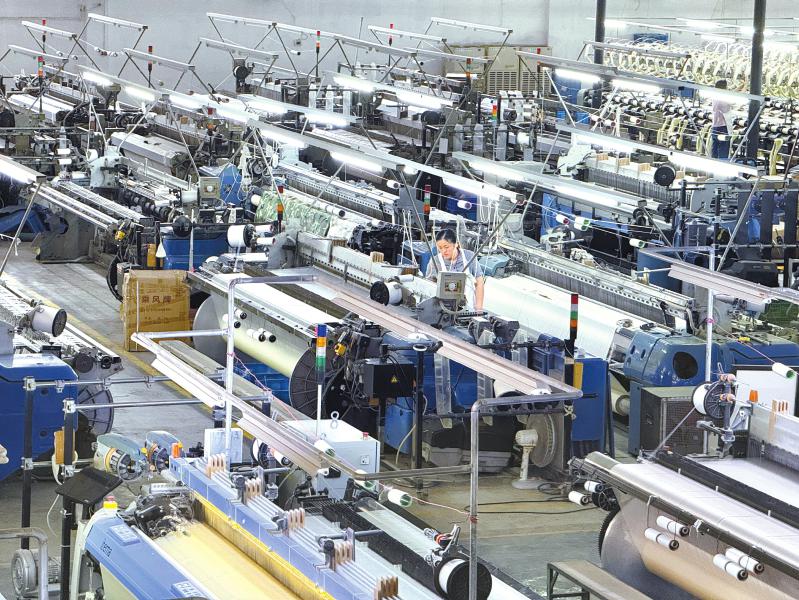
Core Viewpoint - The Ministry of Commerce and six other departments have issued a notice to enhance the silk industry in China, focusing on upgrading processing capabilities and promoting the transfer of silk weaving enterprises from eastern to western regions [1] Group 1: Industry Development - The initiative aims to improve the processing capacity of silk fabrics by supporting enterprises in upgrading their existing production lines [1] - Traditional silk weaving companies are encouraged to optimize their efficiency through this initiative [1] - The plan includes attracting silk weaving enterprises from regions like Zhejiang and Jiangsu to establish operations in the western areas, creating a silk textile processing industrial park [1] Group 2: Technological Advancement - The notice emphasizes the need for upgrading weaving technology and equipment, promoting the application of new technologies such as new shuttle weaving and wide-width electronic jacquard [1] - The goal is to enhance production efficiency through these technological improvements [1] Group 3: Product Innovation - There is a focus on promoting innovation in silk fabrics, including the development of composite, differentiated, and functional new silk materials [1] - The initiative aims to optimize the product structure within the silk industry [1] Group 4: Enterprise Cultivation - The plan includes fostering a group of specialized, innovative small and medium-sized enterprises in the silk industry, as well as champion manufacturing enterprises [1]