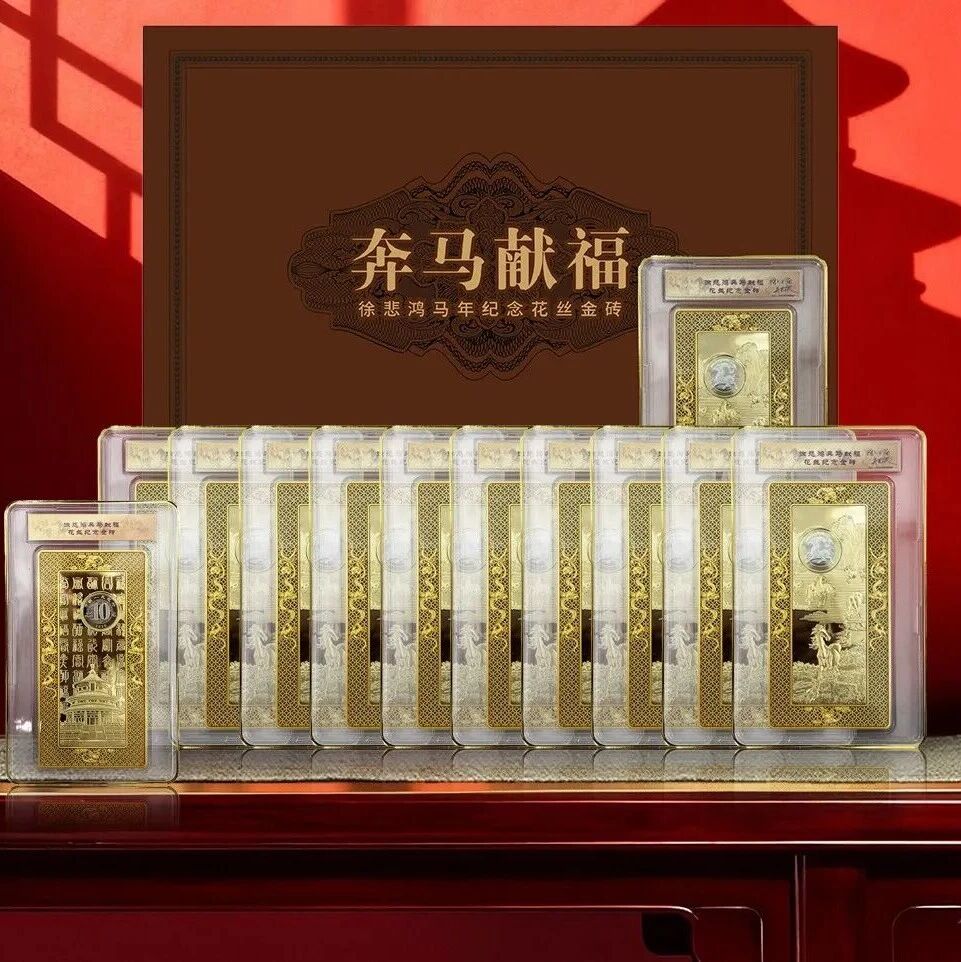
徐悲鸿奔马花丝纪念金砖

Search documents
别乱买马年纪念币!这款「奔马献瑞花丝金砖」才是真黑马
凤凰网财经· 2026-03-15 15:36
Core Viewpoint - The article highlights the significance and value of the "Xu Beihong Galloping Horse Flower Silk Commemorative Gold Brick," emphasizing its artistic craftsmanship and cultural heritage, making it an attractive collectible for both art enthusiasts and the general public [1][10][23]. Group 1: Artistic and Cultural Significance - The "Flower Silk Inlay" technique, a national intangible cultural heritage, has a history of over 4,000 years and is known for its intricate craftsmanship and use of precious materials, traditionally reserved for royalty [1][40]. - The commemorative gold brick features high-relief, fine carving, and micro-carving techniques, showcasing Xu Beihong's iconic "Galloping Horse" artwork, creating a three-dimensional visual experience [3][5]. - The collaboration between top institutions in the art and minting sectors adds credibility and prestige to the collectible, ensuring its value and quality [13][25]. Group 2: Market Potential and Collectibility - Xu Beihong's "Galloping Horse" artwork has seen explosive market demand, with prices reaching millions, indicating a strong potential for appreciation in value [9][46]. - The commemorative gold brick is positioned as a high-value collectible, combining traditional craftsmanship with modern artistic elements, making it a desirable item for collectors [48][50]. - Limited production of only 5,000 sets, along with various certificates of authenticity, enhances its exclusivity and investment appeal [57][54]. Group 3: Accessibility and Affordability - The gold brick is priced at an accessible level, starting at 198 yuan, making it feasible for ordinary consumers to acquire a piece of high-quality art [15][59]. - The product is marketed as an ideal gift for the upcoming New Year, combining cultural significance with practical value, appealing to a wide audience [63][75]. - The article emphasizes the unique opportunity for collectors to own a piece of art that was previously only available in museums, now made accessible for personal enjoyment [45][41].