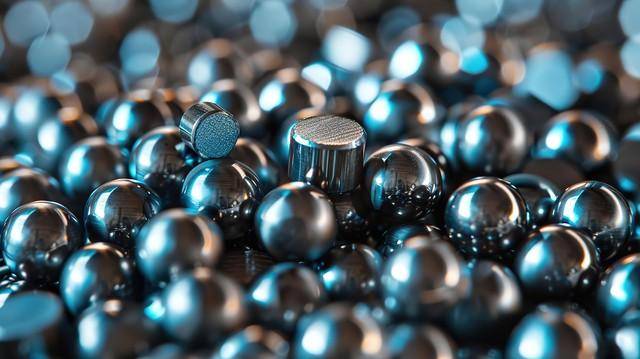
微米级钨珠

Search documents
钨珠战争:美国加税353%,中国为何沉默反击?
Sou Hu Cai Jing· 2025-11-29 10:37
Core Viewpoint - The recent announcement by the U.S. to impose tariffs of up to 353% on tungsten beads from China highlights a strategic concern regarding supply chain dependencies in high-tech industries, despite the lack of strong domestic backlash in China [1][3]. Group 1: Importance of Tungsten Beads - Tungsten beads are not merely ordinary metal beads; they are critical high-tech strategic materials used in aerospace engines, missile guidance systems, and semiconductor manufacturing due to their high melting point, hardness, and resistance to corrosion and high temperatures [3]. - The U.S. tariff on tungsten beads reflects anxiety over supply chain vulnerabilities, as many high-tech products cannot be produced without them [3]. Group 2: China's Position in Tungsten Industry - China holds over 80% of the global tungsten supply and has established a competitive advantage through technological barriers across the entire industry chain, rather than through low-cost dumping [5]. - Chinese companies have mastered core patents in areas such as ultra-fine tungsten powder preparation and spherical tungsten bead formation, making them indispensable suppliers even to European and American firms [5]. Group 3: Strategic Response to Tariffs - The lack of a strong rebuttal from China can be attributed to the relatively small export value of tungsten beads compared to their strategic importance, as well as China's shift from being a raw material exporter to a technology leader [7]. - Chinese firms are focusing on high-end customized products that are not affected by the tariffs, effectively countering the impact of U.S. trade barriers through technological advancements [7]. Group 4: Future Trends in the Tungsten Industry - The tungsten bead dispute signifies a broader trend where resource competition is evolving into technology competition, with China aiming to extend its reach into downstream applications such as tungsten alloy 3D printing materials and high-temperature components for nuclear power [9]. - China is also taking steps to establish industry standards, having led the development of international standards for tungsten product particle size detection in 2023, which positions it as a key player in setting global quality benchmarks [9].