戈壁温室技术

Search documents
一支科研“国家队”的组团式援疆
Zhong Guo Xin Wen Wang· 2026-02-26 02:30
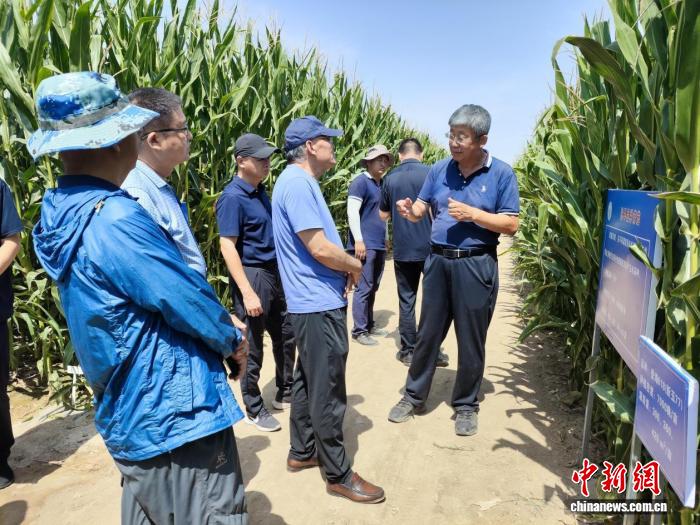
Core Viewpoint - The Chinese Academy of Agricultural Sciences (CAAS) is implementing a "team-based" aid strategy in Xinjiang, focusing on long-term agricultural modernization and development through the establishment of research teams that integrate resources and expertise from across the country [1]. Group 1: Agricultural Innovations and Achievements - By 2025, the average yield of corn in the Ili region is expected to reach 1209.1 kg per mu, with corn production contributing over 80% to the total grain increase in Xinjiang [2]. - The CAAS's grain production innovation team has successfully implemented high-density corn planting techniques, achieving full coverage in regions like Ili and Changji, significantly boosting corn yields [2]. - The introduction of the "Zhongyou Pan" variety by the fruit and tree quality improvement team has resulted in an income exceeding 20,000 yuan per mu, benefiting over a thousand farmers in the region [2]. Group 2: Technological Advancements - The greenhouse technology developed by the facility agriculture team has reduced production costs by 30%, water usage by 50%, and increased energy efficiency by over 60% in the Gobi Desert [4]. - A network of 1,990 monitoring points for plastic film pollution has been established across 68 counties, achieving a plastic film recovery rate exceeding 85% [5]. - High-level research platforms, including the National Agricultural Biosecurity Science Center and several key laboratories, are enhancing agricultural technology innovation capabilities in Xinjiang [5]. Group 3: Talent Development and International Collaboration - CAAS has adopted a three-dimensional model of "dual exchange, joint training, and on-site service" to address talent shortages in Xinjiang, establishing a long-term stationed aid mechanism [6]. - Over 100 retired scientists and more than 500 young scientists have committed to working in Xinjiang, fostering a permanent agricultural technology workforce [6]. - Collaborative projects, such as the cotton "Belt and Road" joint laboratory in Uzbekistan and the animal P3 laboratory in Kazakhstan, extend the impact of these initiatives beyond Xinjiang to Central Asia [6]. Group 4: Economic Impact and Future Prospects - The walnut deep processing project in Aksu represents the largest scale in the country, transforming raw walnut sales into product sales through advanced extraction techniques [8]. - Techniques for watermelon cultivation have increased cost efficiency by over 1,000 yuan per mu in northern Xinjiang and over 800 yuan in southern Xinjiang [8]. - The comprehensive approach of the CAAS is not only enhancing food security and farmer income but also fostering local innovation and international cooperation, thereby gradually transforming the agricultural landscape of Xinjiang [8].