房屋建筑和市政基础设施工程施工图设计文件审查服务

Search documents
青海省房屋建筑和市政基础设施工程施工图设计文件审查管理办法
Xin Lang Cai Jing· 2026-01-11 19:16
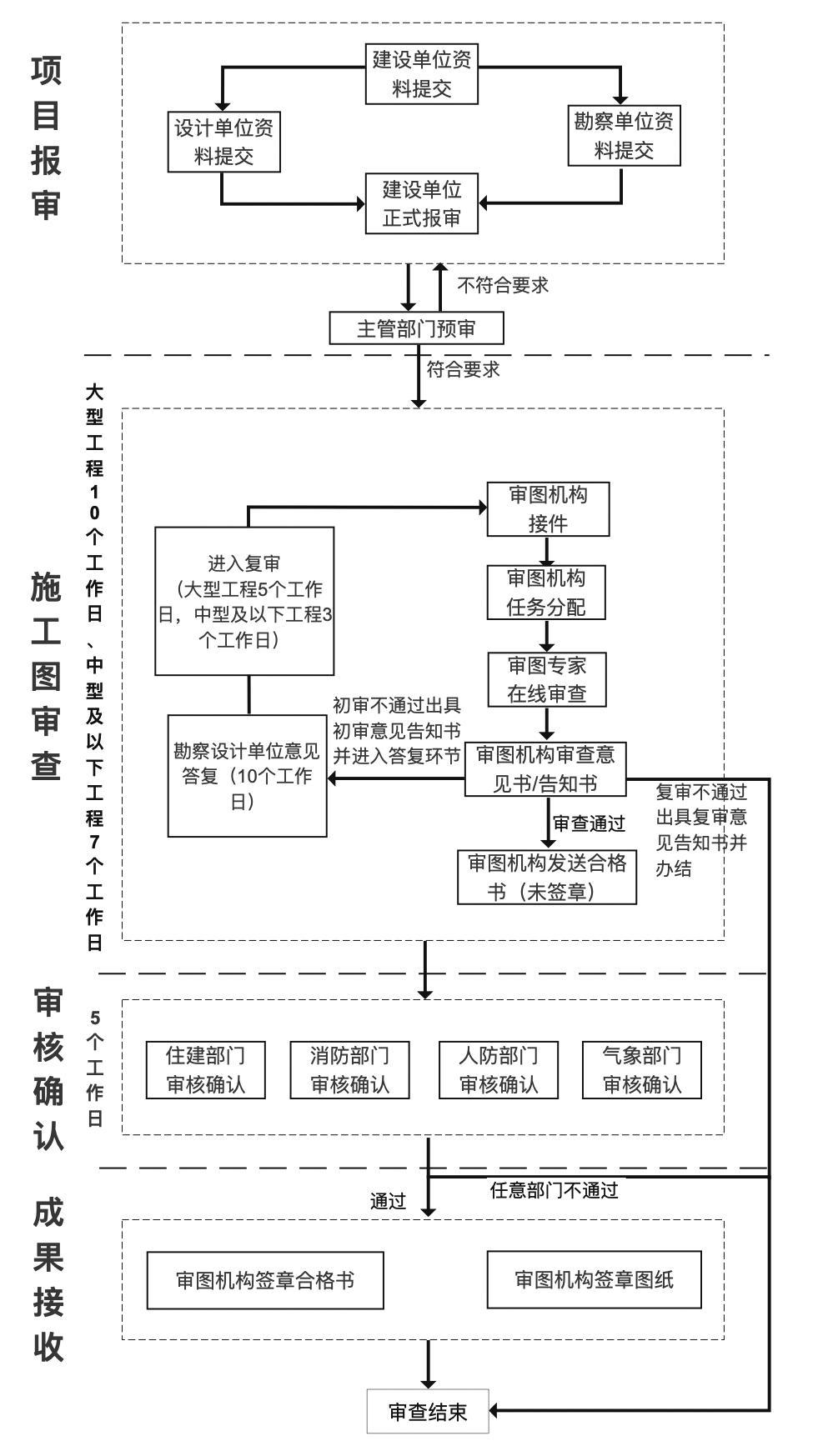
Core Viewpoint - The document outlines the regulations and procedures for the review and filing of construction drawings for housing and municipal infrastructure projects in Qinghai Province, aiming to enhance supervision, standardize review practices, and improve efficiency and service quality [6][7][8]. Group 1: General Principles - The regulations are established to strengthen the supervision and management of construction drawing design file reviews, ensuring compliance with various national and provincial laws [6]. - All construction projects, including new, renovated, or expanded buildings and specialized engineering projects, must undergo drawing review and management [6][7]. - The provincial housing and urban-rural development department is responsible for overseeing the review activities across the province [6][7]. Group 2: Review Process - The review process mandates a joint review system where all relevant design documents, including fire safety and human defense designs, must be submitted together for technical review [7]. - Small-scale projects that pose minimal risk may bypass pre-review requirements, allowing for expert validation instead [7][8]. - Drawings that have not been reviewed and approved cannot be utilized [8]. Group 3: Review Institutions Management - Review institutions must be independent legal entities with the necessary technical qualifications and are not profit-oriented [9]. - The number and scope of review institutions are determined by the provincial housing and urban-rural development department based on various criteria, including past review performance [9][10]. - Review institutions are categorized into three types based on their operational scope: Class I, Class II, and specialized institutions [11][12]. Group 4: Review Personnel Management - Review personnel must be selected from an expert database and cannot be employed by more than one review institution simultaneously [14][15]. - Both full-time and part-time reviewers must meet specific qualifications and undergo continuous education [19][20]. - Review personnel are prohibited from reviewing projects associated with their own organization or those with conflicts of interest [19][20]. Group 5: Project Application Management - The review process is digitized, with all stages managed through a unified system, ensuring accountability from the construction unit [20]. - Projects qualifying for a green channel can expedite the review process, allowing for preliminary construction permits while awaiting final approval [20][21]. - The application for review must include comprehensive documentation, including project progress reports and relevant government approvals [22][23]. Group 6: Quality Management - Review institutions and experts are responsible for ensuring that construction drawings comply with mandatory standards and safety regulations [29][30]. - Institutions must maintain thorough records of the review process and are liable for any damages resulting from non-compliance with legal standards [30][32]. - The review process must adhere to a one-time submission principle, with exceptions only for large or complex projects [24][25]. Group 7: Supervision and Management - Violations of the regulations by any involved parties will be recorded and may lead to penalties as per existing laws [50][51]. - Regular evaluations of review institutions will be conducted to ensure compliance and quality of service [51][52]. - Institutions failing to meet standards may face restrictions on their ability to conduct reviews and could be removed from the official list of review bodies [52][53].