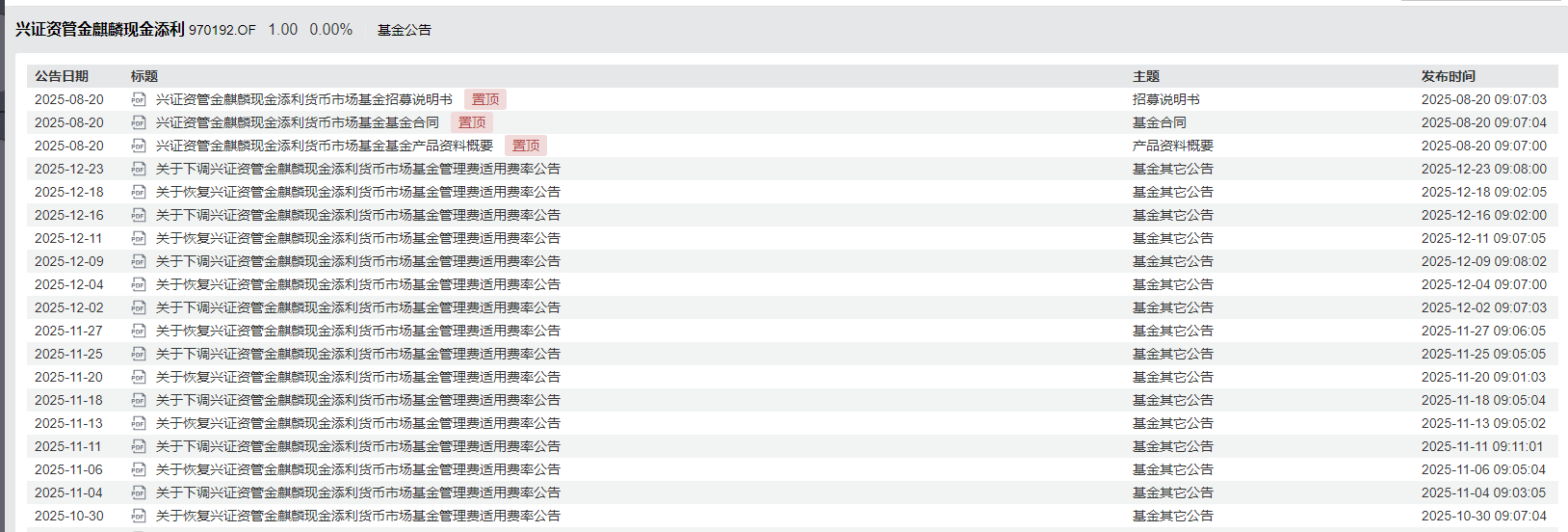
招商资管智远天添利

Search documents
“破1”潮下,货币基金规模逆势增超万亿
第一财经· 2025-12-24 01:43
Core Viewpoint - The decline in money market fund yields has raised questions about their value, yet their total scale continues to grow, indicating their ongoing importance as a cash management tool [3][10]. Group 1: Yield Trends - The average 7-day annualized yield of money market funds has dropped to 1.24%, down from 1.6% a year ago, and significantly lower than 2.18% in 2023, marking a decline of over 40% [5]. - No money market fund currently exceeds a 7-day annualized yield of 2%, with the highest yield being 1.86% for a specific fund, compared to 57 funds exceeding 2% last year [5]. - The number of funds with yields below 1% has increased 2.4 times year-on-year, with 93 funds currently in this category [5]. Group 2: Fund Management Fees - The decline in yields has triggered several funds to activate fee reduction clauses, with some adjusting management fees from 0.7% to 0.3% when yields fall below certain thresholds [6][8]. - A total of 17 funds have experienced similar fee adjustments in the past month, indicating a trend among funds with higher management fees [8]. Group 3: Market Position and Growth - Despite declining yields, the total scale of money market funds has surpassed 15.05 trillion yuan, accounting for 40.73% of the market, with an increase of 1.44 trillion yuan since the beginning of the year [10]. - The number of accounts holding money market funds has exceeded 2 billion, with an increase of nearly 7 million accounts in the first half of the year [10]. Group 4: Investment Value - Industry experts assert that money market funds remain essential for cash management, especially for novice investors or those with low risk tolerance, serving as a foundational investment product [11][12]. - For more experienced investors, money market funds provide liquidity and flexibility in asset allocation, while for institutional investors, they are crucial for cash management [12]. - The core reason for the growth of money market funds, despite yield declines, is their unchanged role as cash management tools, with a significant likelihood of continued stability in scale [12]. Group 5: Consumer Behavior and Product Integration - Many money market products are deeply integrated with consumer scenarios, enhancing user habits and solidifying their role as essential financial infrastructure [13]. - Fund companies are encouraged to deepen integration with market demands and improve user retention through fee reductions and enhanced service offerings [13].


“破1”潮下,货币基金规模逆势增超万亿
Di Yi Cai Jing Zi Xun· 2025-12-24 00:11
Core Insights - The average 7-day annualized yield of money market funds has dropped to 1.24%, with nearly 100 products yielding below 1%, raising questions about their investment value [2][3] - Despite declining yields, the scale of money market funds has surpassed 15 trillion yuan, indicating a continued interest from investors [2][7] - Industry experts believe that the core value of money market funds as cash management tools remains unchanged, suggesting future growth in scale [2][8] Yield Trends - The overall yield of money market funds has shown a downward trend, with the average yield dropping from 1.6% last year to 1.24% this year, a decrease of 0.36 percentage points [2][3] - No money market fund currently exceeds a 7-day annualized yield of 2%, with the highest being 1.86% [3] - A significant number of funds, 93, have yields below 1%, a 2.4-fold increase compared to last year [3][4] Fund Management Fees - The decline in yields has led to adjustments in management fees for several money market funds, with some reducing fees to maintain investor interest [4][6] - As of December 23, 17 funds have announced similar fee adjustments in response to yield changes [6] - Many of these funds have higher management fees due to their origins as asset management products, which may not align with typical public fund fee structures [6] Market Position and Growth - The scale of money market funds has increased by 1.44 trillion yuan since the beginning of the year, accounting for 40.73% of the total market [7] - The number of accounts holding money market funds has surpassed 2 billion, with an increase of nearly 7 million accounts in the first half of the year [7] - The growth in money market fund scale is attributed to funds moving from bond funds and the inclusion of money market funds in some wealth management products [7][8] Investment Value - Industry professionals assert that despite lower yields, money market funds remain essential for cash management, especially for novice investors [8][9] - For more experienced investors, money market funds serve as a foundational asset allocation tool, ensuring liquidity and flexibility [8][9] - The inherent characteristics of money market funds as cash management tools have not changed, suggesting limited potential for significant scale reduction in the future [9]

收益率“破1”进行时 货基规模为何能逆势创高
Sou Hu Cai Jing· 2025-12-23 17:07
Core Insights - The average 7-day annualized yield of money market funds has dropped to 1.24%, with nearly 100 products yielding below 1%, raising questions about their investment value [1][5] - Despite declining yields, the scale of money market funds has surpassed 15 trillion yuan, increasing by over 1 trillion yuan since the beginning of the year, indicating continued investor interest [1][5] - The number of accounts holding money market funds has exceeded 2 billion, with an increase of nearly 70 million accounts in the past six months, reflecting their ongoing appeal [1][5] Yield Trends - The overall yield of money market funds has shown a downward trend, with the average 7-day annualized yield falling from 1.6% last year to 1.24% this year, a decrease of 0.36 percentage points [1][2] - Currently, no money market fund has a yield exceeding 2%, with the highest being 1.86%, compared to 57 funds exceeding 2% last year [2] - A significant number of funds, 93, have yields below 1%, a 2.4-fold increase year-on-year [2] Fee Adjustments - Several funds have adjusted their management fees in response to declining yields, with some reducing fees to 0.3% when yields fall below certain thresholds [3][4] - A total of 17 funds have implemented similar fee adjustments recently, indicating a trend among funds transitioning from asset management products to money market funds [3][4] - High management fees have been noted in some funds, with 21 funds having fees exceeding 0.5%, which is relatively high compared to the average [3][4] Value Proposition of Money Market Funds - Industry experts assert that despite lower yields, money market funds remain essential for cash management, providing liquidity and stability for investors [5][6] - Money market funds are viewed as a foundational asset for both novice and experienced investors, offering a safe entry point into investment [6][7] - The integration of money market funds with consumer payment scenarios has solidified their role as a fundamental financial infrastructure, making them less replaceable [7]
“破1”潮下规模逆势增超万亿!货基靠什么“圈粉”?
Di Yi Cai Jing· 2025-12-23 12:03
Core Viewpoint - The decline in average 7-day annualized yield of money market funds (MMFs) to 1.24% has raised questions among investors about the value of investing in these funds, especially as nearly 100 products yield below 1% [1][7] - Despite the low yields, the total scale of MMFs has increased, surpassing 15 trillion yuan, indicating a continued demand for these funds as cash management tools [1][7] Group 1: Yield Trends - The average 7-day annualized yield for MMFs has decreased significantly from 1.6% last year to 1.24%, marking a decline of 0.36 percentage points [1][2] - No MMFs currently yield over 2%, with the highest yield being 1.86%, compared to 57 funds yielding over 2% last year [2] - A significant number of funds, 93, now have yields below 1%, a 2.4 times increase year-on-year [2] Group 2: Fund Size and Investor Behavior - The total scale of MMFs has grown by over 1 trillion yuan since the beginning of the year, reaching 15.05 trillion yuan, which constitutes 40.73% of the total market [7] - The number of accounts holding MMFs has exceeded 2 billion, with an increase of nearly 7 million accounts in the first half of the year [8] - The growth in MMF size is attributed to funds being redirected from bond funds and the inclusion of MMFs in some wealth management products [8] Group 3: Fee Adjustments and Management - Several MMFs have adjusted their management fees in response to declining yields, with some lowering fees to 0.3% when yields fall below certain thresholds [3][5] - A trend of passive fee reductions has been observed, with 17 funds making similar adjustments in the past month [4][5] - High management fees are prevalent in some MMFs, particularly those designed for institutional clients, which may not align with the general market fee levels [6] Group 4: Value Proposition of MMFs - Industry experts assert that despite declining yields, MMFs retain their core value as essential cash management tools, particularly in a low-interest-rate environment [1][9] - MMFs are viewed as suitable for risk-averse investors and as foundational assets for more sophisticated investors, providing liquidity and flexibility [9][10] - The integration of MMFs with consumer payment scenarios has solidified their role as a fundamental financial infrastructure, making them less replaceable [9][10]
曾经“一招鲜”,券商保证金产品正待突围之道
Xin Lang Cai Jing· 2025-04-27 09:54
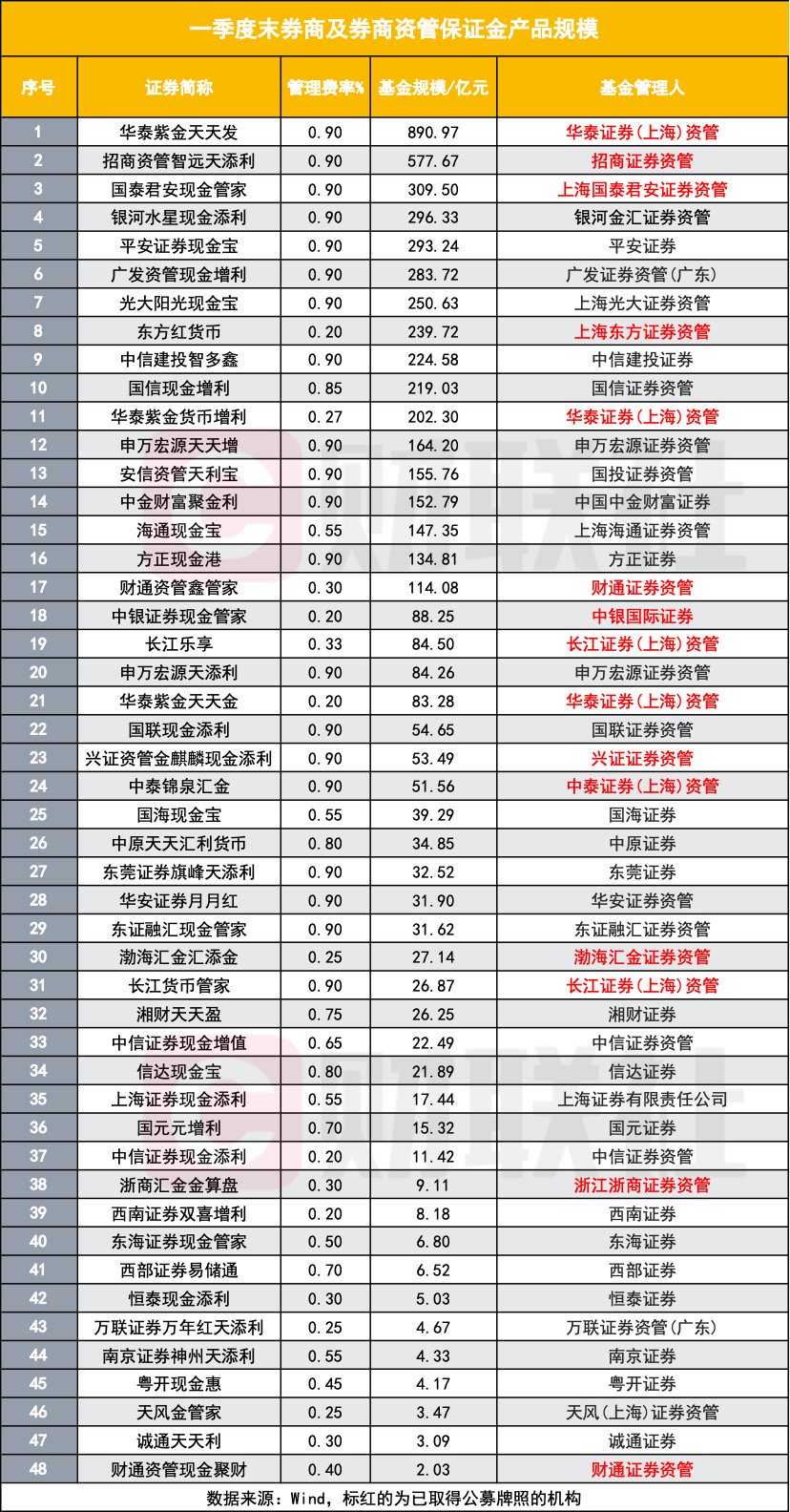
Group 1 - The core viewpoint of the articles highlights the challenges faced by brokerage margin products, which are experiencing pressure to transition to a public offering model due to high management fees and regulatory requirements [1][9] - As of the end of Q1, the total scale of brokerage margin products reached 555.3 billion yuan, with 74% of these products having a management fee rate of 0.9% [2][9] - The market is characterized by a "stronger getting stronger" phenomenon, with the top ten products accounting for 65% of the total market scale [2][9] Group 2 - The top three brokerage products by scale are Huatai Securities' "Huatai Zijin Tiantianfa" at 89.1 billion yuan, followed by "Zhaoshang Zichan Zhiyuan Tiantianli" at 57.8 billion yuan, and "Guotai Junan Cash Manager" at 30.9 billion yuan [2][3] - The concentration of assets among leading institutions is evident, with Huatai Securities, Zhaoshang Asset Management, and Guotai Junan collectively holding 32% of the market [2][3] Group 3 - The transition to a public offering model is urgent, as brokerage margin products face a potential reduction in management fees from 0.9% to an average of 0.23%, which could lead to a loss of over 2.7 billion yuan in annual revenue for the industry [1][9] - Despite the fee reduction pressure, brokerage margin products maintain competitive advantages such as T+0 real-time redemption and automatic subscription features, which cater to investors' liquidity needs [10][11] Group 4 - The promotion strategies of brokerages significantly influence the scale of their margin products, with some firms not prioritizing these products in their offerings [4][6] - Certain brokerages automatically enroll clients in margin products during account setup, which can lead to increased participation but may also raise compliance concerns [8]