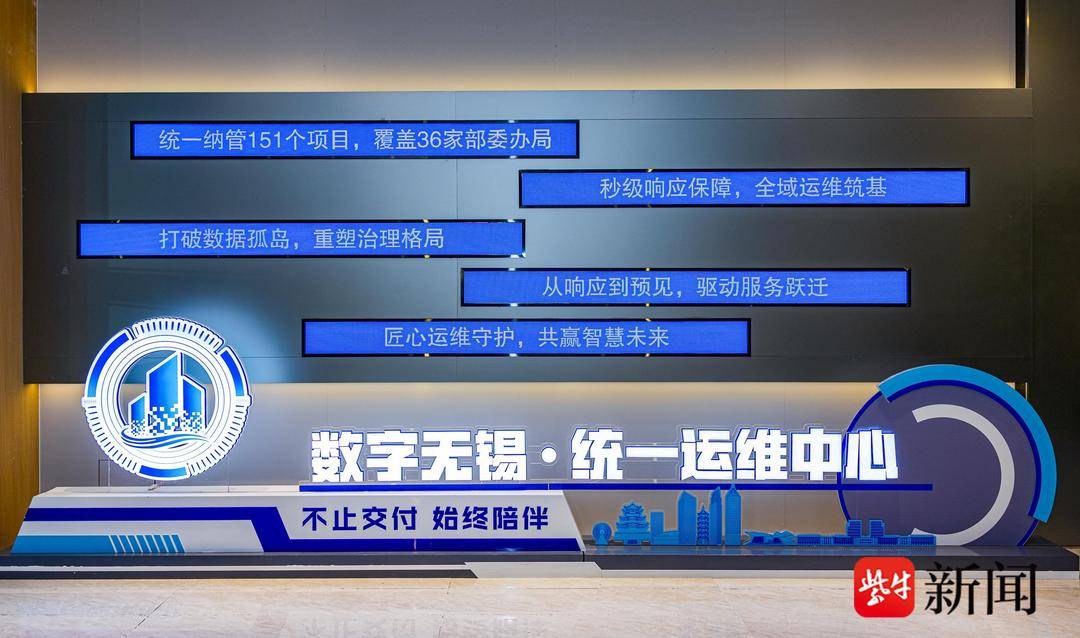
数字无锡.统一运维中心

Search documents
全国首个城市级“运维大脑”,数字无锡统一运维中心正式启用
Yang Zi Wan Bao Wang· 2025-11-25 12:52
Core Insights - The article discusses the launch of the "Digital Wuxi Unified Operation and Maintenance Center," which marks a shift from traditional "turnkey projects" to a "companion service" model throughout the system's lifecycle, aiming for cost reduction and efficiency improvement [2][5]. Group 1: Operational Changes - The new center represents a transition from a "delivery-type" model to a "proactive protection and continuous optimization" approach in government information system operations [2][5]. - The initiative addresses the long-standing issue in the government information sector of focusing more on construction than on maintenance, leading to delayed responses and disconnection between services and business needs [2][5]. Group 2: Implementation Strategy - The Wuxi Data Bureau and Finance Bureau collaborated to create a unified operation and maintenance work implementation plan, focusing on a "cost reduction and efficiency improvement" core goal with a "graded, classified, and phased" advancement strategy [2][5]. - The center has integrated 151 municipal-level government information projects into a centralized operation and maintenance management framework, aiming for a 20% reduction in total operation costs by 2027 compared to 2023 [5][6]. Group 3: Technological Integration - The center employs a dedicated service team and establishes a regular business demand research system, ensuring seamless integration between project delivery and long-term maintenance [2][3]. - It aims to transform the operation and maintenance work from "post-failure handling" to "proactive intervention and continuous optimization," enhancing the stability and efficiency of government systems [5][6]. Group 4: Future Goals - The ultimate goal is to achieve improvements in efficiency, safety, and centralized management across the city, creating a cohesive operational network for government data [6]. - The initiative also seeks to eliminate traditional "information silos" by connecting data across 36 municipal departments and 151 government information projects, enhancing data collaboration [5][6].