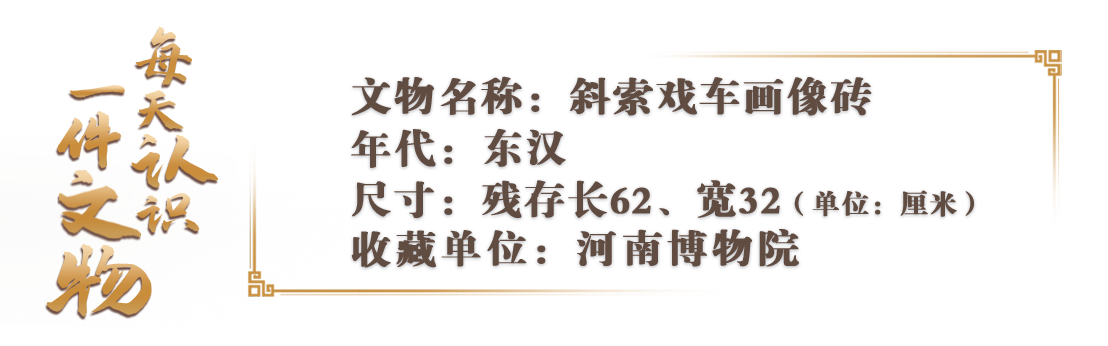
斜索戏车画像砖

Search documents
文化中国行·文博日历丨东汉砖头上竟有已经失传的超棒杂技 速看→
Yang Shi Xin Wen Ke Hu Duan· 2025-08-19 02:29
Core Viewpoint - The article highlights an ancient Han Dynasty brick that captures a thrilling acrobatic performance from 1800 years ago, showcasing the complexity and artistry of Han-era entertainment [2][4]. Summary by Sections Acrobatic Performance - The brick depicts a high-difficulty acrobatic act involving performers on a flying wire, demonstrating remarkable skills as they balance and climb [10][14]. - The performance features two horse-drawn carts with vertical poles, where performers execute intricate movements while the carts are in motion, emphasizing the combination of equestrian skills and acrobatics [14][16]. Historical Context - The integration of acrobatics with horse-drawn vehicles, known as "xiche," was a popular and challenging form of entertainment during the Han Dynasty, as documented in historical texts [16][18]. - The performance style reflects the cultural significance of chariots in ancient China, symbolizing military prowess and societal status [14][16]. Variety of Han Dynasty Acrobatics - Han Dynasty acrobatics were diverse, including strength acts, body techniques, juggling, high-altitude performances, equestrian acts, and illusions, making it a vital part of both court and public entertainment [21][29]. - Specific acts included strength displays like "lifting pots," body techniques centered around balancing, juggling acts like "throwing balls," equestrian performances, and magical illusions [21][23][27]. Artistic Representation - The brick serves as a visual narrative, employing line and surface techniques to depict the dynamic nature of Han acrobatics, providing a glimpse into the vibrant life of that era [29].

文博日历丨东汉砖头上竟有已经失传的超棒杂技 速看→
Yang Shi Xin Wen· 2025-08-18 01:37
Core Viewpoint - The article highlights an ancient Han Dynasty brick that captures a thrilling acrobatic performance, showcasing the complexity and artistry of Han-era entertainment [2][4]. Summary by Sections Performance Description - The performance depicted on the brick features a two-tiered stage, with a leader on horseback and a performer shooting arrows [6][8]. - The most impressive part of the performance involves acrobats balancing on a flying wire while the chariots are in motion, demonstrating high difficulty and skill [10][12]. Historical Context - The integration of chariots and acrobatics in the Han Dynasty was a significant form of entertainment, known as "xiche" or "drama chariot," which was recorded in historical texts [16][18]. - The performance was characterized by its dangerous maneuvers, indicating its importance in the cultural and entertainment landscape of the time [20]. Variety of Acrobatic Arts - Han Dynasty acrobatics were diverse, including strength acts, body techniques, juggling, aerial performances, equestrian acts, and illusions [21][23]. - Acrobatics were prevalent in both court entertainment and public festivities, making them a vital part of leisure activities during the Han era [31]. Artistic Representation - The brick employs a combination of lines and surfaces to narrate the performance, serving as a key to understanding the vibrant life of the Han Dynasty [31].