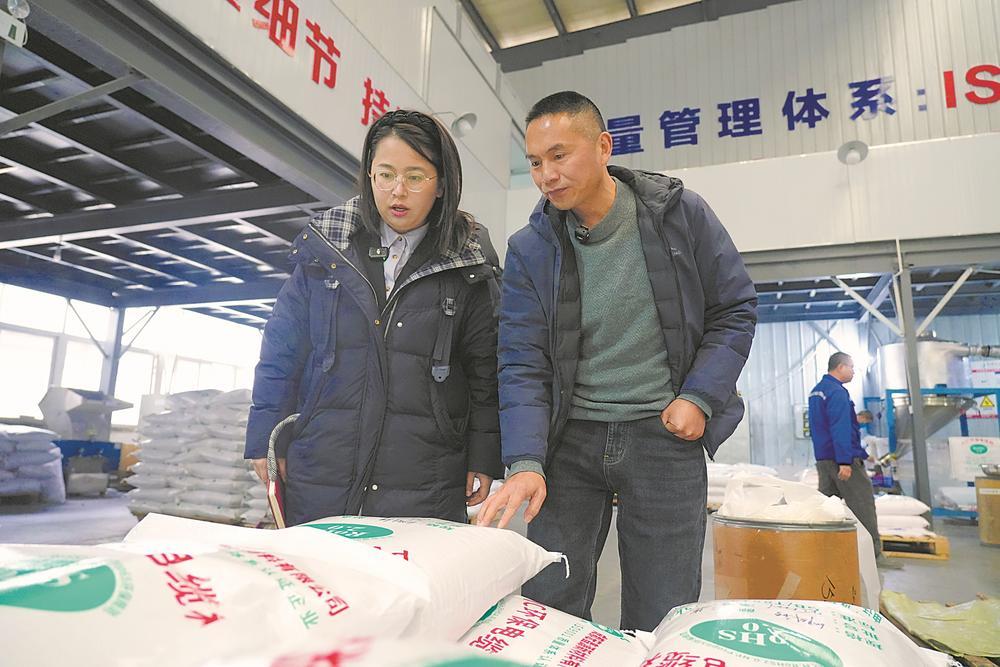
新型浅色电缆料

Search documents
给固废颗粒穿“外衣” 让传统电缆料获“新生”
Xin Lang Cai Jing· 2026-01-03 20:20
Core Viewpoint - The article highlights the innovative collaboration between academia and industry, specifically focusing on the role of a "Technology Vice President" in bridging the gap and driving sustainable development in the production of new materials for the cable industry [4][7]. Group 1: Company Overview - Chengdu Hongxinyuan New Materials Co., Ltd. is actively engaged in the production of PVC cable materials, facing challenges related to environmental compliance and cost efficiency [4][5]. - The company has successfully developed a new type of light-colored cable material that meets environmental regulations and reduces raw material costs by 1%-2%, achieving a product qualification rate of over 99% [5]. Group 2: Innovation and Technology - The focus of innovation is on developing a new antimony-free flame retardant system and a production technology for high solid waste-filled light-colored PVC cable materials, which are critical for the company's survival and growth [4][5]. - The approach taken involves a "core-shell" design where waste particles are coated with specialized flame retardant materials, enhancing both color and strength while providing superior flame retardant properties [5][6]. Group 3: Role of Academia - The "Technology Vice President" role, filled by a professor from Xihua University, aims to transform innovation from a one-time event into a continuous process, fostering a culture of innovation within the company [5][6]. - This role not only facilitates the application of academic research in practical settings but also enriches academic perspectives by addressing real-world challenges faced by industries [6][7]. Group 4: Policy and Future Directions - Chengdu's government is actively working on policies to support the "Technology Vice President" initiative, aiming to create a mechanism for shared benefits between academia and industry, promoting the transformation of research outcomes into practical applications [7].