
变废为宝

Search documents
赤泥等工业固废实现高效协同利用
Xin Lang Cai Jing· 2026-02-24 23:26
Core Insights - The project "Research and Application of Comprehensive Utilization of Industrial Solid Waste Materials such as Red Mud" has received the second prize for outstanding scientific research achievements in engineering technology from the Ministry of Education for 2025, marking a significant technological breakthrough in the resource utilization of red mud in China [1][2] - The project addresses the global challenge of sustainable development in the aluminum industry by introducing an innovative model for the comprehensive utilization of red mud, which is a highly alkaline solid waste produced during alumina production [1] Group 1 - Red mud is characterized by its high iron content and complex composition, making its resource utilization challenging and posing environmental risks when stored traditionally [1] - The project team has developed a new model of "source reduction + high-value transformation," overcoming key technical bottlenecks such as low cementitious activity and harmful ion migration [1] - The technology enables the efficient collaborative utilization of red mud with other industrial solid wastes like coal gangue and fly ash, achieving a total incorporation rate of 95% in the building materials produced [1] Group 2 - The technology has been successfully demonstrated in a road engineering project at a red mud storage site in Xing County, Shanxi, resulting in the construction of a 3.2-kilometer red mud-based road [2] - The project has led to a 20% reduction in construction costs, with the road showing no settlement or cracking after five years of use, while also exhibiting excellent environmental performance and durability [2] - Experts in the industry have evaluated the overall results as reaching an internationally leading level, providing core technical support for large-scale comprehensive utilization of red mud in China [2]
一半都是“二手”物料,这个乐园却引粉丝无数
Xin Lang Cai Jing· 2026-02-20 01:07
Core Viewpoint - The "Dawan Chicken" event at the Olympic Sports Carnival is a successful initiative that repurposes materials from the 15th National Games and the Special Olympics, promoting a concept of sustainable event management and community engagement [2][3]. Group 1: Event Highlights - The "Dawan Chicken" mascot made a lively appearance at the carnival, attracting significant attention from children and visitors [2]. - The carnival features a special performance area named "Immediate Turnaround," where the mascot interacts with attendees, enhancing the festive atmosphere [2]. - The park includes notable repurposed items from the 15th National Games, such as a giant lobster and various event props, showcasing the creative reuse of materials [2]. Group 2: Community Engagement - The event's planning involved public feedback, leading to adjustments such as retaining the "Dawan Chicken" logo based on community suggestions [3]. - Visitors expressed appreciation for the initiative to repurpose event materials, highlighting the importance of sustainability and reducing waste [3]. - The carnival allows citizens to experience the spirit of the 15th National Games, fostering a deeper understanding of the city's culture and sportsmanship [3]. Group 3: Performance and Activities - During the Spring Festival, "Dawan Chicken" will perform 12 shows daily, utilizing various interactive formats to enhance the visitor experience [4]. - The temporary amusement park effectively integrates event props into the celebrations, ensuring that the legacy of the games continues to resonate with the community [4].


磁分离技术把危废转化为资源
Ke Ji Ri Bao· 2026-02-11 10:07
Core Insights - The company has implemented a magnetic separation technology to transform waste balance agents into reusable low-magnetic products, enhancing the efficiency and environmental sustainability of its operations [1][2] Group 1: Technology and Innovation - The magnetic separation technology allows for the precise selection of balance agents, effectively capturing and separating low-heavy metal content portions, which can be reused in the heavy oil catalytic cracking unit [2] - This innovation reduces the overall heavy metal pollution in the balance agents, improving the conversion rate of heavy oil and the yield of high-value light oil [2] Group 2: Economic and Environmental Impact - By reusing 1 ton of treated low-magnetic agents, the company can reduce the hazardous waste output by 3 tons and replace 0.6 tons of fresh catalyst [2] - The application of this technology is projected to save approximately 260 tons of fresh catalyst annually and decrease hazardous waste output by nearly 1600 tons, generating direct economic benefits exceeding 1 million yuan [2]

供热减碳不搞 “一刀切”!余热反哺 + 生物质可兜底破局
Zhong Guo Neng Yuan Wang· 2026-01-22 07:20
Core Insights - The low-carbon transition in heating energy is crucial for building a new energy system and achieving carbon neutrality goals, with policies promoting clean energy development and pollution reduction in the heating industry [1][2] Group 1: Challenges in Transition - Northern provinces like Shandong and Hebei face two main challenges: the need to eliminate numerous small coal-fired power plants and the rising costs of heating for rural households due to coal-to-gas initiatives [1][3] - The total thermal energy demand for industrial and building operations in China is projected to reach 24 billion gigajoules annually, with traditional coal boilers potentially emitting 2.6 billion tons of CO2 [1][2] Group 2: Innovative Solutions - A systematic reconstruction of thermal supply is necessary, moving beyond traditional combustion methods. High-temperature gas-cooled reactor technology is seen as ideal for high-parameter steam needs, while urban waste heat could provide over 25 billion gigajoules of potential resources for medium and low-parameter heating [2][5] - The construction of extensive waste heat distribution networks and seasonal heat storage facilities can create a "waste heat sharing" network, converting waste heat into valuable resources [2][6] Group 3: Addressing Rural Heating Needs - The challenges of clean heating in rural areas are significant, impacting the warmth and well-being of many households. Issues include limited electricity and gas resources, as well as the financial burden of clean heating solutions [3][4] - Utilizing agricultural waste as biomass resources to create composite fuels can provide a cost-effective alternative to coal, achieving better emissions outcomes [4][6] Group 4: Policy and Industry Collaboration - The transition involves both long-term systemic solutions for zero-carbon heat sources and immediate strategies to address rural heating challenges, emphasizing the need for technological innovation and supportive policies [5][6] - The development of heat pump technologies and waste heat networks is expected to be a long-term solution for rural heating, while biomass composite fuels may serve as a transitional bridge [6]
以发展“含绿量”提升增长“含金量” 看浙江三“变”|活力中国调研行
Ren Min Ri Bao· 2026-01-19 06:43
Group 1: Energy Transformation - The Zhoushan LHD marine tidal energy power station utilizes underwater "wind turbines" to convert tidal movements into green electricity [1] - The Meishan Port area has achieved a container throughput of 7.4782 million TEUs from January to July 2025, a year-on-year increase of 14.66% [2] - The Meishan Port's wind-solar-storage integrated project has generated over 40 million kilowatt-hours of electricity since its operation, reducing carbon emissions by approximately 24,000 tons [2] Group 2: Industrial Upgrading - The Huzhou "transformation financial loan" supports Hongchang Aluminum's production line upgrade, enhancing energy efficiency and productivity [1] - The Jiaxing Port area has deployed 100 hydrogen-powered trucks, saving approximately 3 million yuan annually compared to traditional fuel vehicles and reducing carbon emissions by about 5,000 tons [3] - The Shaoxing Shangyu District has transformed a traditional chemical park into a hub for strategic emerging industries, with the new materials industry expected to exceed 100 billion yuan in output value by 2024 [4] Group 3: Waste to Resource - Agricultural waste such as straw and citrus peels is being converted into bio-based fuels, contributing to carbon reduction efforts [7] - The "blue circular" model for marine plastic waste management has successfully recovered 58,000 tons of marine plastic waste, reducing carbon emissions by 52,200 tons [7] Group 4: Green Industry Development - Zhejiang is actively cultivating green low-carbon industries, with a focus on developing green technologies and products, leading to the emergence of several hundred billion yuan recycling resource industries [8] - The region emphasizes ecological priority and green low-carbon development, driving a transformation in production and economic structure [8]
绿染将军山 双河换新颜
Xin Lang Cai Jing· 2026-01-14 18:39
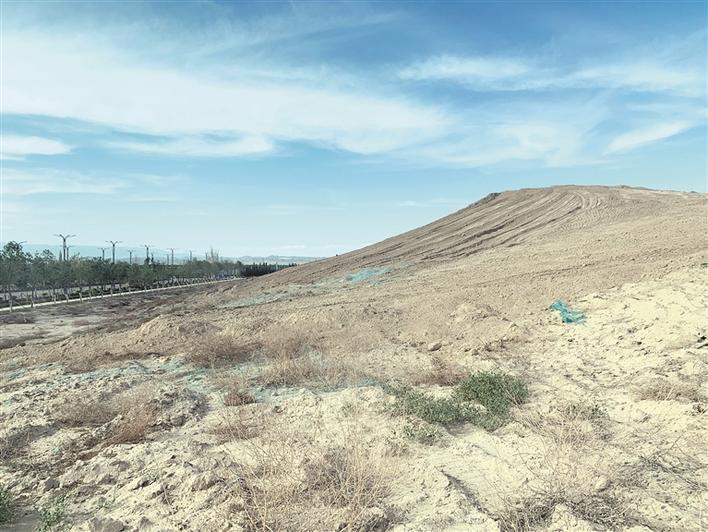
Core Viewpoint - The transformation of the Jiangjun Mountain Park in Wushi Shuanghe City exemplifies successful ecological restoration, turning a former construction waste site into a vibrant urban park, highlighting the "turning waste into treasure" philosophy and contributing to the city's sustainable development [3][5]. Group 1: Ecological Restoration Efforts - The ecological restoration project began in 2019, converting approximately 115 million cubic meters of construction waste into a 20.78-hectare artificial mountain [3][6]. - Four major initiatives were implemented: reshaping the waste pile, covering with 450,000 cubic meters of planting soil, creating landscapes with various plant species, and enhancing recreational facilities [4]. Group 2: Environmental and Economic Impact - The project has resulted in the addition of over 170,000 square meters of green space, significantly improving the urban microclimate, reducing noise, and purifying the air [4]. - The effective utilization of construction waste has saved processing costs by 90 million yuan, eliminating environmental risks associated with open waste storage [6].
给固废颗粒穿“外衣” 让传统电缆料获“新生”
Xin Lang Cai Jing· 2026-01-03 20:20
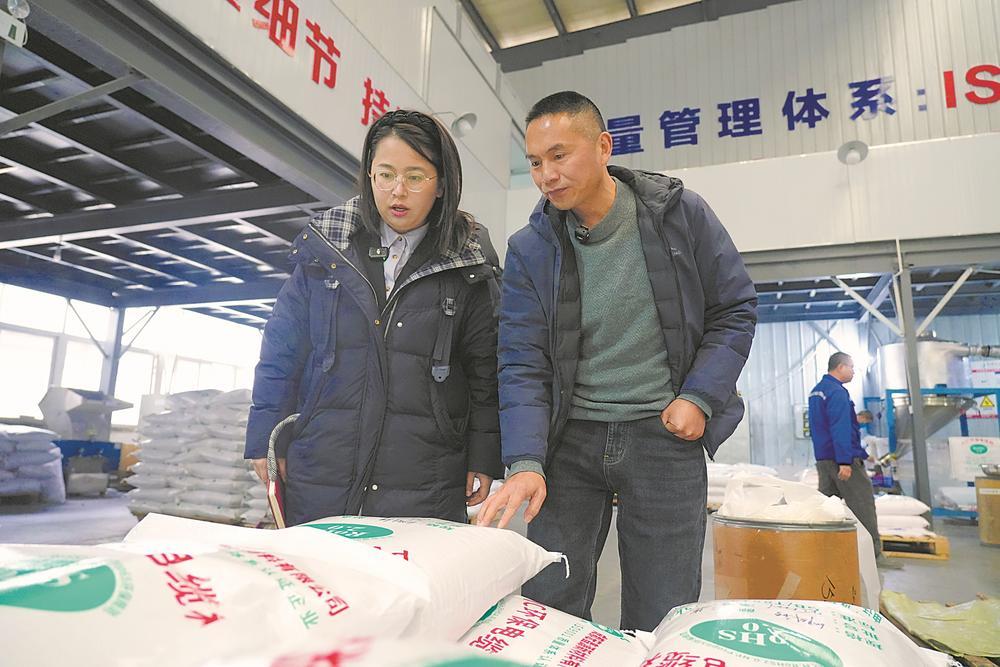
Core Viewpoint - The article highlights the innovative collaboration between academia and industry, specifically focusing on the role of a "Technology Vice President" in bridging the gap and driving sustainable development in the production of new materials for the cable industry [4][7]. Group 1: Company Overview - Chengdu Hongxinyuan New Materials Co., Ltd. is actively engaged in the production of PVC cable materials, facing challenges related to environmental compliance and cost efficiency [4][5]. - The company has successfully developed a new type of light-colored cable material that meets environmental regulations and reduces raw material costs by 1%-2%, achieving a product qualification rate of over 99% [5]. Group 2: Innovation and Technology - The focus of innovation is on developing a new antimony-free flame retardant system and a production technology for high solid waste-filled light-colored PVC cable materials, which are critical for the company's survival and growth [4][5]. - The approach taken involves a "core-shell" design where waste particles are coated with specialized flame retardant materials, enhancing both color and strength while providing superior flame retardant properties [5][6]. Group 3: Role of Academia - The "Technology Vice President" role, filled by a professor from Xihua University, aims to transform innovation from a one-time event into a continuous process, fostering a culture of innovation within the company [5][6]. - This role not only facilitates the application of academic research in practical settings but also enriches academic perspectives by addressing real-world challenges faced by industries [6][7]. Group 4: Policy and Future Directions - Chengdu's government is actively working on policies to support the "Technology Vice President" initiative, aiming to create a mechanism for shared benefits between academia and industry, promoting the transformation of research outcomes into practical applications [7].
故事里的黑龙江·我的“十四五” (22)|科技点金之变废为宝
Xin Lang Cai Jing· 2025-12-26 19:02
Group 1 - The core idea of the articles revolves around the innovative approach to treating corn soaking wastewater, transforming it into fertilizers and animal feed, thus addressing environmental pollution concerns [1][2]. - Wang Zhigang, a prominent scholar in the field of microbiology, has led significant advancements in the industrial application of microbial resources, resulting in over 80 published papers and 21 authorized patents [1][2]. - The new technology developed allows for the biological fermentation of wastewater at room temperature, achieving low energy consumption and zero pollutant discharge, which is a breakthrough for the bio-industry in China [2]. Group 2 - Heilongjiang Province is the largest corn production base in China, accounting for 16% of the national output, and leads the country in corn processing, with wastewater from the soaking process representing 30% of the national total [2]. - The research outcomes have been successfully transferred to Zhongke Liyuan Environmental Technology Co., Ltd. for 20 million yuan, setting a record for the conversion of research achievements from provincial universities [2]. - Collaborations with well-known companies such as Feihe Dairy and Yihai Kerry have enabled the practical application of research findings, demonstrating a commitment to integrating scientific innovation with rural revitalization and regional development [3].
你穿的摇粒绒,可能是塑料瓶变的
Xin Lang Cai Jing· 2025-12-19 17:24
Group 1 - The core idea of the article is the transformation of plastic bottles into fleece fabric, highlighting the environmental benefits and innovative processes involved in this recycling method [1][7]. - Fleece and plastic bottles share a common raw material, PET (polyethylene terephthalate), but they are not equivalent; the processing methods and properties differ significantly [2][3]. - The recycling process involves four main steps: cleaning the plastic bottles, melting and purifying the material, modifying the molecular structure, and finally spinning the fibers into fleece fabric [4][5][6]. Group 2 - China can recycle 20 billion plastic bottles annually into fleece, which could wrap around the Earth 30 times, and the carbon footprint of this production process is reduced by 60% compared to traditional fabrics [7]. - Not all fleece is made from recycled plastic bottles; most polyester fibers still come from petroleum, and recycled options are not yet mainstream due to higher costs and limited raw materials [8]. - Major brands like Adidas and H&M plan to switch half of their clothing lines to recycled polyester, and consumers can identify these products by looking for labels indicating "recycled polyester" or "rPET" [8].
黑龙江省七台河市:点石成金,一座煤城的绿色蝶变
Ke Ji Ri Bao· 2025-12-17 00:50
Core Insights - The article highlights the transformation of coal gangue into new building materials and energy products in Qitaihe City, Heilongjiang Province, showcasing a successful model of green development through technological innovation and policy support [1][4]. Group 1: Company Innovations - Yungao Company utilizes advanced automation production lines, consuming 700,000 tons of coal gangue annually and producing 600,000 sintered bricks daily, achieving a sales revenue of 25.3 million yuan in the first three quarters of the year, a 76% increase year-on-year [2]. - The company has implemented a circular model of "waste utilization—energy recovery—product output," significantly improving the efficiency and environmental impact of coal gangue processing [2]. - Baichun Solid Waste Resource Technology Company has developed a new technology that allows for brick production without soil and coal, fully replacing clay with coal gangue, and has processed over 10 million tons of coal gangue since its establishment [2][3]. Group 2: Technological Advancements - The establishment of the first provincial engineering technology research center for solid waste coal gangue in Heilongjiang aims to customize treatment solutions based on regional waste characteristics, enhancing the technological capabilities in the industry [3]. - A partnership with China Energy Construction Group has been formed to process 5 million tons of coal gangue annually, alongside a new project with a total investment of 350 million yuan expected to generate an annual output value of 500 million yuan [3]. Group 3: Policy Support - The local government has introduced the "Qitaihe City Coal Gangue Pollution Prevention and Comprehensive Utilization Regulations," effective from October 1, 2024, to provide legal support for industry development [4]. - Various departments have issued technical guidance and tax incentives, promoting a positive cycle of "policy guidance—enterprise innovation—market drive" [4]. - The city has significantly improved its coal gangue utilization capacity, achieving 4.45 million tons in 2023, exceeding the annual target by 360,000 tons, and has enhanced air quality and land use in previously polluted areas [4].