
无人机外卖配送服务

Search documents
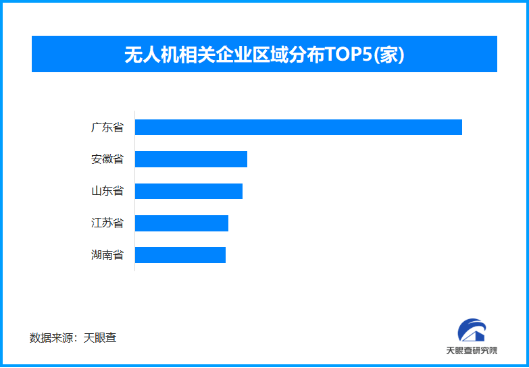
长江江面“外卖”从天降,现存无人机相关企业超3.6万家
Xin Lang Cai Jing· 2026-02-05 01:32
Group 1 - The article highlights an innovative service in Nanjing, where drones deliver food to cargo ships, showcasing advancements in logistics and technology [1][4] - Consumers and partners can assess the reliability of drone service companies by checking the management team's experience in drone operations and logistics [1][4] - The convenience of drone deliveries has significantly improved the lives of long-time sailors, who previously faced challenges in resupplying while at sea [5] Group 2 - As of now, there are over 36,000 drone-related companies in China, indicating rapid industry growth alongside challenges in technology, safety, and compliance [2][5] - Guangdong province leads in the number of drone-related companies, with over 7,300, accounting for 20% of the national total, followed by Anhui, Shandong, Jiangsu, and Hunan provinces [2][5] - Companies can utilize risk assessment tools to evaluate potential partners and market entry risks by examining various dimensions of judicial, operational, and regulatory risks [2][5]

万亿规模大市场前景诱人 低空经济何时造福"寻常百姓家"
Zhong Guo Chan Ye Jing Ji Xin Xi Wang· 2025-06-15 22:43
Core Viewpoint - The establishment of a Low Altitude Economy Working Committee in China aims to explore and develop applications in the low-altitude economy sector, with significant market potential projected for the coming years [1][2]. Group 1: Market Potential - The Chinese Civil Aviation Administration predicts that the market size of the low-altitude economy will reach 1.5 trillion yuan (approximately 210 billion USD) by 2025 and 3.5 trillion yuan (approximately 490 billion USD) by 2035 [1]. - Currently, 30 provinces in China have included low-altitude economy development plans in their 2025 local government work reports, indicating a nationwide push for this sector [1]. Group 2: Application Scenarios - Low-altitude economy primarily focuses on urban air traffic, with potential applications in logistics, transportation, and tourism, which can significantly enhance traditional industries [2][3]. - The integration of low-altitude economy with traditional sectors, such as "low-altitude economy + tourism" and "low-altitude economy + transportation," is expected to create new products and travel methods [2]. Group 3: Challenges and Development - The low-altitude economy is still in its exploratory phase, requiring substantial work on standards, regulations, and infrastructure to support its growth [3][6]. - Experts suggest that it may take 2-3 years for low-altitude services to become commonplace in major cities like Guangzhou, Shenzhen, Chengdu, and Shanghai [4]. - Key challenges include technological advancements, safety regulations, and public acceptance of new air travel methods, which need to be addressed for successful implementation [5][6].