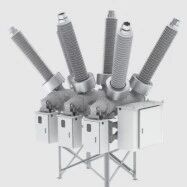
无SF6的环保型断路器

Search documents
落地罐式SF6断路器产业链及龙头企业行业最新趋势
QYResearch· 2025-12-12 02:22
Core Viewpoint - The article discusses the structure, functionality, and strategic importance of the Dead Tank SF6 Circuit Breaker, emphasizing its reliability, safety, and the industry's shift towards environmentally friendly alternatives to SF6 gas [1][2][4][26]. Industry Chain Analysis Upstream - The primary insulating and arc-extinguishing medium in Dead Tank SF6 Circuit Breakers is SF6 gas, known for its excellent dielectric strength and arc-extinguishing capabilities. However, due to its high global warming potential, the industry is exploring environmentally friendly alternatives like C4F7N, which offers similar performance with a significantly lower environmental impact [4][26]. - Key metal materials used in manufacturing include cast aluminum, cast steel, copper, and silver, which are essential for the structural integrity and electrical performance of the breakers. The industry is focusing on cost reduction through material optimization and advanced manufacturing techniques [5]. Midstream - Indoor Dead Tank SF6 Circuit Breakers are designed for installation in substations, featuring a compact structure that minimizes space usage while ensuring high reliability. However, they face challenges due to stringent environmental regulations regarding SF6 gas [8]. - Outdoor Dead Tank SF6 Circuit Breakers are built to withstand harsh environmental conditions, with robust designs that ensure reliability and safety. The industry is moving towards developing outdoor breakers that utilize environmentally friendly gases [9]. Downstream - In substations, Dead Tank SF6 Circuit Breakers play a critical role in controlling and protecting the power grid, ensuring safe operation during normal and fault conditions. Their design allows for high insulation strength and pollution resistance, making them suitable for high-voltage applications [10]. - In power plants, these breakers serve as a crucial interface between generators and the grid, ensuring safe energy transmission and protecting against faults. Their robust design is essential for maintaining operational reliability in challenging environments [11]. - In industrial high-voltage systems, Dead Tank SF6 Circuit Breakers are deployed to ensure continuous and safe power supply, acting as the main switch for complex internal networks [12]. Industry Leaders - Hitachi Energy offers a range of Dead Tank SF6 Circuit Breakers with voltage ratings up to 245 kV, focusing on reliability and compact design while integrating digital solutions for monitoring and management [14][15]. - Mitsubishi Electric provides a comprehensive line of gas-insulated circuit breakers, ensuring high reliability and supporting digital monitoring capabilities to meet modern smart grid requirements [18][19]. - Siemens Energy specializes in outdoor Dead Tank SF6 Circuit Breakers, focusing on extreme environmental adaptability and high performance, with a strong emphasis on sustainability and compliance with international standards [20][21]. Development Trends, Opportunities, and Challenges Development Trends - The industry is undergoing a significant transformation towards environmental sustainability and technological advancement, driven by the need to address the greenhouse gas emissions associated with SF6 [26][27]. - There is a clear trend towards developing SF6-free circuit breakers, with companies investing in alternative technologies and conducting field tests to validate their reliability under various conditions [27][28]. Opportunities - The next 5 to 15 years present a strategic growth window for Dead Tank SF6 Circuit Breakers, as many existing units reach the end of their operational life, particularly in regions like Europe and North America [30][31]. - The ongoing demand for large-scale hydropower and nuclear projects will continue to drive the need for high-voltage circuit breakers, ensuring a robust market for these products [30]. Challenges - The industry faces significant challenges in developing reliable alternatives to SF6, particularly in extreme conditions where new gases may not perform adequately [32]. - Economic barriers exist due to the higher costs associated with new materials and technologies, which may hinder widespread adoption of environmentally friendly circuit breakers [32][33]. - Supply chain vulnerabilities and intense competition within the industry further complicate the landscape, impacting innovation and profitability [33][34].