早期中国系列展览

Search documents
考古成果如何走出“象牙塔”
Ren Min Ri Bao Hai Wai Ban· 2025-10-08 22:11
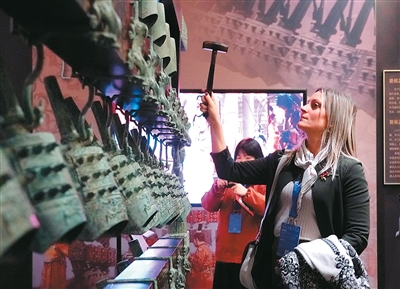
Core Viewpoint - The article highlights the integration of academic research and public engagement in archaeology exhibitions, showcasing how museums are utilizing technology and collaborative efforts to enhance the understanding and appreciation of Chinese civilization through archaeological findings [8][12][16]. Group 1: Exhibition Highlights - The "Archaeology and the Origins of Chinese Civilization Exhibition" at the China Archaeological Museum features precious artifacts that illustrate the development of human history and culture in China over millions of years [8]. - The "Taibao Yongyan - Fangshan Liuli River Site Special Exhibition" at the Capital Museum showcases 180 artifacts, including 113 items that are being exhibited for the first time [4][8]. - The "Early China" series of exhibitions at the Shaanxi History Museum has received public acclaim and multiple honors since its inception in 2017, focusing on the evolution of Chinese civilization from the Neolithic to the early Zhou period [9][12]. Group 2: Academic Support and Collaboration - Academic research is emphasized as a crucial foundation for public dissemination of archaeological findings, with museums integrating scholarly elements into their exhibitions to create engaging narratives [9][11]. - The establishment of the "Chinese Civilization Origin Academic Collaboration Unit" by the China Historical Research Institute and 16 archaeological institutions aims to enhance the academic depth and social impact of exhibitions [12]. - The Shaanxi History Museum employs a "1+N" model, where main exhibitions are supported by various public engagement activities, including lectures and online content [13]. Group 3: Technological Integration - The use of technology such as 3D scanning and VR is transforming the presentation of archaeological findings, allowing for interactive and immersive experiences that engage the public [14][16]. - The "Taibao Yongyan" exhibition utilizes digital sand tables and interactive screens to recreate historical contexts, making the experience more accessible and engaging for visitors [15][16]. - Museums are increasingly adopting a "technology-driven + multi-dimensional interaction" approach to make archaeological knowledge more relatable and enjoyable for the public [16]. Group 4: Visitor Engagement and Statistics - In the summer of 2025, national museums received 304 million visitors, marking a 2.6% increase from the previous year, indicating a growing public interest in cultural heritage [17].