智能云控制平台

Search documents
汇川储能新动作:剑指工业零碳蓝图
行家说储能· 2025-08-15 10:37
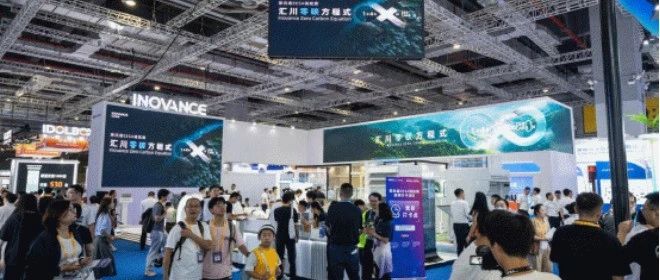
Core Viewpoint - The article highlights the launch of Huichuan Technology's industrial zero-carbon strategy, termed "1+4+X=0," at the 4th China International Energy Storage Exhibition, emphasizing the integration of automation and energy management for low-carbon transformation [2][4][6]. Group 1: Industrial Zero-Carbon Strategy - Huichuan's zero-carbon formula consists of one ecological cooperation framework, four flows (energy flow, process flow, information flow, equipment flow), multiple industries, and aims for zero carbon emissions [4]. - The strategy focuses on optimizing energy usage in high-energy-consuming enterprises through automation and process technology, which is central to Huichuan's digital and low-carbon transformation [6][8]. Group 2: Energy and Manufacturing Integration - The close relationship between manufacturing and energy is emphasized, with three core scenarios for digital and green transformation: process control, energy grid, and digital scenarios, which will drive 90% of new or renovated investments [9]. - The importance of energy in defining manufacturing processes is highlighted, particularly in the context of electricity market vitality brought by power reform policies [11]. Group 3: Energy Storage Solutions - Huichuan has developed the All-liqcool full liquid cooling energy storage system, which has seen batch sales and established multiple distributed solar-storage microgrid demonstration projects [13]. - The company is positioning itself as a provider of comprehensive decarbonization solutions for high-energy industries, indicating a strategic shift towards energy storage services [8][13]. Group 4: Collaborative Ecosystem - Huichuan aims to build an ecological framework that empowers partners to participate in the zero-carbon transition, promoting a new era where energy defines manufacturing [14].


获1.2GW大单!“工控小华为”,储能闷声发大财?
行家说储能· 2025-05-14 07:19
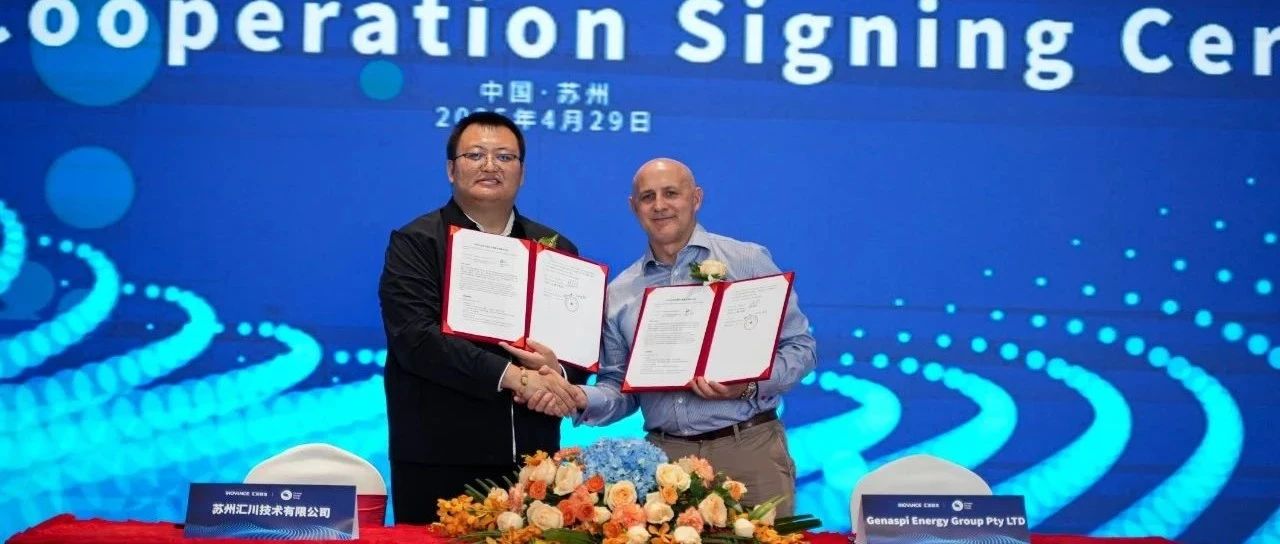
Core Viewpoint - The article highlights the strategic advancements of Huichuan Technology in the energy storage sector, particularly through its collaboration on the Bundey project in Australia, aiming to establish a global benchmark for energy storage solutions [2][5]. Group 1: Project Collaboration - Huichuan Technology has partnered with China Energy Construction Corporation's subsidiary Zhongchu Technology and Australia's Genaspi Energy to develop the Bundey project, which has a capacity of 1.2GW/3.9GWh [2][3]. - The project is currently in a substantive advancement phase, with the three parties having submitted core technology solutions for certification by the Australian National Grid [3]. Group 2: Strategic Partnerships - Huichuan Technology is actively building an "ecosystem" in the energy storage field, forming strategic partnerships with various companies, including Haibo Shichuang, Cairi Energy, Pengcheng Unlimited, and TGOOD [8][10]. - The partnerships focus on technology research and market development, with Huichuan Technology's 2024 annual report indicating a three-year period of preparation leading to a "harvest period" in energy storage [10]. Group 3: Product Development and Market Expansion - Huichuan Technology has developed a series of energy storage products, including PCS for generation and grid sides, commercial energy storage, and household storage solutions, with a significant increase in shipments, surpassing 7GW in 2024 [11][14]. - The company has introduced innovative products such as the All-liqcool full liquid cooling energy storage system and a new generation of high-power centralized PCS, which has reduced the footprint by over 20% compared to previous models [16][14]. Group 4: Future Outlook - The company plans to enhance its capabilities in providing comprehensive energy solutions for commercial enterprises and aims to make breakthroughs in overseas energy business [16][18]. - A new energy storage factory in Xi'an is set to commence operations in 2025, which will significantly improve the delivery efficiency of energy storage products and strengthen the company's market competitiveness [18].