智能商用硬件

Search documents
新股前瞻|商米科技:物联网龙头陷“增收不增利”困局 客户连年流失拷问成长性
智通财经网· 2026-01-17 02:59
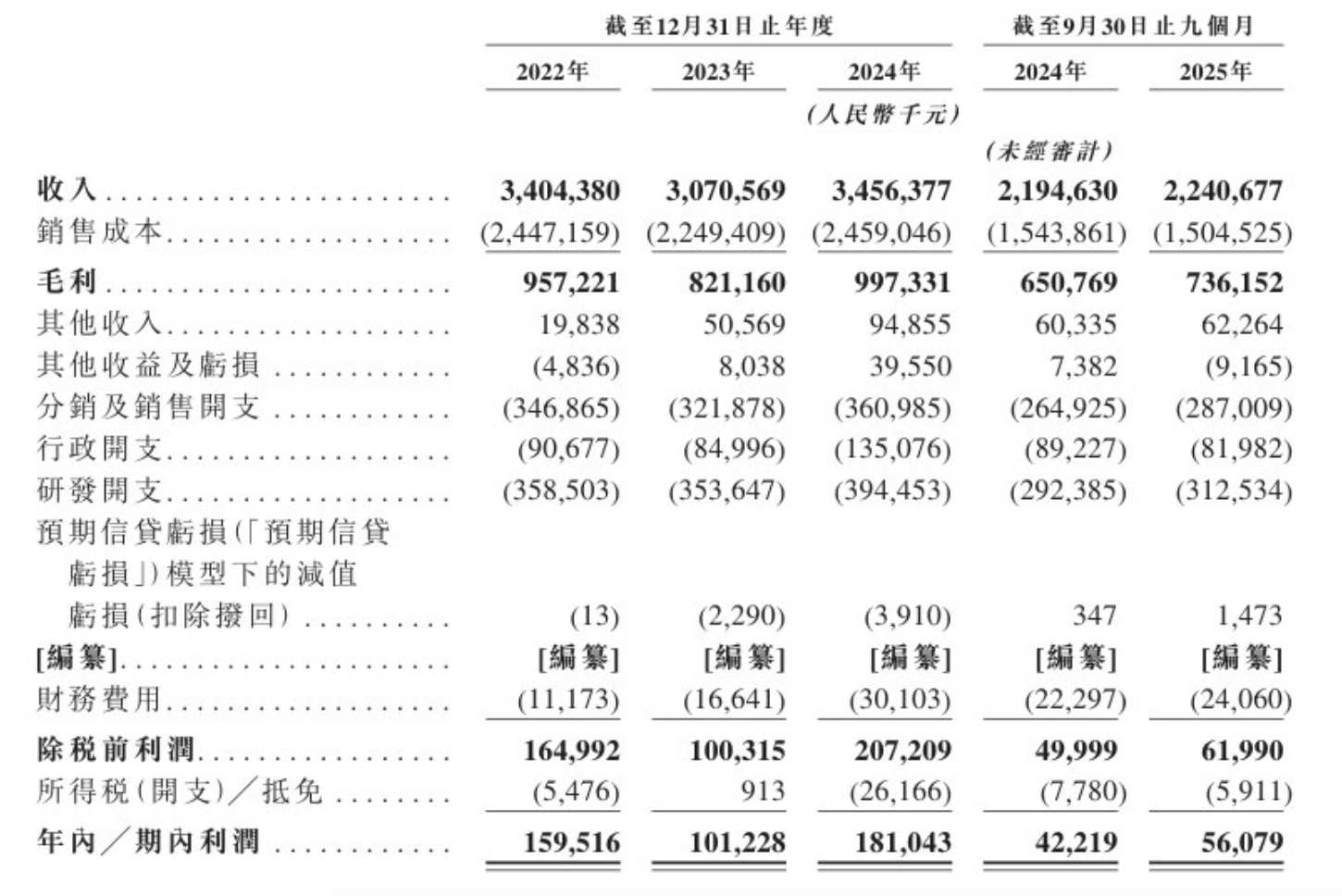
Core Insights - Company is attempting to go public again after submitting a listing application to the Hong Kong Stock Exchange, positioning itself as a leader in the global Android BIoT market, but faces challenges due to a highly concentrated revenue structure and a declining number of paying customers [1][2] Financial Performance - Revenue growth has stagnated, with total revenues of RMB 34.04 billion in 2022, RMB 30.71 billion in 2023 (a 9.8% decline), and projected to recover slightly to RMB 34.56 billion in 2024, indicating a lack of growth momentum [2][3] - The total number of customers has decreased from 2,506 in 2022 to 1,965 by the end of the first nine months of 2025, highlighting pressure on market coverage and customer acquisition [2] - Net profit margins have been low, with figures of 4.7% in 2022, 3.3% in 2023, and 5.2% in 2024, dropping to 2.5% in the first nine months of 2025, indicating significant volatility and instability in profitability [4][5] Cost Structure - High operating expenses, particularly in R&D and sales, are continuously squeezing profits, with R&D expenses exceeding 11% of revenue and rising to 13.9% in the first nine months of 2025 [4][5] - Distribution and sales expenses have remained above 10%, reflecting high costs in market expansion and customer maintenance amid a declining customer base [4] Business Model Challenges - The company heavily relies on hardware sales, which contribute over 99% of total gross profit, while software services have not significantly contributed to revenue, indicating a strategic challenge in transitioning to a service-oriented model [6][9] - The shift towards lower-margin products, such as smart financial devices, has led to a decrease in overall profitability, as the company adopts a "price for volume" strategy to gain market share [8][9] - The transition from hardware to software services has not been successful, with low conversion rates from hardware customers to software users, indicating a lack of synergy between hardware and software offerings [9]