
PaaS平台及定制服务

Search documents
硬件独撑99%营收,商米科技IPO背后:站在BIoT爆发前夜向左还是向右
Hua Xia Shi Bao· 2026-01-20 11:35
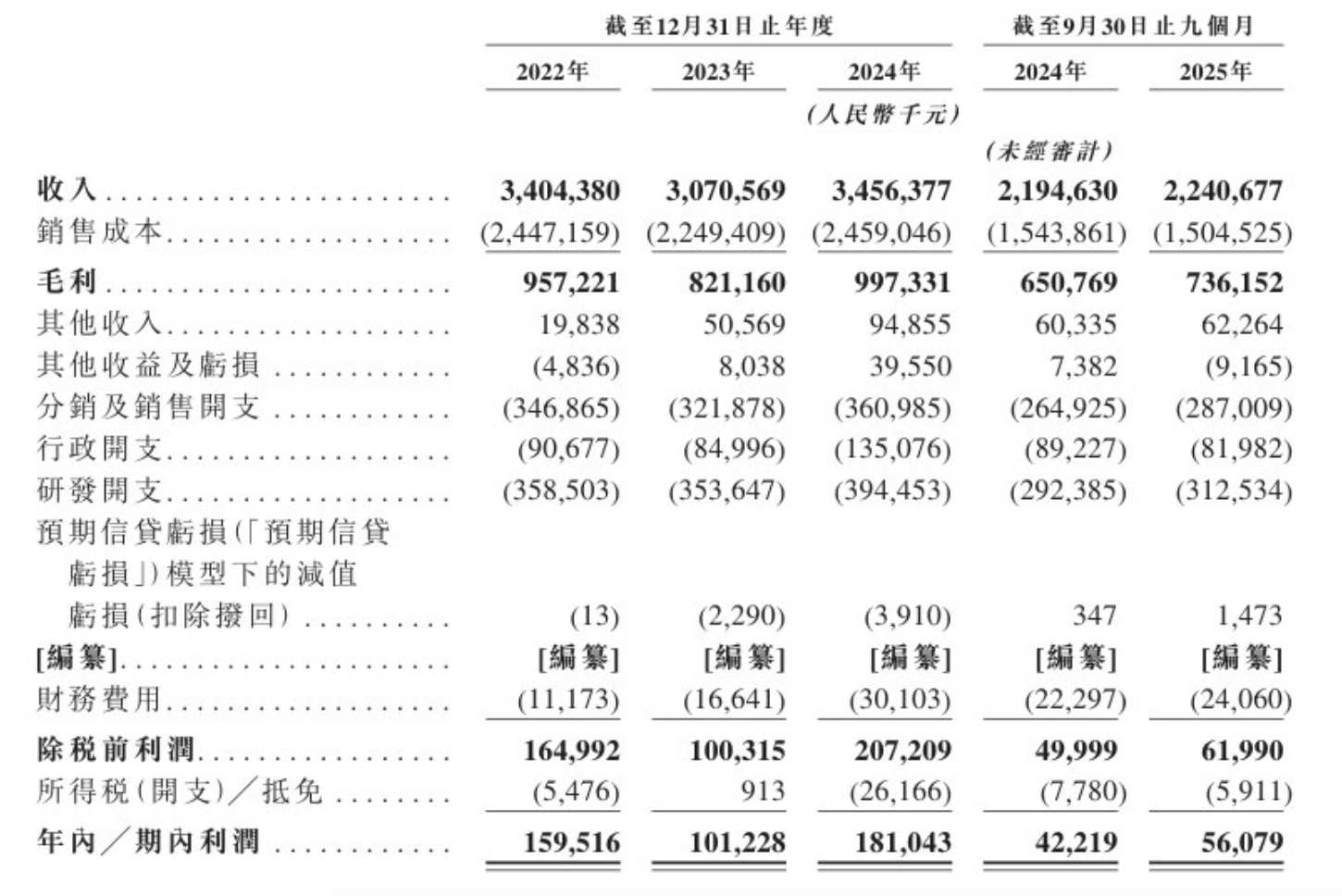
Core Viewpoint - Shanghai Shangmi Technology Group Co., Ltd. is attempting to go public again, aiming to become the first stock in the commercial Internet of Things (BIoT) sector, despite facing significant challenges such as performance volatility, customer attrition, and reliance on an OEM model [2][3]. Financial Performance - Shangmi Technology's revenue from 2022 to 2025 (first three quarters) was 34.04 billion, 30.71 billion, 34.56 billion, and 22.41 billion respectively, with a 9.8% year-on-year decline in 2023 and a 12.5% recovery in 2024, yet not returning to 2022 levels [3][4]. - Net profit for the same periods was 1.60 billion, 1.01 billion, 1.81 billion, and 560.79 million, with net profit margins of 4.7%, 3.3%, and 5.2% for 2022 to 2024, dropping to 2.5% in the first three quarters of 2025 [3][4]. Business Structure - The majority of Shangmi Technology's revenue comes from hardware sales, accounting for 99.5%, 98%, 99.5%, and 99% from 2022 to 2025 (first three quarters) [4]. - The gross margin for hardware sales was 28%, 26.5%, 28.7%, and 32.4% for the same periods, while the higher-margin PaaS platform and custom services had gross margins of 43.2%, 38.6%, 51.1%, and 77.2%, but their revenue contribution remained around 1% [4][5]. Customer Base Concerns - The total number of customers has decreased from 2,506 in 2022 to 1,965 in the first three quarters of 2025, a decline of 22% [6]. - Ongoing arbitration with a major customer, referred to as "Customer B," involves a claim of $354 million, with this customer contributing 16.5%, 22.0%, and 12.5% of revenue in 2023, 2024, and the first three quarters of 2025 respectively [6]. Production Model - Shangmi Technology relies heavily on an OEM/ODM model, with the number of third-party manufacturers increasing from 23 to 28 during the reporting period [7]. - The company faces risks related to supply chain stability, quality control, and cost fluctuations due to its reliance on third-party manufacturers [7]. Market Position and Growth Potential - Despite challenges, Shangmi Technology remains a leader in the industry, with solutions deployed in over 200 countries, covering more than 90% of the global market, and holding over 10% market share in the Android BIoT solutions sector [8]. - The BIoT solutions market is expected to grow at a compound annual growth rate of 23.7%, increasing from 32 billion in 2024 to 92 billion by 2029 [8]. Industry Trends - The commercial IoT industry is becoming increasingly competitive, with a shift from hardware to integrated solutions that combine hardware, software, and services [10]. - There is a growing demand for customized solutions in vertical markets such as retail, dining, and logistics, with a focus on scenario-based capabilities as a core competitive advantage [10].


新股前瞻|商米科技:物联网龙头陷“增收不增利”困局 客户连年流失拷问成长性
智通财经网· 2026-01-17 02:59
Core Insights - Company is attempting to go public again after submitting a listing application to the Hong Kong Stock Exchange, positioning itself as a leader in the global Android BIoT market, but faces challenges due to a highly concentrated revenue structure and a declining number of paying customers [1][2] Financial Performance - Revenue growth has stagnated, with total revenues of RMB 34.04 billion in 2022, RMB 30.71 billion in 2023 (a 9.8% decline), and projected to recover slightly to RMB 34.56 billion in 2024, indicating a lack of growth momentum [2][3] - The total number of customers has decreased from 2,506 in 2022 to 1,965 by the end of the first nine months of 2025, highlighting pressure on market coverage and customer acquisition [2] - Net profit margins have been low, with figures of 4.7% in 2022, 3.3% in 2023, and 5.2% in 2024, dropping to 2.5% in the first nine months of 2025, indicating significant volatility and instability in profitability [4][5] Cost Structure - High operating expenses, particularly in R&D and sales, are continuously squeezing profits, with R&D expenses exceeding 11% of revenue and rising to 13.9% in the first nine months of 2025 [4][5] - Distribution and sales expenses have remained above 10%, reflecting high costs in market expansion and customer maintenance amid a declining customer base [4] Business Model Challenges - The company heavily relies on hardware sales, which contribute over 99% of total gross profit, while software services have not significantly contributed to revenue, indicating a strategic challenge in transitioning to a service-oriented model [6][9] - The shift towards lower-margin products, such as smart financial devices, has led to a decrease in overall profitability, as the company adopts a "price for volume" strategy to gain market share [8][9] - The transition from hardware to software services has not been successful, with low conversion rates from hardware customers to software users, indicating a lack of synergy between hardware and software offerings [9]

商米科技,拟赴港上市
Zhong Guo Zheng Quan Bao· 2026-01-14 08:25
Core Viewpoint - Shanghai Shangmi Technology Group Co., Ltd. plans to go public in Hong Kong, focusing on its transition from providing takeaway solutions to smart commercial devices, while facing challenges such as a declining customer base and a single business structure [1][2]. Company Overview - Shangmi Technology was established in December 2013, initially focusing on takeaway solutions for the restaurant industry. In August 2014, Xiaomi Group participated in its Series B financing, leading to a gradual shift towards smart commercial devices [1]. - The company operates primarily in the Business Internet of Things (BIoT) sector, integrating smart hardware, software, and data insights to enhance digital transformation in offline commercial scenarios [2]. Business Structure - The business structure of Shangmi Technology is relatively singular, consisting mainly of two segments: sales of smart devices and PaaS platform services. Sales of smart devices dominate the revenue, accounting for 99.5%, 98%, and 99.5% of total revenue in 2022, 2023, and 2024 respectively [2]. - Revenue from smart device sales for the years 2022, 2023, and 2024 is reported as 3.389 billion, 3.008 billion, and 3.438 billion respectively [2]. Customer Base Trends - The total number of customers has been decreasing, with figures of 2,506 in 2022, 2,337 in 2023, 2,262 in 2024, and 1,965 in the first nine months of 2025 [3]. - The company emphasizes that its success relies on maintaining and expanding its customer base, as well as encouraging increased usage of its products and services [3]. Industry Challenges - The BIoT industry faces challenges such as a lengthy iteration and digital penetration process, with varying adoption rates across different sectors [4]. - There is a high degree of demand dispersion and significant customization costs associated with BIoT hardware and software, making it difficult for small and medium-sized enterprises to afford tailored solutions [5]. - The industry also suffers from low collaboration efficiency, necessitating standardized, cost-effective hardware and PaaS solutions to facilitate better integration and cooperation among different participants [5].
蚂蚁、美团、小米都投过的独角兽,要去IPO了
Sou Hu Cai Jing· 2025-08-08 04:24
Core Viewpoint - The company, Shangmi Technology, is aiming for an IPO on the Hong Kong Stock Exchange after previously withdrawing its application for the A-share market. The company has faced challenges such as revenue fluctuations and customer attrition, which are magnified in the competitive landscape of the commercial IoT sector [1][4]. Group 1: Company Background and Development - Shangmi Technology was founded in 2013, evolving from a POS machine manufacturer to a leading provider of commercial IoT solutions, capitalizing on the growth of the food delivery market [2][4]. - The company launched its first smart POS machine in 2016, achieving over $100 million in global revenue within three years [2]. - By 2024, Shangmi is projected to hold over 10% of the global market share in the Android-based BIoT solutions sector, serving approximately 61,000 commercial partners worldwide [4]. Group 2: Financial Performance - Shangmi's revenue decreased from 34.04 billion RMB in 2022 to 30.71 billion RMB in 2023, with a slight recovery expected to 34.56 billion RMB in 2024, indicating a net revenue growth of only 52 million RMB over three years [9][10]. - The net profit for 2022, 2023, and 2024 was reported at 1.60 billion RMB, 1.01 billion RMB, and 1.81 billion RMB, respectively, with gross profit margins fluctuating between 26.7% and 28.9% [9][10]. - The decline in revenue is primarily attributed to a drop in sales from smart device sales, which accounted for 98% of total revenue [10]. Group 3: Market Position and Competition - The competitive landscape includes major players like Xiaomi, Ant Group, and Meituan, all of whom have invested in Shangmi Technology [5][6]. - The company has experienced a reduction in its customer base, dropping from 2,506 in 2022 to 2,262 in 2024, highlighting the challenges of maintaining client relationships in a competitive market [13]. - Shangmi's reliance on a few major clients is evident, with the top five clients contributing 42.3%, 28.8%, and 41.1% of revenue over the reporting period [13]. Group 4: Future Plans and Funding - The company plans to use the funds raised from the IPO for R&D in BIoT hardware and software solutions, enhancing supply chain operations, and global market expansion [8].

