智能答疑系统“邮大师”

Search documents
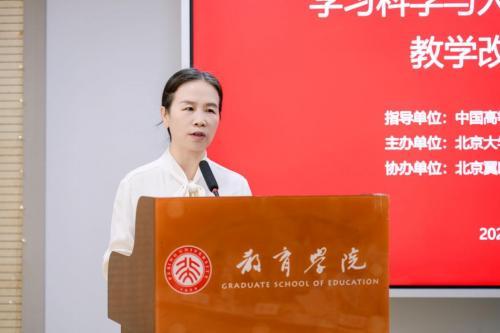
学习科学与人工智能赋能课程教学改革研讨会在京举办
Huan Qiu Wang Zi Xun· 2025-09-23 10:16
Core Viewpoint - The conference on "Learning Science and AI Empowerment in Curriculum Teaching Reform" emphasizes the need for educational reform in the context of digitalization and artificial intelligence, aiming to optimize curriculum structures and teaching methods to cultivate innovative talents suited for the evolving job market [1][15]. Group 1: AI Empowerment in Education - The conference gathered over 30 experts from 20 universities to discuss the integration of AI in educational practices and curriculum reform [1]. - Beijing University is developing an "AI + X" action plan to restructure its curriculum and promote innovative teaching methods, aiming to bridge the gap between laboratory research and classroom application [1][15]. - The concept of "teaching intelligence" is introduced as a core driver for transforming university classrooms, focusing on personalized resource delivery and collaborative teaching models [3][5]. Group 2: Teaching Models and Innovations - The "AI + X" curriculum design framework includes three levels: foundational skills, scenario applications, and project-based learning, aimed at fostering interdisciplinary talents [14]. - The integration of AI in education is seen as a means to redefine learning objectives, shifting from "learning for work" to "learning for personal development" [5]. - Various universities are implementing innovative teaching practices, such as virtual classes and project-based learning, to enhance student engagement and practical skills [7][8][9]. Group 3: AI Literacy and Student Engagement - A study on AI literacy among undergraduates revealed an average score of 5 out of 8, indicating a moderate understanding of AI, with weaknesses in knowledge and application [10]. - The reliance on AI tools for basic tasks highlights a potential "new digital divide," necessitating a focus on enhancing students' critical thinking and digital literacy [10]. - The importance of human teachers in fostering empathy and deep thinking is emphasized, suggesting a collaborative approach between AI and human educators [11]. Group 4: Future Directions and Collaborative Efforts - The conference participants agreed on the necessity of leveraging AI to create a new educational ecosystem that promotes personalized learning and critical thinking [15]. - There is a call for deeper collaboration between academia and industry to build an inclusive and innovative educational environment [15]. - The focus on developing teaching intelligence and AI-native courses is seen as essential for achieving educational modernization and strengthening the education system [15].