智能组串式构网型储能

Search documents
华为侯金龙:技术引领变革,共筑数字能源产业繁荣新生态
中国能源报· 2026-03-26 07:29
Core Viewpoint - The article emphasizes the transformation of the energy sector, highlighting the integration of digital technology and the emergence of new energy sources as the main drivers of change in the industry [2][3]. Group 1: Digital Energy Focus Areas - Huawei Digital Energy focuses on three core areas: new power systems, electric mobility, and AI data centers, aiming to create competitive products and solutions through deep integration of digital technology, AI, power electronics, and energy storage [1]. - The company aims to leverage the opportunities presented by the energy transition by adhering to a core strategy of "technology-driven, scene-focused, and value-creating" [1]. Group 2: Energy Structure Transformation - The global energy landscape is undergoing significant changes, with renewable energy officially becoming the dominant energy source. By the end of 2025, China's cumulative installed capacity of wind and solar power is expected to exceed 1.8 billion kilowatts, surpassing that of thermal power [2]. - The demand for electricity is shifting due to the explosive growth of AI data centers and electric vehicles, leading to a profound change in the electricity consumption structure [2]. Group 3: Technological Innovations - Huawei has introduced a full-scenario networking technology to address the stability challenges of high-proportion renewable energy integration, marking a shift from "current source" to "voltage source" in renewable energy integration [2]. - The company has launched the world's first "networking-type intelligent string inverter," which represents a fundamental change in how renewable energy supports the grid [2]. Group 4: Safety and Charging Innovations - In the energy storage sector, Huawei has redefined safety standards by lowering the safety protection level from "box-level" to "battery pack-level," effectively preventing the spread of thermal runaway risks [2]. - Huawei is leading innovations in electric vehicle charging technology, setting new standards for ultra-fast charging, which have become benchmarks in the industry [2]. Group 5: Collaborative Ecosystem - Huawei believes that the future of the digital energy industry relies on deep integration of industry, technology, and scenarios, emphasizing the importance of collaboration and ecosystem synergy [6]. - The company has introduced four support measures for partners, including competitive product offerings, clear cooperation boundaries, unified processes, and a commitment to long-term success through continuous investment in technology and ecosystem development [6].

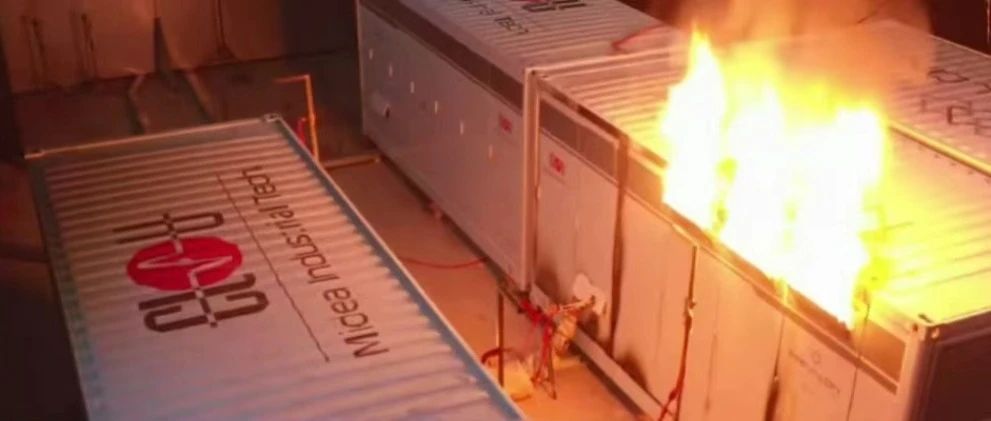
全球储能巨头“真机燃烧”大比拼
中关村储能产业技术联盟· 2025-06-16 10:57
Core Viewpoint - The article emphasizes the importance of safety in the rapidly growing global energy storage industry, highlighting the extreme testing conducted by leading companies to validate the safety performance of their energy storage systems under severe conditions [1]. Group 1: Sunlight Power - Sunlight Power conducted the world's first large-scale combustion test of its PowerTitan1.0 system in June 2024, followed by a significant investment of 30 million for the PowerTitan2.0 test in November 2024 [1]. - The PowerTitan2.0 system withstood 25 hours and 43 minutes of continuous burning, demonstrating its robust protective capabilities and preventing fire spread [2]. - During extreme conditions, the system maintained structural integrity and prevented heat propagation, showcasing its excellent fire resistance and impact performance [3]. Group 2: BYD Energy Storage - BYD's MC Cube energy storage system underwent testing in December 2024, adhering to CSA TS-800 large-scale fire testing standards [6]. - The test revealed that while the internal temperature exceeded 1000℃, adjacent battery cabinets remained below 60℃, confirming the system's effective fire isolation design [6]. - The MC Cube demonstrated outstanding fire resistance and structural integrity, preventing fire spread and ensuring safety for personnel and the environment [6]. Group 3: Huawei Digital Energy - Huawei's intelligent string-type energy storage system was tested in December 2025, following international UL9540A standards with increased thermal runaway cell counts [7]. - The system effectively managed a scenario with 12 cells experiencing thermal runaway, utilizing innovative pressure and smoke management mechanisms to prevent combustion [8]. - The test confirmed the system's ability to maintain low temperatures in adjacent units, demonstrating its safety under extreme conditions [8]. Group 4: Hichain Energy Storage - Hichain's ∞Block 5MWh system was tested in June 2025 under UL9540A and NFPA855 standards, with open cabinet conditions to simulate extreme fire scenarios [9]. - The system successfully prevented heat propagation between cabinets even at temperatures exceeding 1300℃, validating its thermal isolation capabilities [10]. - The test confirmed the system's reliability and high safety standards without external fire protection [11]. Group 5: Canadian Solar - Canadian Solar's SolBank 3.0 system was tested in June 2025, adhering to CSA TS-800 standards for large-scale fire testing [12]. - The test demonstrated that the SolBank 3.0 effectively contained fire within the target unit, showcasing its superior passive fire protection design [13]. Group 6: Kelu - Kelu's Aqua C2.5 5MWh liquid-cooled energy storage system was tested in June 2025, following CSA TS-800 standards [14]. - The test involved a 59-hour continuous burn, with the internal temperature reaching 1300℃, yet the system maintained structural integrity and functionality [17]. - The Aqua C2.5 effectively prevented thermal runaway between units, proving its scalability for large energy storage stations [17]. Group 7: Ruipu Lanjun - Ruipu Lanjun's Powtrix® battery cabin was tested in June 2025 under CSA TS-800 extreme safety testing [18]. - The system endured approximately 14 hours of burning under severe conditions, demonstrating exceptional safety and reliability [18]. Group 8: Trina Storage - Trina's Elementa energy storage cabinet was tested in September 2024, following guidelines from the China Academy of Building Research [19]. - The test validated the effectiveness of the fire suppression systems and the overall safety of the energy storage design, with no signs of re-ignition after 24 hours [21].