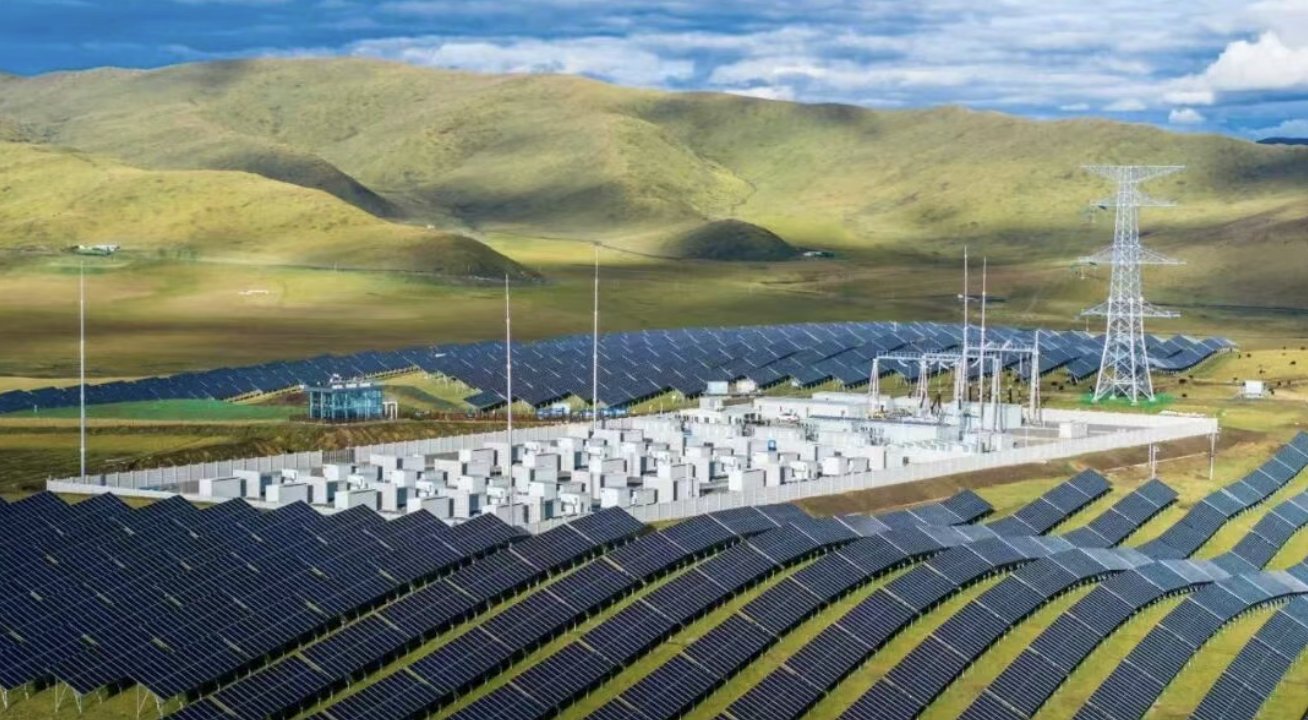
构网技术

Search documents
阳光电源(300274) - 阳光电源投资者关系活动记录表20260331
2026-04-01 01:10
Industry Overview - The global photovoltaic (PV) industry continues to grow, with an increase of 12% in new installations, reaching 513 GWac in 2025 [2][3] - Domestic PV installations rose from 278 GWac in 2024 to 317 GWac in 2025, a growth of 14%, accounting for 61% of global installations [2][3] - Global lithium battery storage capacity reached 317 GWh in 2025, a 74% increase year-on-year, with domestic installations growing by 82% [3] - Wind power saw a global increase of 169 GW in 2025, a 44% rise, with domestic wind power growing from 80 GW to 120 GW, a 50% increase [3] Financial Performance - The company achieved a revenue of 89.184 billion CNY in 2025, a 14.55% increase year-on-year [4] - Gross margin improved to 31.83%, up by 1.89% from the previous year [4] - Net profit attributable to shareholders reached 13.461 billion CNY, a 21.97% increase, with adjusted net profit growing by 29.8% to 14.3 billion CNY [4] Product and Market Development - The company shipped 143 GW of inverters in 2025, with a revenue of 26.6 billion CNY, a 4% increase [7] - The inverter business maintained a gross margin of approximately 37% due to new product launches and increased overseas revenue [7] - In the energy storage sector, shipments reached 43 GWh, a 54% increase, with revenue of 37.2 billion CNY, up 49% [8] R&D and Innovation - R&D investment reached 4.175 billion CNY in 2025, a 31.97% increase, with 7,625 R&D personnel, accounting for about 40% of the workforce [6] - The company launched two new inverter models, enhancing its product offerings and market competitiveness [7] Sustainability and Shareholder Returns - The company received an MSCI ESG rating of AAA, reflecting its commitment to sustainable development [10] - A cash dividend of 6.90 CNY per 10 shares was proposed, totaling 1.416 billion CNY, with a total planned distribution of 3.367 billion CNY for the year [11] Challenges and Strategic Focus - The company faces intense competition and complex international environments but remains focused on innovation, digital transformation, and global market expansion [3][4] - The domestic energy storage market has low margins, prompting strategic adjustments to focus on high-quality projects [19]

华为侯金龙:技术引领变革,共筑数字能源产业繁荣新生态
中国能源报· 2026-03-26 07:29
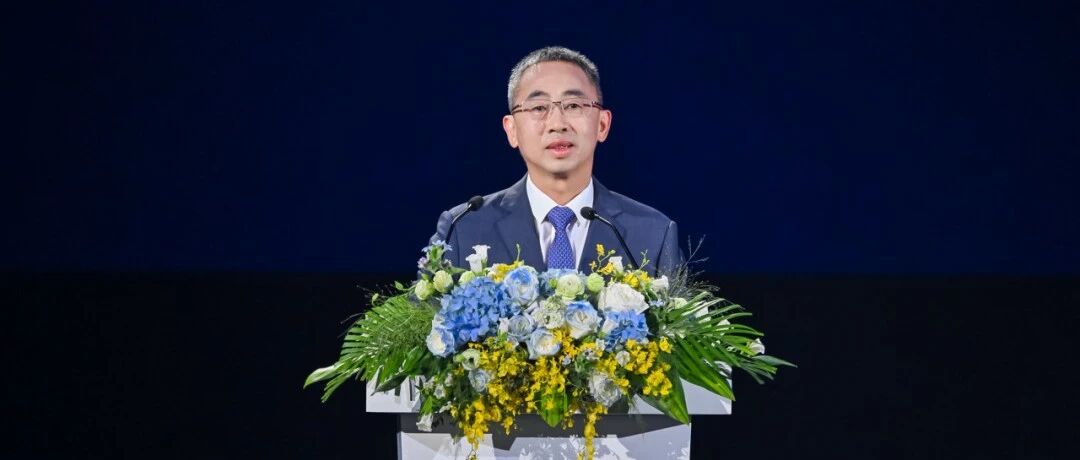
Core Viewpoint - The article emphasizes the transformation of the energy sector, highlighting the integration of digital technology and the emergence of new energy sources as the main drivers of change in the industry [2][3]. Group 1: Digital Energy Focus Areas - Huawei Digital Energy focuses on three core areas: new power systems, electric mobility, and AI data centers, aiming to create competitive products and solutions through deep integration of digital technology, AI, power electronics, and energy storage [1]. - The company aims to leverage the opportunities presented by the energy transition by adhering to a core strategy of "technology-driven, scene-focused, and value-creating" [1]. Group 2: Energy Structure Transformation - The global energy landscape is undergoing significant changes, with renewable energy officially becoming the dominant energy source. By the end of 2025, China's cumulative installed capacity of wind and solar power is expected to exceed 1.8 billion kilowatts, surpassing that of thermal power [2]. - The demand for electricity is shifting due to the explosive growth of AI data centers and electric vehicles, leading to a profound change in the electricity consumption structure [2]. Group 3: Technological Innovations - Huawei has introduced a full-scenario networking technology to address the stability challenges of high-proportion renewable energy integration, marking a shift from "current source" to "voltage source" in renewable energy integration [2]. - The company has launched the world's first "networking-type intelligent string inverter," which represents a fundamental change in how renewable energy supports the grid [2]. Group 4: Safety and Charging Innovations - In the energy storage sector, Huawei has redefined safety standards by lowering the safety protection level from "box-level" to "battery pack-level," effectively preventing the spread of thermal runaway risks [2]. - Huawei is leading innovations in electric vehicle charging technology, setting new standards for ultra-fast charging, which have become benchmarks in the industry [2]. Group 5: Collaborative Ecosystem - Huawei believes that the future of the digital energy industry relies on deep integration of industry, technology, and scenarios, emphasizing the importance of collaboration and ecosystem synergy [6]. - The company has introduced four support measures for partners, including competitive product offerings, clear cooperation boundaries, unified processes, and a commitment to long-term success through continuous investment in technology and ecosystem development [6].

科华数能联合主办第十四届储能国际峰会暨展览会ESIE 2026
中关村储能产业技术联盟· 2026-03-12 09:03
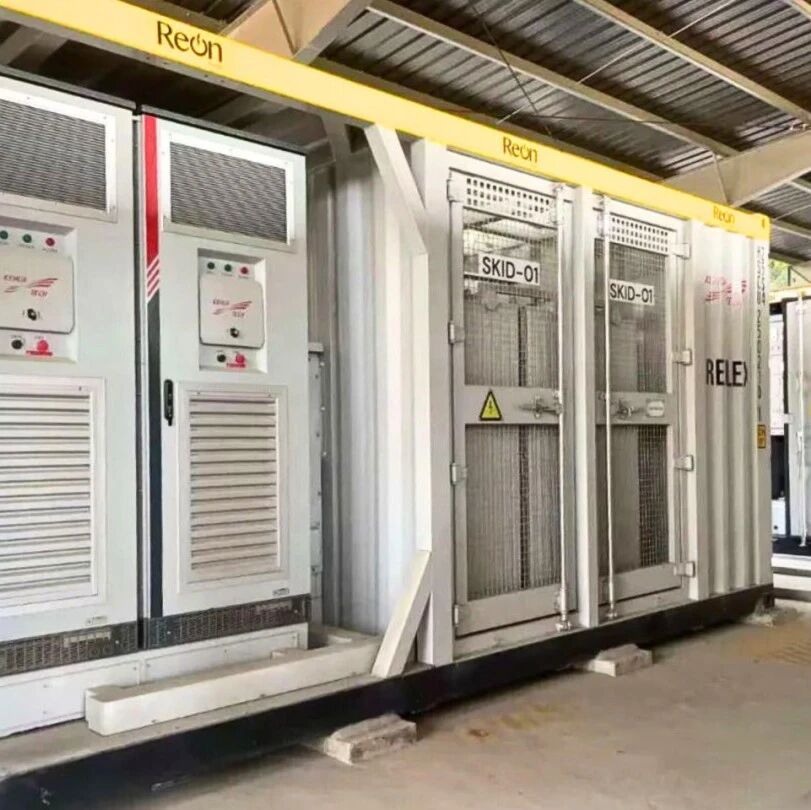
Core Viewpoint - The article highlights the advancements and achievements of Kehua Data in the energy storage sector, particularly in the deployment of integrated microgrid systems and innovative storage solutions across various challenging environments [2][3][5][9][10][12]. Group 1: Project Achievements - Kehua Data has successfully deployed over 400 integrated microgrid systems, with a total global energy storage shipment exceeding 3GW, establishing multiple benchmark projects [2]. - The 1GW/4GWh project in Inner Mongolia is noted as China's largest integrated energy storage project, enhancing the power system's self-healing capabilities and risk resilience [3]. - The 300MW/1.2GWh project in Xinjiang utilizes an advanced energy storage integration solution to stabilize voltage, frequency, and power angle, significantly improving grid stability [5]. Group 2: Innovative Solutions - The "grid-connected + follow-up" hybrid storage project in Ningxia, with a capacity of 100MW/200MWh, employs mixed control technology to enhance revenue from energy storage auxiliary services and facilitate energy transition [7]. - In Tibet, a 60MW/300MWh independent energy storage project demonstrates Kehua Data's capability to operate in extreme conditions, providing stable support for renewable energy consumption in high-altitude areas [9]. - The 20MW microgrid project in Pakistan utilizes Kehua Data's VSG 3.0 technology to ensure stable voltage and frequency in a weak grid environment, meeting the stringent demands of industrial and residential electricity [10]. Group 3: Market Expansion - Kehua Data has made significant inroads into the European market, with over 1GW of energy storage shipments in Bulgaria alone, maintaining a leading market share as the European energy storage market continues to grow [12].

阳光电源:光储融合、场景深耕将成核心主线
中关村储能产业技术联盟· 2026-02-13 04:41
Core Viewpoint - The global solar and energy storage industry experienced significant growth in the past year, with solar installations exceeding 500 GW and cumulative energy storage installations surpassing 300 GWh, reflecting a nearly 70% year-on-year increase [3]. Group 1 - The industry is shifting from scale expansion to value competition, with a focus on solar-storage integration and deepening application scenarios as core themes for the new year [3]. - Advanced technologies such as AI and network construction are accelerating implementation, while electricity trading is maturing and diverse scenarios are emerging [3]. - The company remains committed to long-term innovation and aims to meet diverse demands by collaborating with global partners to build a more stable, efficient, and intelligent energy ecosystem [3]. Group 2 - The company has confirmed its sponsorship of the 14th International Energy Storage Summit and Exhibition (ESIE 2026), inviting industry peers to participate in this global energy storage event [7]. - The event is scheduled to take place from March 31 to April 3, 2026, at the Beijing Capital International Exhibition Center [8].

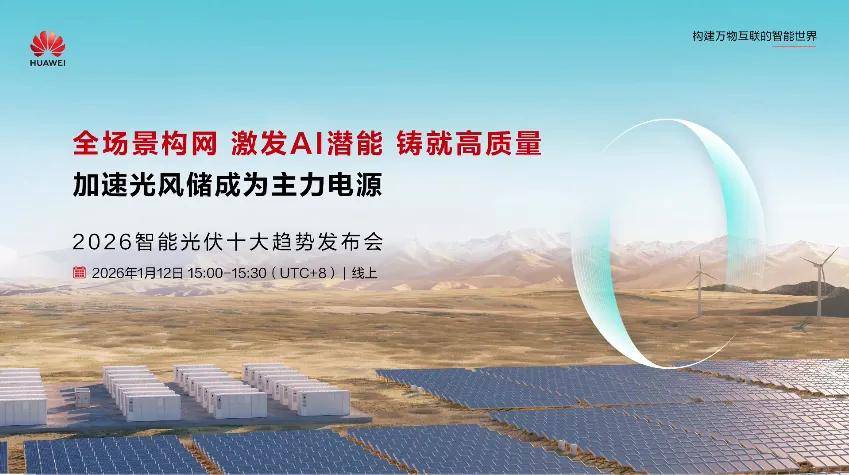
光伏大变局!华为发布2026十大趋势,以“三大硬功夫”定义下一代可信电站
Sou Hu Cai Jing· 2026-01-16 13:38
Core Insights - Huawei's report on the "Top Ten Trends in Smart Photovoltaics by 2026" provides a comprehensive roadmap for the industry to transition towards "value cultivation" [2] - The report emphasizes that competition in the industry has shifted from merely installation scale and cost to "system credibility" [2][16] Group 1: Trends in Scenarios - Four key scenario trends are identified: synergy of wind, solar, and storage; networked energy storage; collaborative energy management; and AI-native home energy storage [2] - These trends define the core value of renewable energy as a stable power source, a key resource for the grid, a regional autonomous unit, and a smart energy terminal [2] Group 2: Technological Support - Six technological trends are highlighted: high frequency and density, high voltage and reliability, system-level battery management, mature networking technology, intelligent empowerment, and quantifiable safety [2] - These technologies provide comprehensive capability assurance from devices to systems, enabling the realization of the aforementioned values [2] Group 3: Network Construction and Flexibility - The report identifies "collaborative network construction" and "full-scenario networking" as essential trends to address the challenges posed by the increasing penetration of renewable energy [4] - The essence of network construction technology is to empower photovoltaic and storage systems to actively stabilize the grid, marking a shift from passive to active roles in grid support [4] Group 4: AI Integration in Operations - AI is set to transform the operation of photovoltaic plants, evolving from an auxiliary tool to the core decision-making entity [8] - In projects like the one in Wuhan, AI has enhanced overall project returns by over 10% through dynamic optimization across various operational goals [10] Group 5: Safety and Quality Assurance - The industry is moving towards a new phase of "quantifiable safety," where safety is no longer a hidden cost but a measurable asset [12] - Huawei proposes a comprehensive safety architecture that spans from battery cells to the grid, aiming to prevent incidents before they occur [12][14] Group 6: System Capability Assessment - The report indicates that future photovoltaic plants will be complex systems integrating high-performance power electronics, advanced electrochemistry, complex algorithms, and vast data [16] - The evaluation criteria for these systems will be multidimensional, focusing on grid support capabilities, lifecycle profitability, and quantifiable risk levels [16]
全球最大构网型储能并网
Xin Lang Cai Jing· 2025-12-18 08:06
Core Insights - The announcement by Sungrow Power Supply regarding the full capacity grid connection of a 7.8 GWh energy storage project in Saudi Arabia marks it as the largest application of grid construction technology globally [1] - The project is expected to deliver an annual discharge of 2.2 billion kWh, which can power 400,000 households for a year, supporting Saudi Arabia's Vision 2030 [1] Company Highlights - Sungrow Power Supply is at the forefront of implementing advanced energy storage solutions, showcasing its capabilities in large-scale projects [1] - The successful integration of this project highlights the company's role in the renewable energy sector and its commitment to supporting sustainable energy initiatives [1] Industry Implications - The project aligns with global trends towards renewable energy and energy storage, indicating a growing market for such technologies [1] - The achievement contributes to the broader goals of energy transition and sustainability in the Middle East, particularly in relation to Saudi Arabia's Vision 2030 [1]
储能PCS下一张王牌已现:阳光、汇川、南瑞继保等重仓布局
行家说储能· 2025-12-04 11:17
Core Insights - The competitive landscape of energy storage PCS has shifted from a "blue ocean" to a "red ocean," with a decisive question emerging: where will the key competitive points lie in the second half of the industry? The answer is increasingly clear: it is not about marginal efficiency improvements or extreme cost reductions, but rather a network-forming technology that can reshape the value of PCS and transition energy storage systems from "passive execution" to "active support" [2] Group 1: Market Dynamics - By 2025, new policies from the National Energy Administration and mandatory ratios in regions like Xinjiang indicate that grid-forming energy storage is rapidly moving from a "technical alternative" to a "market necessity" [4] - According to CESA data, from January to September 2025, the newly installed capacity of grid-forming energy storage in China reached 2.9GW/9GWh, surpassing the total of 8.9GWh for the entire year of 2024, with a cumulative operational capacity of 6GW/19.1GWh, nearly five times the growth from 2023 [7] Group 2: Technological Advancements - Leading companies like Sungrow, Huichuan Technology, and NARI Technology are strategically positioning themselves around grid-forming technology, indicating that the market positioning and commercial value of PCS are being redefined [2][4] - Sungrow emphasizes that PCS will increasingly focus on the overall grid dimension, enhancing its foundational support for safety and improving the intelligent response level for economic aspects [7] - Huichuan Technology is prioritizing grid-forming technology, enhancing the stability of power systems through active participation in frequency and voltage regulation [7] Group 3: Challenges and Opportunities - Grid-forming energy storage faces multiple challenges in scaling up, including technical, standardization, and economic issues [10] - The complexity of adapting to various operational conditions is a significant hurdle for grid-forming PCS, requiring high responsiveness, control precision, and overload capacity [12] - The lack of unified technical standards for grid-forming PCS in China has led to market credibility issues, with some "pseudo-grid" products causing operational failures [14] Group 4: Future Outlook - The industry is at a critical stage of deep integration of "source-grid-load-storage," with collaborative efforts to draft a white paper analyzing storage development trends, set to be released in January 2026 [14]


构网迎来分水岭:站在3600米,深度拆解阳光电源
行家说储能· 2025-10-20 03:03
Core Viewpoint - The article highlights the increasing integration of renewable energy sources like solar and wind into the power grid, which poses significant stability challenges, referred to as the "glass heart" of the grid. The introduction of networked energy storage technology by Sungrow Power Supply Co., Ltd. is presented as a potential solution to these challenges [2][6][18]. Group 1: Industry Challenges - The integration of high proportions of renewable energy is leading to a decline in grid stability, with traditional power equipment lacking the ability to provide active support, making them vulnerable to disruptions [6][4]. - The industry is facing a critical bottleneck in energy security and clean development due to the random and intermittent nature of renewable energy generation [6][4]. - The traditional grid-following energy storage systems are inadequate, necessitating the development of grid-supporting energy storage solutions that can quickly stabilize voltage and enhance system robustness [6][4]. Group 2: Sungrow's Technological Innovations - Sungrow's networked energy storage solution for the China Huadian Yake solar-storage power station has a capacity of 50MW/100MWh, utilizing 20 PowerTitan 2.0 liquid-cooled storage systems [6][4]. - The storage system employs a "three-electricity integration" design, which effectively addresses grid fluctuations caused by high renewable energy penetration, significantly improving grid resilience and reliability [7][6]. - The technology has surpassed industry standards, achieving smooth switching between strong and weak grid conditions and supporting a wide range of operational parameters [10][11]. Group 3: System-Level Breakthroughs - Sungrow's approach transcends traditional component upgrades, establishing a multidimensional collaborative technical system that addresses the core bottlenecks in grid technology [11][12]. - The company has developed a comprehensive technical framework that includes extreme grid adaptability, multi-energy collaborative optimization, enhanced equipment safety, and advanced intelligent management systems [12][19]. - Sungrow's innovations redefine the boundaries of networked technology, transitioning from a focus on individual components to a holistic system-level solution [12][19]. Group 4: Global Validation and Impact - Sungrow has accumulated extensive practical experience with 870GW of global grid-connected projects, demonstrating its capability to handle extreme conditions and contributing to the evolution of grid technology applications [15][17]. - The company has successfully implemented numerous benchmark projects across various regions, including Tibet and Australia, showcasing its technology's reliability in diverse environments [15][16]. - The advancements in Sungrow's technology are positioned to enhance China's competitiveness in the global energy market and support national energy strategies aimed at achieving a 30% penetration rate for networked energy storage by 2025 [19][20]. Group 5: Future Outlook - The article emphasizes that the future of energy technology competition will focus on system-level solutions rather than just individual device performance, with Sungrow's networked technology paving the way for a more stable and efficient zero-carbon power system [20][19]. - The ongoing advancements in networked energy storage technology are seen as just the beginning, with further exploration and innovation anticipated in the industry [20].
风光储全景,阳光电源打造系统级构网技术新高地
中国能源报· 2025-10-13 11:13
Core Viewpoint - The article highlights the advancements in networked energy storage technology by Sungrow Power Supply Co., which has been recognized as internationally leading by a committee of experts, including academicians from the Chinese Academy of Sciences and the Chinese Academy of Engineering [2][10]. Group 1: Technological Advancements - Sungrow's networked technology enhances grid flexibility, facilitates efficient integration of renewable energy, and ensures stable power system operation, making it a focal point in the global energy industry [4]. - The company has developed a multi-dimensional self-synchronizing stable source network, capable of smooth switching between strong and weak grids, and can handle a wide frequency range for oscillation suppression [5][4]. - The innovative wind-solar-storage panoramic network allows for flexible solution selection and economic power distribution, addressing self-stabilization issues in weak grids [5][4]. Group 2: Practical Applications and Global Reach - Sungrow's networked technology has been validated through various projects, including the first networked doubly-fed wind turbine in Zhangjiakou, China, and the highest-altitude photovoltaic power station in Tibet [7][8]. - The company has successfully implemented the world's largest wind-solar-storage hydrogen complementary project in Saudi Arabia and has contributed significantly to grid stability in the UK and Australia [8][7]. Group 3: Industry Context and Strategic Positioning - The article discusses the challenges faced by the solar and energy storage industries, including significant price drops leading to increased operational pressures on companies [10][11]. - Sungrow advocates for a "value over price" approach, emphasizing technological innovation to create long-term value for customers, thus setting a precedent for high-quality industry development [11][10].
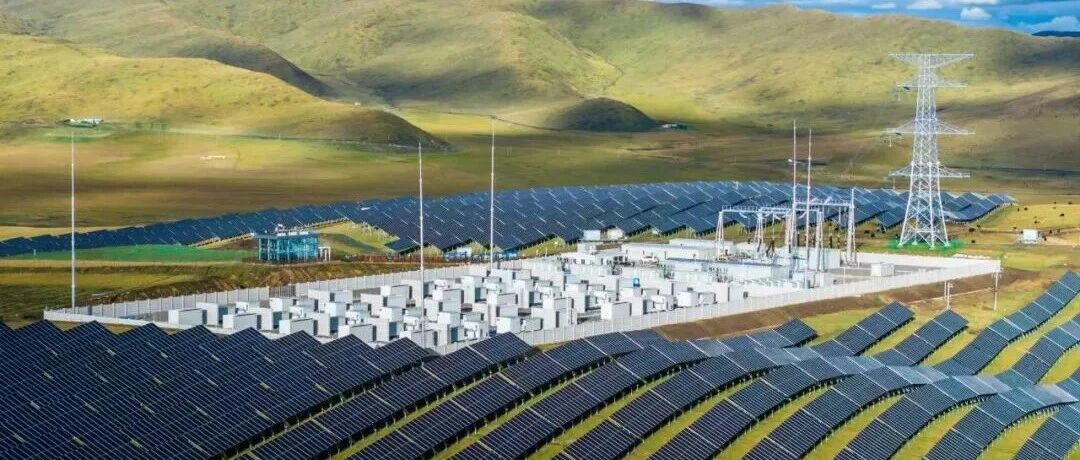
风光储全景,阳光电源打造系统级构网技术新高地
Zhong Guo Neng Yuan Wang· 2025-10-13 07:57
Core Viewpoint - The academic evaluation of "Key Technologies and Applications of Networked Wind-Solar-Storage Systems" submitted by Sungrow Power Supply has been recognized as reaching an international leading level, which is expected to set a technical benchmark for the industry and guide healthy development [1][8]. Group 1: Technological Advancements - Networked technology is a key technology for building new power systems, enhancing grid flexibility, and ensuring stable operation of power systems, attracting global industry attention [2]. - Sungrow Power Supply has made significant progress in networked technology, addressing technical bottlenecks such as the limitations of single control mode in grid-connected converters and the adaptability of network algorithms under wide-ranging disturbances [2][3]. - The company has pioneered multi-dimensional self-synchronizing stable source network technology, achieving smooth switching between strong and weak grids and comprehensive support for various oscillation suppression [2][3]. Group 2: Practical Applications - Sungrow Power Supply's networked technology has been validated through multiple projects globally, demonstrating its effectiveness in various grid conditions [6][7]. - The company has successfully integrated its networked systems in significant projects, including the world's highest photovoltaic power station in Tibet and the largest wind-solar-storage hydrogen complementary project in Saudi Arabia [6][7]. - In the UK, Sungrow's systems contributed to stabilizing the grid frequency during critical moments, showcasing their rapid response capabilities [6]. Group 3: Industry Impact and Strategy - The recognition of Sungrow's networked technology is expected to drive upgrades in the renewable energy industry and influence government energy policy [8][9]. - The company emphasizes a strategy of "not competing on price but on technology," focusing on long-term value creation through continuous innovation in networked technology [9]. - The competitive landscape in the photovoltaic and energy storage sectors is marked by significant price declines, which pose risks to product quality and safety, highlighting the importance of technological differentiation [8][9].