欧洲基准天然气(TTF)

Search documents
欧洲天然气库存告急:提取量创五年新高,价格单月飙涨30%
智通财经网· 2026-01-23 12:11
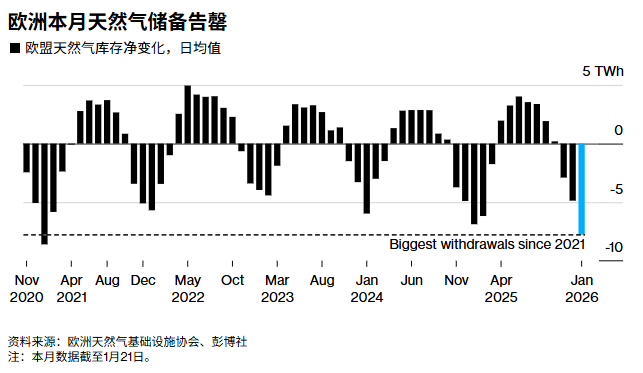
Core Insights - The average daily net withdrawal from natural gas storage in Europe reached approximately 7.79 terawatt-hours (around 730 million cubic meters) in January, marking the highest level since 2021 [1] - European natural gas prices (TTF) have increased by over 30% this month due to supply disruptions and extreme cold weather [1] Group 1: Supply and Demand Dynamics - The significant consumption of gas inventory is driven by both demand and supply pressures, including increased heating demand due to extreme cold and reduced pipeline gas imports from Russia [2] - The efficiency of wind power generation in Europe has declined, leading to higher gas-fired power generation demand, prompting utilities to prioritize the withdrawal of low-cost stored gas over purchasing high-priced LNG [2] - Current European gas inventories are below half of normal levels, with predictions that they could drop to only 20% of normal levels by the end of winter if trends continue [2] Group 2: Economic Considerations - The extraction of natural gas from storage is influenced by economic considerations, as the high spot prices make LNG imports less attractive compared to stored gas purchased at lower prices [3] - The historical peak in gas extraction in January has raised market attention towards potential policy measures ahead of the next storage season, which typically starts in April [5] - Analysts suggest that without government support, the anticipated rapid filling of gas storage may not be realized, highlighting the importance of potential subsidy policies linked to inventory targets [5] Group 3: Future Implications - Europe faces a significant replenishment challenge in the upcoming summer of 2026, requiring substantial investment in LNG purchases to meet storage targets [6] - The pressure to replenish gas inventories is expected to keep European natural gas prices elevated and volatile throughout 2026, prompting a reassessment of long-term energy security strategies within the EU [6]