水质净化系统

Search documents
【科技日报】南沙永暑礁:从海上戈壁到绿树成荫
Ke Ji Ri Bao· 2025-11-27 02:19
Core Viewpoint - The ecological restoration efforts on the Nansha Yongshu Reef have led to the establishment of a near-natural salt marsh, significantly improving the local environment and biodiversity [1][2]. Group 1: Ecological Restoration Efforts - The Yongshu Reef has transformed from a barren coral sand beach to a green oasis, guided by the philosophy of "lucid waters and lush mountains are invaluable assets" [1]. - The establishment of a near-natural salt marsh is crucial for maintaining the ecosystem, regulating hydrology, and protecting the coastline [2]. - The survival rate of plants has increased to over 90% due to innovative soil improvement techniques, reducing the salinity of the reef sand from 1.38‰ to 0.443‰ [2]. Group 2: Biodiversity Enhancement - The number of plant species that can be cultivated on Yongshu Reef has increased from fewer than 20 to over 120, surpassing many urban planning standards for green space [3]. - The implementation of a marine environmental monitoring system allows for real-time tracking of water quality and coral health, contributing to the protection of marine biodiversity [3][4]. Group 3: Technological Integration - The monitoring system includes underwater cameras that provide continuous surveillance of the marine environment, enabling timely responses to ecological threats such as coral die-offs caused by crown-of-thorns starfish [3][5]. - The use of drones for marine debris inspection and remote sensing technology for monitoring vegetation growth enhances the efficiency and effectiveness of ecological management efforts [5].
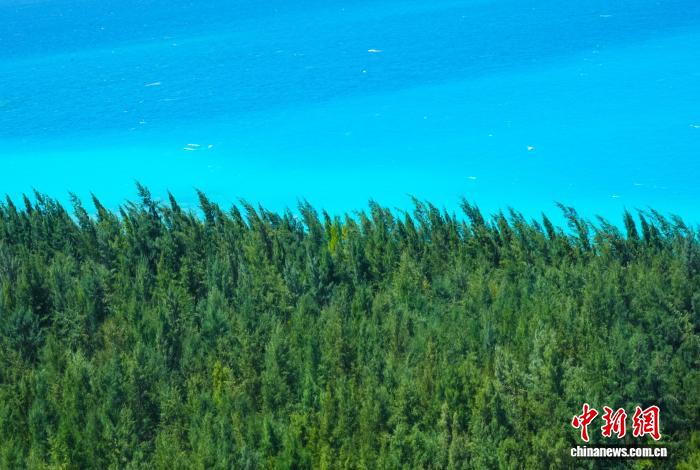
在南海看见森林——我国南海岛礁生态环保建设取得显著成效
Zhong Guo Xin Wen Wang· 2025-08-19 02:26
Core Viewpoint - The ecological and environmental protection efforts on the islands and reefs in the South China Sea have achieved significant results, transforming previously barren areas into green, sustainable ecosystems [1][3]. Group 1: Ecological Achievements - The average vegetation coverage on the islands has reached 46%, with some areas exceeding 90% coverage, showcasing the successful implementation of green initiatives [3][4]. - Over 120 plant species have been cultivated on one island, contributing to the formation of diverse forest ecosystems, including woodlands and shrublands [3][4]. - The establishment of ecological demonstration sites, such as wetland parks and fruit orchards, highlights the successful greening efforts and the revitalization of the islands [3][4]. Group 2: Environmental Management - Strict environmental control measures have been implemented, including the treatment of kitchen waste and wastewater, which are converted into organic fertilizers and reusable water [4][6]. - Advanced ecological protection facilities, such as drip irrigation and water quality monitoring systems, have been established to enhance the islands' environmental management [4][6]. - The successful management of waste and wastewater has led to a zero-emission approach, significantly improving the ecological environment of the islands [4][6]. Group 3: Biodiversity and Marine Life - The discovery of a green sea turtle nesting site on Yongshu Reef indicates a thriving marine ecosystem, providing suitable habitats for endangered species [4][6]. - The presence of various bird species, such as egrets, further demonstrates the positive impact of ecological initiatives on local wildlife [4][6]. - The monitoring systems in place allow for continuous observation of marine biodiversity, ensuring the protection of the ecological balance in the region [6].