汉简

Search documents
博物馆搬上飞驰列车
Xin Lang Cai Jing· 2026-02-13 22:47
Core Viewpoint - The article highlights a unique initiative where precious cultural relics from Gansu's national first-class museums are showcased on a train journey from Lanzhou to Guangzhou during the Spring Festival travel rush, transforming the train into a mobile museum experience for passengers [1][2][3] Group 1: Cultural Engagement - The train features interactive educational activities, including quizzes and storytelling about the "Bronze Galloping Horse" and ancient animal fossils, enhancing passengers' cultural knowledge [2] - Passengers express their excitement and appreciation for the cultural atmosphere, with one passenger noting that each train car feels like a miniature museum [1][2] Group 2: Journey and Experience - The train travels through major cities such as Xi'an, Zhengzhou, Wuhan, and Changsha, with new passengers boarding at each stop, further spreading cultural awareness [3] - The initiative is part of a 30-day program, aiming to continue this cultural journey across the country, allowing more passengers to engage with China's rich history [3]
甘肃简牍博物馆:汉代长城上的日常生活丨从长安到敦煌
Jing Ji Guan Cha Wang· 2025-06-17 01:13
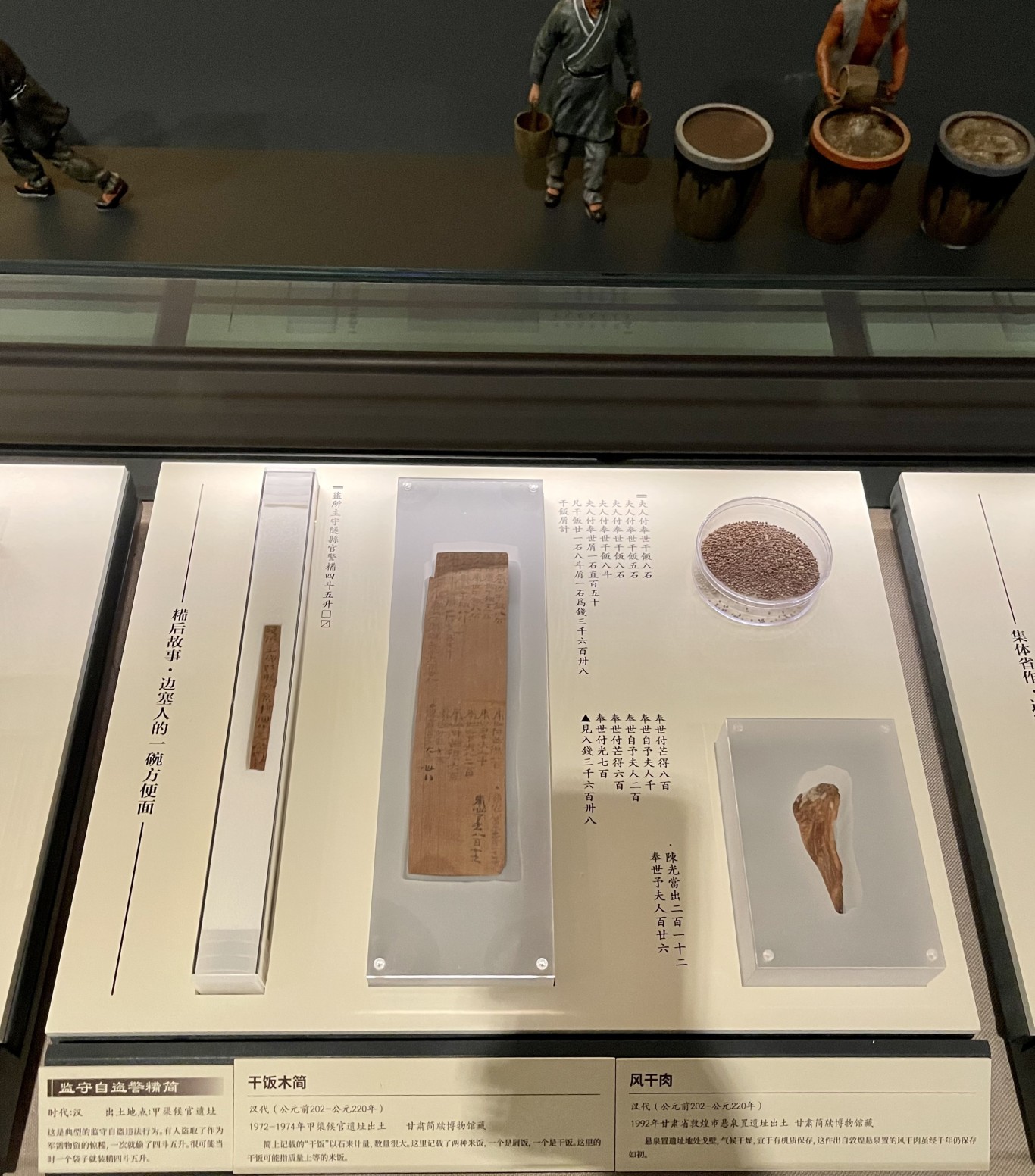
Core Viewpoint - The article reflects on the historical significance of the Silk Road and the Han Dynasty's military and administrative strategies in the northwestern regions of China, emphasizing the importance of logistics, communication, and cultural exchange in ancient times [1][4][10]. Group 1: Historical Context - The Han Dynasty established several commanderies in the northwestern region, including Wuwei, Zhangye, Jiuquan, and Dunhuang, to manage the Hexi Corridor for over 300 years [4][5]. - The military strategy included a focus on logistics, such as the detailed accounting of supplies needed for troops, which highlights the importance of resource management in military campaigns [1][2][4]. Group 2: Archaeological Discoveries - Numerous archaeological finds, including thousands of Han bamboo slips, have provided insights into the daily lives of soldiers and civilians in the Han Dynasty, revealing a rich tapestry of social interactions and administrative practices [5][10][28]. - The Gansu Bamboo Slip Museum houses nearly 40,000 bamboo slips and related artifacts, showcasing the historical significance of these documents in understanding the governance and daily life during the Han era [26][28]. Group 3: Military Logistics and Communication - The Han military employed a sophisticated communication system using beacon towers to relay information about enemy movements, which was crucial for defense strategies [34][39]. - Soldiers were required to patrol the borders regularly, ensuring that any unauthorized crossings were reported, which reflects the structured approach to border security in the Han Dynasty [40][46]. Group 4: Cultural Exchange and Daily Life - The article discusses the cultural exchanges that occurred along the Silk Road, highlighting how soldiers and civilians interacted with diverse cultures, contributing to a vibrant social fabric [51][57]. - Educational activities were prevalent among soldiers, who often used their time at military outposts to learn reading and writing, indicating a focus on literacy and education even in military settings [51][52].