汽车门板装饰条

Search documents
第五部分:案例分析与行业趋势
Sou Hu Cai Jing· 2026-01-14 02:13
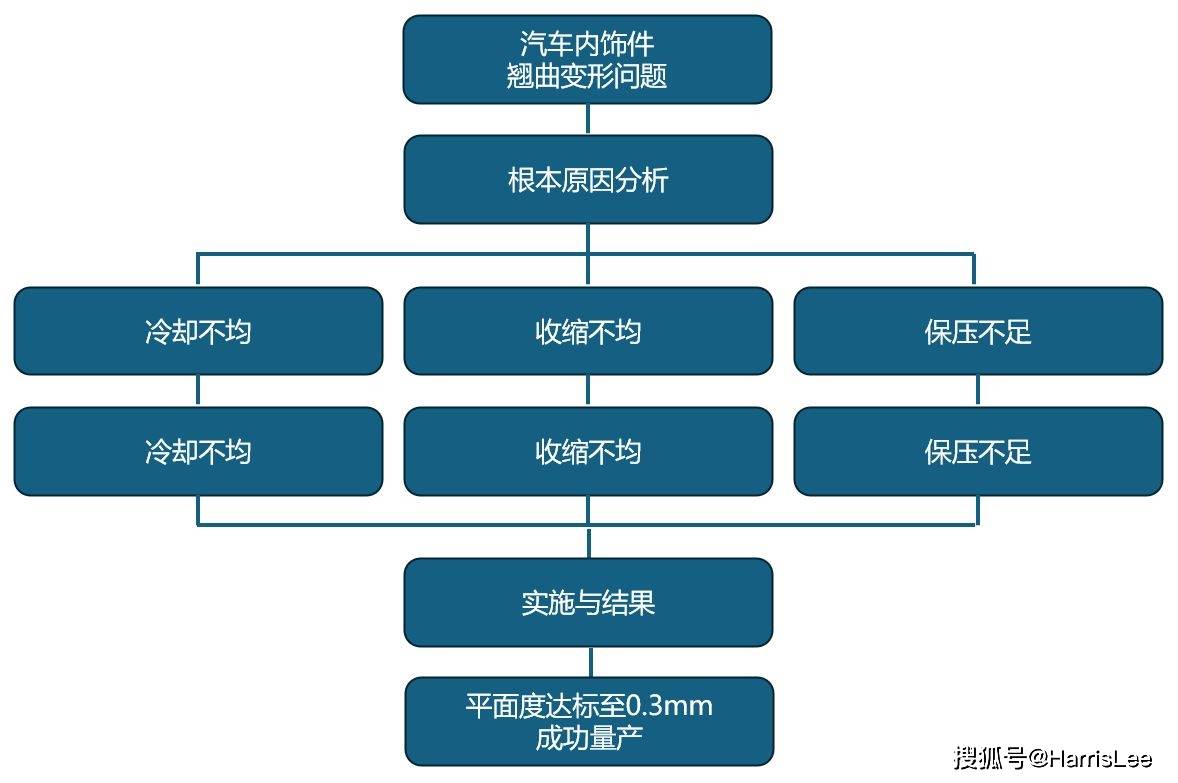
Group 1 - The article discusses common challenges and solutions in injection molding projects, using a specific case study of automotive interior parts warping as an example [2][5]. - The root cause analysis (RCA) utilized 5Why analysis and Moldflow simulation to diagnose issues, identifying uneven cooling, uneven shrinkage, and insufficient holding pressure as key contributors to the warping problem [5][6]. - A multi-layered solution was implemented based on the analysis results, leading to successful mass production with product flatness stabilized within 0.3mm, meeting the required specifications [6]. Group 2 - The article highlights industry trends towards smart and digital manufacturing (Industry 4.0) and emphasizes the importance of green and sustainable development in the injection molding sector [4][9]. - Innovations in materials and processes, such as lightweighting through advanced techniques and the use of biodegradable materials, are becoming increasingly important [9]. - Automation and flexible production systems are widely adopted, with robotics playing a significant role in various manufacturing processes, responding to the demand for small-batch and diverse product offerings [9]. Group 3 - The article stresses the importance of systematic project management and technical expertise in successful injection molding projects, indicating that future engineers and project managers must also possess data analysis and digital tool application skills to maintain competitiveness [9]. - The concept of digital twins and AI-driven process optimization is introduced, showcasing how these technologies can significantly reduce trial-and-error costs in physical testing [6][9]. - The need for localized production and collaborative platforms is highlighted as a response to global supply chain risks and the demand for faster response times [9].