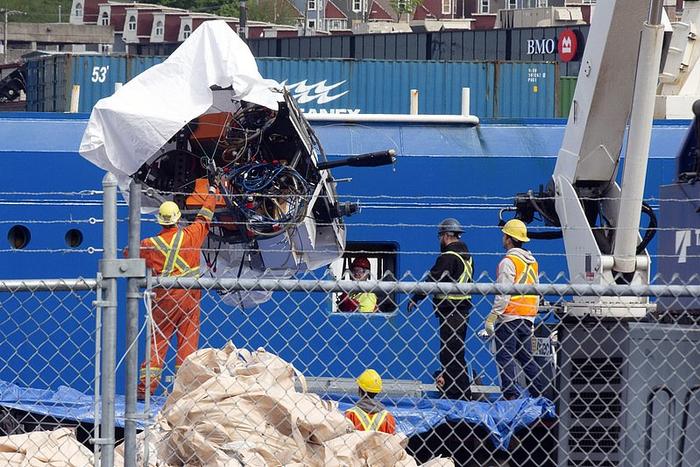
泰坦号潜水器

Search documents
美国公布“泰坦”号爆炸调查报告
Bei Jing Shang Bao· 2025-08-06 16:05
Core Insights - The investigation report on the Titan submersible accident identifies design, certification, maintenance, and inspection flaws by OceanGate as the primary causes of the incident [1] Group 1: Incident Overview - The Titan submersible exploded and sank on June 18, 2023, during a mission to explore the wreck of the Titanic, resulting in the deaths of five individuals [2] - The Coast Guard confirmed the discovery of wreckage four days after the incident, which was identified as part of the missing submersible's external structure [2] - OceanGate announced the suspension of all exploration and commercial operations on July 6, 2023, following the incident [2] Group 2: Financial and Operational Aspects - OceanGate's previous project details indicated that each expedition cost $250,000 per person for an 8-day, 7-night journey, with half of the time spent in the North Atlantic, leading to annual revenues of approximately $7.8 million [2] Group 3: Passenger Details - The victims included notable individuals such as Stockton Rush, the founder of OceanGate, and other wealthy explorers, highlighting the profile of typical passengers [2] - The submersible was reportedly halfway through its descent to the Titanic wreck site when the explosion occurred, located about 1,448 kilometers east of Cape Cod, Massachusetts [2] Group 4: Design and Safety Concerns - A former passenger described the Titan as resembling a "seatless small truck," utilizing non-professional components like a video game controller for steering [3] - Experts have raised concerns about the submersible's design and the extreme conditions at the ocean's depths, suggesting that remote-operated vehicles are the most reliable means for such deep-sea exploration [3]


灾难性内爆,多名富豪深海瞬间死亡,事故原因公布
21世纪经济报道· 2025-08-06 07:15
Core Viewpoint - The investigation report on the Titan submersible explosion indicates that the primary cause was deficiencies in the design, certification, maintenance, and inspection processes by OceanGate Exploration Company [1] Group 1: Investigation Findings - The report concluded that the implosion of the Titan submersible was due to the loss of structural integrity of its carbon fiber hull, resulting in the instantaneous death of all five occupants [4] - The Coast Guard noted that abnormalities in the Titan's hull were detected after a 2022 dive, but OceanGate failed to conduct appropriate investigations or resolutions [4] - Investigators criticized OceanGate for not analyzing data from the Titan's real-time monitoring system and for not taking any preventive maintenance actions prior to the dive to the Titanic wreck [7] Group 2: Safety Culture and Management - The report highlighted serious deficiencies in OceanGate's safety culture and operational practices, stating that the CEO misleadingly described the Titan as "indestructible," which created a false sense of security for the occupants [8] - The investigation chairman emphasized the need for stronger regulatory measures to prevent similar incidents in the future, indicating that the tragedy could have been avoided [3] Group 3: Incident Overview - On June 18, 2023, the Titan submersible lost contact approximately 1 hour and 45 minutes into its dive to explore the Titanic wreck, leading to a confirmed "catastrophic implosion" on June 22, resulting in the deaths of all five passengers [10] - The deceased included OceanGate's CEO Stockton Rush, British explorer Hamish Harding, businessman Shahzada Dawood and his son Suleman, and French explorer Paul-Henri Nargeolet [10]
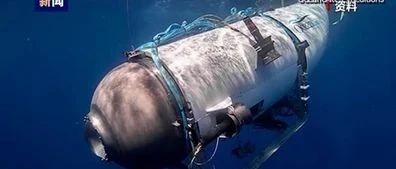
灾难性内爆,多名富豪深海丧生,事故原因公布
财联社· 2025-08-06 01:58
Core Viewpoint - The final investigation report by the U.S. Coast Guard on the Titan submersible implosion incident concludes that it was a "completely avoidable tragedy" due to severe operational failures by OceanGate, the company operating the submersible [1][5]. Group 1: Incident Background - The Titan submersible descended into the Atlantic Ocean on June 18, 2023, aiming for the Titanic wreck at a depth of 3,800 meters. It suffered a catastrophic implosion 90 minutes into the dive, just 500 meters from the wreck, resulting in the instant death of all five individuals onboard, including Stockton Rush, CEO of OceanGate, and three paying tourists [3][5]. Group 2: Investigation Findings - The 335-page report identifies significant issues in all aspects of OceanGate's operations, leading to the incident after years of continuous errors. The implosion was attributed to a loss of "structural integrity," with all individuals onboard experiencing a water pressure of 4,930 pounds per square inch, resulting in "instant death" [5][6]. - The primary cause of the accident was OceanGate's failure to adhere to established engineering safety and testing standards. The Titan was constructed from carbon fiber, a material not previously used for deep-sea submersibles, which is unreliable under high pressure due to its layered structure that can delaminate [5][6]. Group 3: Company Culture and Financial Issues - The report criticizes OceanGate for fostering a "toxic company culture" that discouraged employees from raising safety concerns and ignored obvious signs of potential accidents. Despite being aware of multiple safety issues, the company continued operations without proper inspections [6][7]. - Financial pressures led to delayed employee payments and decisions that compromised safety. A former employee indicated that the company's economic situation was dire, prompting dangerous choices [6][7]. Group 4: Regulatory Recommendations - The report suggests over ten safety recommendations for regulatory bodies, including the implementation of appropriate regulations for the commercial submersible industry, revocation of existing research vessel designations for submersibles, and requirements for operators to submit dive plans and emergency response plans before operations [7].
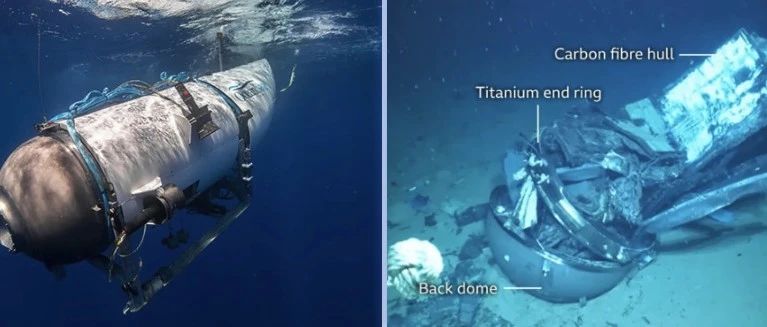
美国公布泰坦号爆炸调查报告:运营公司多个流程存在致命过失
Xin Lang Cai Jing· 2025-08-06 01:17
Core Insights - The investigation report on the Titan submersible incident identifies design, certification, maintenance, and inspection flaws by OceanGate as the primary causes of the explosion that occurred on June 18, 2023, resulting in the deaths of five individuals [1][3]. Company Overview - OceanGate had previously received multiple safety complaints and warnings regarding its submersible prior to the incident [3]. - The company’s former maritime operations director, David Lochridge, highlighted serious safety concerns in 2015, indicating that inadequate testing and certification could lead to extreme dangers for passengers [3]. - The Titan submersible's carbon fiber hull, measuring only 12.7 centimeters thick, was not adequately tested, and its viewport design had a pressure tolerance of only 1281 meters, significantly below the depth of the Titanic wreck at 3962 meters [3]. Financial Performance - OceanGate's business model involved charging $250,000 per person for an 8-day, 7-night expedition, generating annual revenues of approximately $7.8 million [3]. Incident Details - The victims included notable figures such as Stockton Rush, the founder of OceanGate, and experienced explorers, indicating that the passengers were not ordinary tourists [4]. - The Titan was on a descent to the Titanic wreck site when the explosion occurred, approximately 1448 kilometers east of Cape Cod, Massachusetts [4]. - A former passenger described the Titan as resembling a "small truck without seats," constructed from non-specialized components, including a video game controller for steering [4].