
海洋生物地球化学原位传感器

Search documents
国产海洋原位传感器完成验证
Zhong Guo Zi Ran Zi Yuan Bao· 2026-01-16 06:50
Core Viewpoint - The research team led by the Xi'an Institute of Optics and Precision Mechanics of the Chinese Academy of Sciences has successfully developed multiple types of domestic marine biogeochemical in-situ sensors, which have completed validation for deep-sea applications across various platforms and scenarios [1] Group 1: Technological Advancements - The team has overcome key technical challenges related to environmental interference mechanisms, sensor drift self-calibration, multi-band excitation classification measurement, and multi-component overlapping spectral analysis [1] - The developed sensors measure parameters such as dissolved oxygen, polycyclic aromatic hydrocarbons, chlorophyll, colored dissolved organic matter, nitrate, downwelling irradiance, and pH, providing a domestic technical solution for multi-factor collaborative observation [1] Group 2: Application and Impact - The multi-type marine biogeochemical sensors have been tested on domestic buoys, achieving measurement accuracy comparable to leading international products [1] - The results of this achievement provide critical observational tools for marine carbon cycling, ecosystem response, and global change research, supporting key tasks such as deep-sea resource environmental surveys and the construction of a marine three-dimensional observation system [1]
【新华社】我国自研原位传感器完成验证 可实现高分辨率深海移动观测
Xin Hua She· 2026-01-14 00:30
近日,由中国科学院西安光学精密机械研究所吴国俊团队牵头研制的多型国产海洋生物地球化学原 位传感器完成多平台、多场景深海应用验证。这标志着我国在深海移动观测领域打破了长期以来对进口 设备的依赖,实现从跟跑向并跑、部分领跑的关键跨越。 此次验证成果为海洋碳循环、生态系统响应及全球气候变化研究提供了关键观测手段,并为我国深 海资源环境调查及海洋立体观测体系建设等关键任务提供了有力支撑。 工作人员将我国自研海洋生物地球化学原位传感器搭载 Argo 浮标做海试布放( 2025 年 5 月 15 日摄)。 这是我国自研海洋生物地球化学原位传感器搭载 Argo 浮标海试布放现场( 2025 年 5 月 15 日摄)。 ...

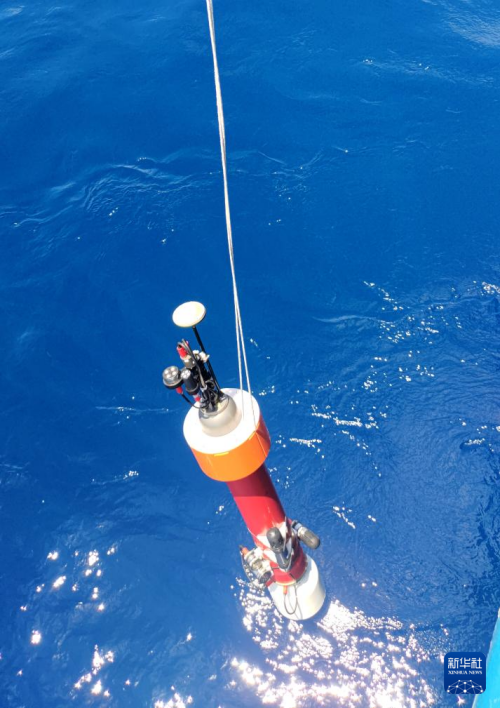
我国自研原位传感器完成验证 可实现高分辨率深海移动观测
Xin Hua She· 2026-01-13 11:07
Core Viewpoint - The development of various domestic marine biogeochemical in-situ sensors led by the team of Wu Guojun from the Xi'an Institute of Optics and Precision Mechanics of the Chinese Academy of Sciences has successfully completed multi-platform and multi-scenario deep-sea application verification, marking a significant shift from reliance on imported equipment to achieving key advancements in deep-sea mobile observation [1] Group 1 - The successful verification results provide critical observational tools for research on marine carbon cycles, ecosystem responses, and global climate change [1] - The advancements support key tasks such as deep-sea resource environmental surveys and the construction of a marine three-dimensional observation system in China [1]