海绵城市系统

Search documents
陕西西咸新区沣东新城沣和苑保障房项目:从“有居”到“优居” 绿色低碳赋能美好生活
Huan Qiu Wang· 2025-12-15 07:40
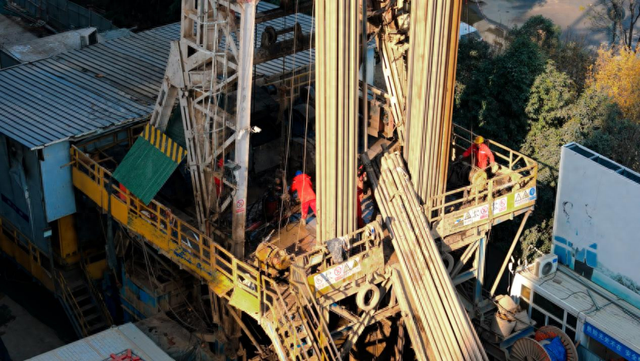
Core Viewpoint - The Fenghe Garden affordable housing project in Shaanxi's Xixian New Area is utilizing deep geothermal energy for heating, showcasing a significant shift towards green and low-carbon building practices in the construction industry [1][3]. Group 1: Geothermal Energy Utilization - The project employs a medium-deep geothermal energy heating system, drilling down to 2,700 meters to extract heat from underground rock layers [1]. - Compared to traditional coal-fired boilers, the geothermal heating can replace over 7,200 tons of standard coal in a heating season, reducing carbon dioxide emissions by 19,400 tons and sulfur dioxide emissions by 613.2 tons [3]. Group 2: Green Building Initiatives - The Fenghe Garden project covers an area of 170 acres and has a total construction area of approximately 450,000 square meters, serving as a key "guarantee relocation" project in Xi'an [3]. - The project includes the installation of photovoltaic panels on each residential building, with an estimated annual power generation of 3,465 kWh per building, which can meet the lighting needs of public areas [4]. Group 3: Water Management and Sustainability - A complete sponge city system has been constructed within the community, allowing for effective rainwater management and storage, with an annual water savings exceeding 1,000 tons [5]. - The design incorporates permeable pavements and rain gardens to facilitate the local absorption and utilization of rainfall, promoting a sustainable community micro-ecology [5]. Group 4: Industry Trends and Policy Support - The Xixian New Area is accelerating its transformation in the construction sector towards green building practices, with increasing participation from construction companies and projects [7]. - As of now, over 35 million square meters of sponge city initiatives and 48 million square meters of green buildings have been promoted in the Xixian New Area, accounting for nearly one-third of Xi'an [9].