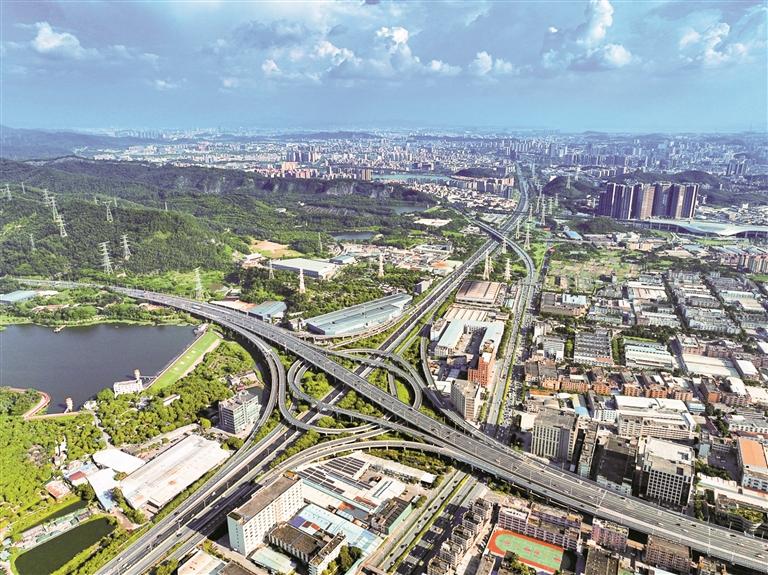
深研交通大模型

Search documents
智慧交通“深圳方案”上新
Shen Zhen Shang Bao· 2025-11-29 23:14
Core Insights - The "Deep Research Traffic Model" has been developed to transition urban traffic systems from "passive response" to "active governance" by utilizing a comprehensive technical system that includes perception, inference, and regulation [2][3] Group 1: Model Development and Application - The "Deep Research Traffic Model" is based on nearly 300 cities and incorporates a total of 770 billion traffic data points, resulting in a model with hundreds of billions of parameters [2] - The model has been piloted in over 20 cities, including Shenzhen, Hong Kong, and Xiong'an, and has also been extended to international markets such as Abu Dhabi and Singapore [3] - The model integrates 11 major categories and 986 subcategories of multimodal data, creating a traffic knowledge graph with a scale of 1 billion points and edges [3] Group 2: Performance and Impact - During the recent National Day holiday, the model achieved a traffic flow prediction accuracy of 93.7% for the Guangdong-Hong Kong-Macao Greater Bay Area, improving prediction accuracy by approximately 25% compared to traditional methods [4] Group 3: Future Directions and Innovations - The future of intelligent transportation is focused on "integrated air and ground" services, with plans to establish over 1,200 low-altitude takeoff and landing points and over 1,000 low-altitude commercial flight routes by the end of 2026 [5] - The model will incorporate low-altitude transportation characteristics and data into its framework, enabling real-time diagnostics of traffic conditions using low-altitude video imagery [5] - The establishment of the Traffic Model Innovation and Industry Alliance aims to promote collaborative development of traffic models across the industry [7] Group 4: Market Growth and Projections - The smart transportation market in China is projected to exceed 240 billion yuan by 2024, with expectations of reaching nearly 400 billion yuan by 2030 as smart city initiatives accelerate [7]