渗透测试服务

Search documents
杭州探索“赛聘融合”新模式
Mei Ri Shang Bao· 2025-09-24 06:44
决赛现场,从线上初赛脱颖而出的15支高校队伍,在"应急响应"和"综合渗透"两大实战模块中展开较 量。最终,来自浙江师范大学行知学院代表队获得大赛一等奖。学校网络空间安全专业带队老师吴建军 表示:"与以前单一的竞赛相比,'赛聘融合'的模式能够让更多学生了解到网络安全领域的真实岗位需 求以及不同企业的技术方向。同时,比赛成绩和赛场表现能够直接转化为企业认可,极大激发了学生的 学习与实践热情。" 商报讯 (记者 张宇帆 通讯员 王聪 周婳) 从紧张刺激的"网络攻防"虚拟战场,到与心仪企业面对面洽 谈的招聘席需要多久?在杭州,这个答案是"零时差"。 昨日,2025大学生网络安全专项活动在杭州职业技术大学顺利举办。"赛聘融合"的创新模式,让选手们 在"应急响应"中展现的冷静判断和在"综合渗透"中运用的精湛技术,成为了此刻通往offer最硬核的"简 历"。 竞赛与招聘有机结合 为网安人才铺设"快车道" 近年来,网络安全领域人才需求旺盛,而高校毕业生往往缺乏实战经验,与企业实际需求存在一定差 距。为此,杭州积极探索"赛聘融合"新形式,将竞赛与招聘有机结合,让学生在比赛中展示能力,企业 则通过实际表现筛选合适人才。 在公司招 ...
美国网络安全智库的“反华合唱团”
Guan Cha Zhe Wang· 2025-09-22 01:38
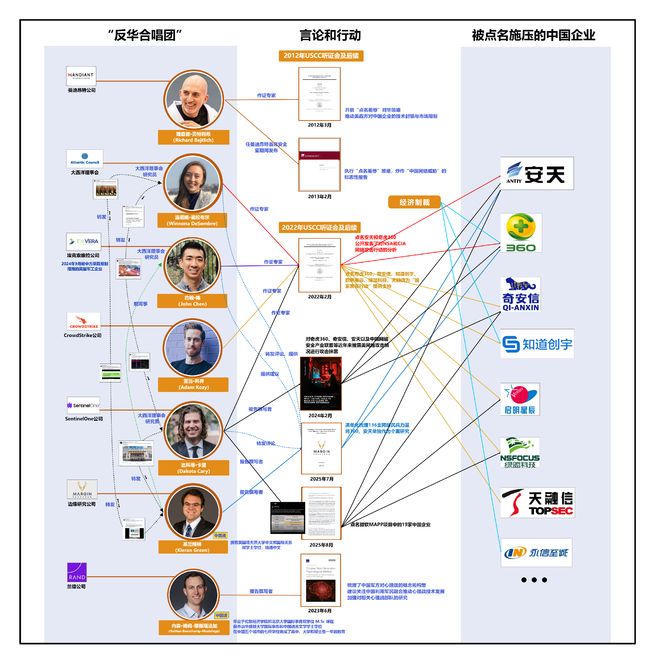
Core Viewpoint - The article discusses the increasing scrutiny and criticism of Chinese cybersecurity companies by U.S. experts and institutions, particularly focusing on the actions of Dakota Cary and the implications for the cybersecurity industry [1][3][9]. Group 1: Criticism of Chinese Cybersecurity Firms - Dakota Cary, a prominent figure in U.S. cybersecurity, has accused several Chinese companies, including Alibaba and Baidu, of being "weapons suppliers" for state-sponsored hacking [1][3]. - Cary's claims are based on the misinterpretation of penetration testing services, which are standard in the cybersecurity industry and not inherently malicious [3][7]. - The U.S. cybersecurity landscape has seen a rise in anti-China rhetoric, with Cary and others labeling Chinese firms as threats to national security [9][10]. Group 2: U.S. Cybersecurity Strategy and Actions - The Microsoft Active Protections Program (MAPP) has been a focal point, with Cary pushing for the exclusion of Chinese firms from this initiative, arguing that they pose a risk of leaking vulnerabilities to state actors [7][8]. - Following Cary's pressure, Microsoft announced restrictions on Chinese companies' access to vulnerability information, indicating a shift in U.S. cybersecurity policy [8][9]. - The article highlights a pattern where U.S. cybersecurity firms gain government contracts and funding by promoting narratives that vilify Chinese companies [34][35]. Group 3: Historical Context and Evolution - The narrative against Chinese cybersecurity firms has roots in earlier U.S. congressional hearings, such as the 2012 USCC hearing, which established China as a primary adversary in cyberspace [16][18]. - The article traces the evolution of U.S. cybersecurity firms' strategies, noting how they have leveraged political narratives to secure government contracts and enhance their market positions [19][36]. - Recent hearings in 2022 further solidified this trend, with experts calling for direct sanctions against Chinese entities, reflecting a more aggressive stance [20][23]. Group 4: Response from Chinese Cybersecurity Firms - In response to the accusations, Chinese cybersecurity firms have begun to publish reports exposing U.S. cyber activities, aiming to counter the negative narratives [36][38]. - Companies like Qihoo 360 and An Tian have released findings on U.S. cyberattacks, showcasing their capabilities and challenging the claims made by U.S. experts [37][41]. - The article emphasizes the ongoing struggle between U.S. and Chinese cybersecurity firms, with each side attempting to assert its narrative in the global cybersecurity landscape [40][49]. Group 5: Implications for the Future - The article suggests that the increasing scrutiny of Chinese cybersecurity firms may lead to a more fragmented global cybersecurity environment, with potential implications for international cooperation [49][50]. - The actions of U.S. experts and firms may also signal a broader strategy to undermine Chinese technological advancements in cybersecurity [56][59]. - The ongoing conflict in narratives and actions between U.S. and Chinese cybersecurity entities reflects a larger geopolitical struggle, with significant consequences for the industry as a whole [59].