火柴人监控

Search documents
无感守护打破“监控困局”
Bei Jing Wan Bao· 2025-12-24 05:55
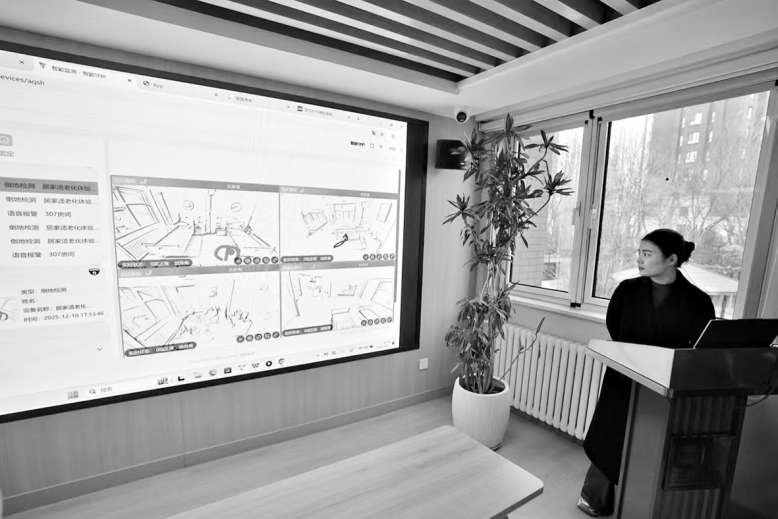
Core Viewpoint - The increasing aging population is leading to a rise in home-based elderly care, creating a conflict between the desire of children to monitor their elderly parents for safety and the parents' wish to maintain their privacy and dignity. Innovative technologies in smart elderly care are being developed to balance safety monitoring and privacy protection [1]. Group 1: Conflict Between Generations - Many elderly individuals feel uncomfortable with the idea of being monitored by cameras, leading to resistance from them when their children attempt to install such devices [3][4]. - A survey of ten elderly individuals revealed that 60% opposed the installation of cameras in their homes, highlighting a significant concern regarding privacy [4]. - The elderly often prefer minimal monitoring, such as a camera directed at the entrance, which allows their children to feel secure while maintaining their comfort [5]. Group 2: Technological Innovations - The "stick figure" monitoring technology is being explored in elderly care facilities, which uses algorithms to transmit only human coordinate information without capturing images or videos, thus protecting privacy [7][8]. - Various technologies, including millimeter-wave radar and position monitoring systems, are being integrated into elderly care to ensure safety without compromising privacy [9]. - The "stick figure" system has been successfully tested in community elderly care settings, achieving over 99% recognition accuracy in identifying falls and other emergencies [10][11]. Group 3: Market Demand for Privacy-Respecting Products - There is a growing market for products that cater to the privacy needs of the elderly, such as specially designed bathing aids and clothing that facilitate personal care while ensuring dignity [12][13]. - The demand for elderly-friendly products, such as open-crotch pants, has surged, indicating a significant market opportunity for companies that focus on privacy and comfort in elderly care [13].