特高压直流输电技术

Search documents
不到1秒钟 四川水电“闪送”1900公里
Si Chuan Ri Bao· 2025-12-19 04:34
Core Viewpoint - The successful commissioning of the Jinshang (Jinsha River upstream) to Hubei ±800 kV UHVDC project marks a significant advancement in high-altitude UHVDC technology, enhancing clean energy transmission capabilities and addressing regional power supply challenges in China [1][2]. Technical Innovation - The project utilizes ±800 kV rated voltage and 8 million kW rated capacity, achieving a transmission distance of nearly 1900 kilometers [1]. - It is the first UHVDC project to successfully apply site-level cascading technology in high-altitude areas, representing a breakthrough in technical innovation [1][2]. - The construction team set a world record by erecting transmission towers at an altitude of 4797.9 meters, showcasing the project's capability to operate in extreme environments [2]. Project Benefits - The project is expected to deliver approximately 40 billion kWh of clean electricity annually, equivalent to replacing 12 million tons of standard coal and reducing carbon dioxide emissions by about 30 million tons [1][2]. - It will facilitate large-scale development and transmission of hydropower from the Jinsha River upstream, optimizing the energy structure at the receiving end [2]. - The project will alleviate long-term power supply and demand imbalances in Central China, contributing to the establishment of a clean, low-carbon, safe, and efficient energy system [2]. Infrastructure Development - With the commissioning of the Jinshang-Hubei UHVDC project, the total number of UHV transmission corridors from Sichuan has reached seven, enhancing the province's capacity to export electricity [1][2]. - Sichuan has become the leading province in UHV construction in China, with a total of eight UHV projects in operation, significantly increasing its electricity export capacity to 62.6 million kW, doubling the capacity achieved during the 13th Five-Year Plan [5]. - The ongoing investment in the power grid infrastructure aims to further enhance the transmission capabilities and establish a comprehensive power delivery network across the region [5].
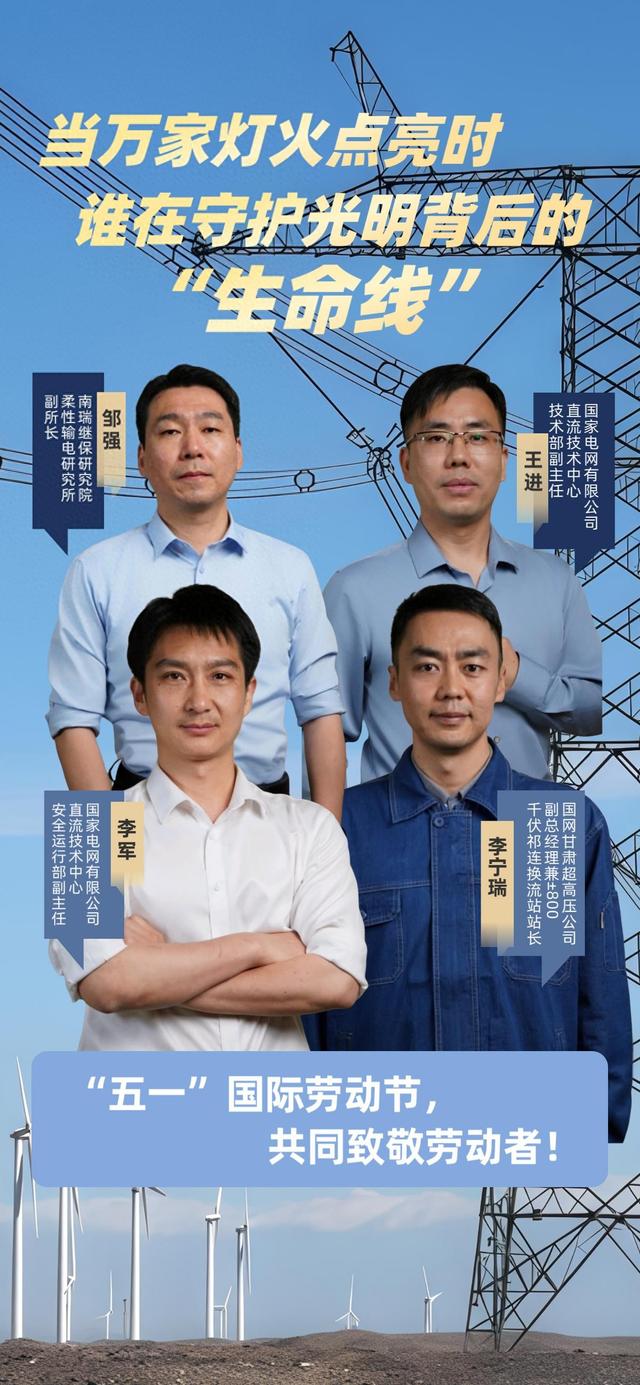
奋斗华章|走近西电东送工程“大动脉”幕后守护者
Zhong Guo Qing Nian Bao· 2025-05-01 04:52
Core Insights - The article highlights the critical role of UHVDC (Ultra High Voltage Direct Current) technology in China's energy transmission, particularly in the West-to-East power transmission project, which is essential for meeting the electricity demands of the nation [1][4][6] - It emphasizes the dedication and expertise of the personnel involved in maintaining and operating UHVDC systems, showcasing their problem-solving capabilities and commitment to safety and efficiency [5][7][8] Group 1: UHVDC Technology and Its Importance - UHVDC technology serves as the backbone of China's West-to-East power transmission, facilitating the delivery of clean energy from the western regions to urban centers [1][4] - The technology ensures energy security and reliability, which are vital for national development and public welfare [4][6] - The total capacity of China's UHVDC systems accounts for half of the global total, with a reliability rate 17 times higher than that of overseas systems [6] Group 2: Personnel Commitment and Achievements - Workers like Wang Jin and Li Jun exemplify the spirit of dedication in the UHVDC sector, tackling complex challenges and innovating solutions to enhance system reliability [5][6][7] - The article describes the rigorous training and operational support provided by professionals, including the training of 210 personnel in Pakistan, showcasing the international recognition of China's UHVDC technology [6] - The commitment of employees is further illustrated by their willingness to work in challenging conditions, often away from home, to ensure the stability and safety of power transmission [8][9] Group 3: Future Developments - The article mentions the upcoming commissioning of the ±800 kV UHVDC project from Longdong to Shandong, marking a significant milestone in China's energy infrastructure [9]