
环氧化大豆油

Search documents
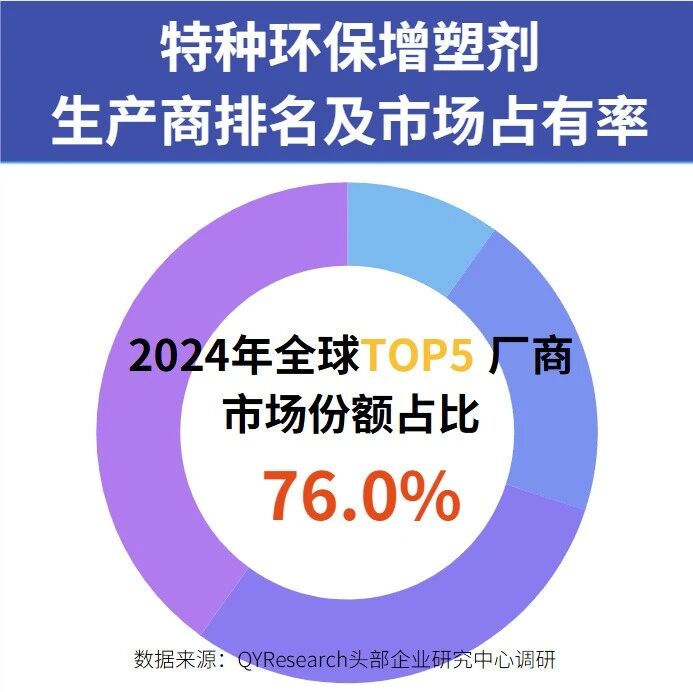
行业聚焦:全球特种环保增塑剂市场头部企业份额调研(附Top10 厂商名单)
QYResearch· 2025-09-30 03:34
Core Insights - The article discusses the growing market for specialty eco-friendly plasticizers, which are designed to meet strict environmental regulations and high-performance requirements, replacing traditional phthalate-based plasticizers [1][2]. Market Overview - The global market for specialty eco-friendly plasticizers is projected to reach $3.56 billion by 2031, with a compound annual growth rate (CAGR) of 6.0% over the coming years [1]. Industry Trends - There is a rising demand from consumers and brands for health and sustainability, leading to the adoption of low-toxicity or bio-based plasticizers in food packaging, baby products, and daily consumer goods [7]. - The packaging industry, particularly in food and flexible packaging, is experiencing explosive growth in demand for non-toxic, recyclable, and biodegradable materials [7]. - High-safety industries such as automotive and medical are driving the need for safer, more specialized, and eco-friendly plasticizers to meet regulatory requirements and reduce brand risks [7]. Market Opportunities - Stricter environmental regulations globally are increasing the demand for eco-friendly alternatives to phthalate plasticizers [8]. - Consumer concerns regarding health and environmental protection are prompting companies to seek low-toxicity and biodegradable plasticizers [9]. - Technological advancements in bio-based plasticizers, such as epoxy soybean oil, are reducing production costs and enhancing market competitiveness [10]. Market Challenges - The production costs of specialty eco-friendly plasticizers are high due to the use of renewable plant oils or bio-based raw materials, which are more expensive than traditional phthalate plasticizers [11]. - The supply chain is vulnerable to fluctuations, as the production and pricing of eco-friendly plasticizers depend significantly on natural raw materials, which can be affected by climate, crop conditions, and international trade policies [11]. - There is a lack of awareness among some downstream companies and consumers regarding the performance, cost-effectiveness, and long-term benefits of eco-friendly plasticizers, which may slow down their adoption [12].

墨西哥对美国环氧化大豆油启动反倾销日落复审调查
news flash· 2025-07-30 03:26
Core Viewpoint - Mexico has initiated a sunset review investigation into anti-dumping duties on epoxy soybean oil originating from the United States, responding to a request from domestic producers [1] Group 1: Investigation Details - The investigation period for dumping is set from July 1, 2024, to June 30, 2025, while the damage investigation period spans from July 1, 2020, to June 30, 2025 [1] - The relevant tax code for the product in question in Mexico is 1518.00.02 [1] Group 2: Historical Context - Mexico first launched an anti-dumping investigation on epoxy soybean oil from the U.S. on May 17, 2004, and confirmed a positive final ruling on July 29, 2005, imposing a 62.45% anti-dumping duty [1] - Subsequent sunset reviews were conducted in January 2012, August 2016, and July 2021, all resulting in affirmative rulings that extended the duration of the duties [1]