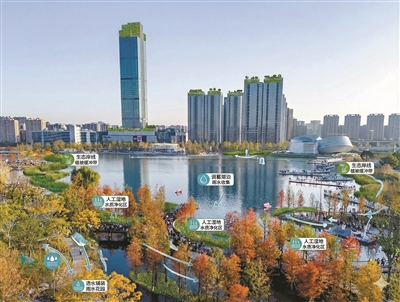
生态湿地等)

Search documents
今年全市已完工海绵城市重点项目106个
Hang Zhou Ri Bao· 2025-12-12 02:27
Core Insights - The article emphasizes the importance of building resilient cities through sponge city initiatives, which are designed to enhance urban water management and disaster resilience [2][4][8] Group 1: Sponge City Development - Hangzhou has been recognized as a national model for sponge city construction since 2021, achieving an "A" rating in performance evaluation [2] - The city has completed 106 key sponge city projects as part of its urban renewal efforts, integrating sponge city concepts into broader urban development [2][4] - The sponge city approach aims to manage rainwater through a system of absorption, storage, purification, and discharge, enhancing both flood prevention and drought resistance [5][7] Group 2: Implementation Strategies - The city plans to enhance the sponge city system by promoting interconnected projects to achieve scale effects and improve overall urban resilience [8][9] - A focus on integrating sponge city features into urban landscapes is evident, with projects like the East Lake Flood Control Lake significantly improving flood management capabilities [7][10] - The city is adopting a comprehensive management approach, ensuring effective oversight throughout the sponge city construction process, including planning, design, and operation [11][12] Group 3: Community Engagement and Benefits - Sponge city facilities are designed to enhance the quality of life for residents, with features like permeable pavements and rain gardens that contribute to both aesthetics and functionality [5][6] - Projects such as the Yuhang Central Business District and Yuhu Park are examples of how sponge city initiatives can drive tourism and community engagement, attracting millions of visitors [12][13] - The integration of sponge city concepts with cultural and recreational spaces is expected to stimulate economic activity and enhance community well-being [12][13]