
海绵城市建设

Search documents
如何告别“城市看海”? 六盘水立法破局
Xin Lang Cai Jing· 2026-01-24 22:39
Group 1 - The core viewpoint of the article is the implementation of the "Liupanshui City Sponge City Construction Management Regulations" starting January 1, marking a transition to legal governance in water management practices [1] - Liupanshui experiences annual rainfall of 1150 to 1450 millimeters but faces challenges due to its karst topography, leading to issues of flooding during rainy seasons and water shortages in dry seasons [1] - The new regulations aim to convert sponge city construction concepts into enforceable laws, clearly defining the responsibilities of various departments such as housing, natural resources, water management, and urban management [1] Group 2 - By 2025, Liupanshui plans to construct and renovate 73.37 kilometers of rainwater drainage networks, effectively controlling previously problematic flooding points [2] - Several projects, including Liupanshui No. 12 Middle School and Water District No. 2 Primary School, have been completed, while ongoing projects include urban flood control at the train station square and drainage network construction in the surrounding areas [2] - The city aims to fully integrate sponge city concepts into urban renewal and the renovation of old neighborhoods, focusing on the construction of permeable pavements and sunken green spaces for comprehensive management [2]
今年全市已完工海绵城市重点项目106个
Hang Zhou Ri Bao· 2025-12-12 02:27
Core Insights - The article emphasizes the importance of building resilient cities through sponge city initiatives, which are designed to enhance urban water management and disaster resilience [2][4][8] Group 1: Sponge City Development - Hangzhou has been recognized as a national model for sponge city construction since 2021, achieving an "A" rating in performance evaluation [2] - The city has completed 106 key sponge city projects as part of its urban renewal efforts, integrating sponge city concepts into broader urban development [2][4] - The sponge city approach aims to manage rainwater through a system of absorption, storage, purification, and discharge, enhancing both flood prevention and drought resistance [5][7] Group 2: Implementation Strategies - The city plans to enhance the sponge city system by promoting interconnected projects to achieve scale effects and improve overall urban resilience [8][9] - A focus on integrating sponge city features into urban landscapes is evident, with projects like the East Lake Flood Control Lake significantly improving flood management capabilities [7][10] - The city is adopting a comprehensive management approach, ensuring effective oversight throughout the sponge city construction process, including planning, design, and operation [11][12] Group 3: Community Engagement and Benefits - Sponge city facilities are designed to enhance the quality of life for residents, with features like permeable pavements and rain gardens that contribute to both aesthetics and functionality [5][6] - Projects such as the Yuhang Central Business District and Yuhu Park are examples of how sponge city initiatives can drive tourism and community engagement, attracting millions of visitors [12][13] - The integration of sponge city concepts with cultural and recreational spaces is expected to stimulate economic activity and enhance community well-being [12][13]

苏州海绵城市主题公园开园
Xin Hua Ri Bao· 2025-11-20 21:24
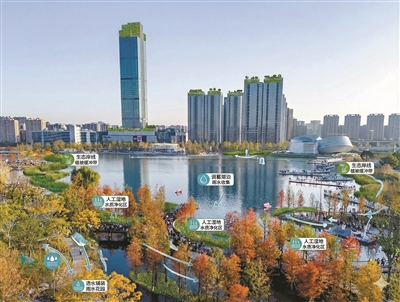
Core Insights - The first sponge city theme park in China, located in Suzhou, officially opened on November 18, showcasing innovative urban space integrating ecological functions and technological attributes [1][2] - The park covers an area of 101,500 square meters and incorporates 18 core sponge city technologies, 36 sponge facilities, and over 100 sponge measures, establishing a runoff management and resource utilization system [1] - The system is capable of processing 20,000 cubic meters of clean water daily and storing 50,000 cubic meters, enhancing urban water resource recycling efficiency and flood prevention capabilities [1] Summary by Sections Sponge City Theme Park - The park serves as a living example of sponge technology while also providing a recreational space for citizens [2] - It combines ecological governance, outdoor leisure, and educational elements, achieving a three-in-one integration of sponge technology, science education, and public recreation [2] Sponge City Science Exhibition Hall - The exhibition hall, designed with the concept of "Kunpeng striking water," features five major exhibition areas that present the development history of sponge cities in China [1] - It emphasizes the Suzhou model based on "overall planning, intelligent empowerment, and multi-party governance," with interactive displays and real-life models to engage visitors [1]
杭州海绵城市建设将更精细、更贴合民生需求
Hang Zhou Ri Bao· 2025-10-14 02:26
Core Insights - The article highlights the successful integration of sponge city concepts with landscape design in Hangzhou, showcasing innovative projects that enhance urban resilience and aesthetics [3][4][6] Group 1: Project Overview - The project features a rainwater garden and permeable pavements, transforming functional rainwater retention facilities into attractive community spaces [4][5] - It includes a 195-ton underground rainwater storage tank capable of collecting over 2000 cubic meters of rainwater annually, supporting daily needs such as irrigation and road cleaning [5][6] Group 2: Community Engagement - Local residents expressed support for the sponge city initiatives, appreciating the aesthetic and functional benefits of the green spaces [5] - Discussions during the seminar focused on the depth of rainwater gardens, maintenance of sponge facilities, and gaining community acceptance for future projects [5][6] Group 3: Future Directions - Hangzhou aims to continue advancing sponge city projects by integrating them with landscape and community needs, striving for more visually appealing and functional designs [6]
【西安】持续推进公园城市建设
Shan Xi Ri Bao· 2025-09-27 22:37
Core Points - Xi'an is enhancing its urban park construction, focusing on the development of parks, greenways, and urban leisure spaces to provide better living environments for citizens and tourists [1][8] - The city has a total of 187 urban parks, 1430 pocket parks and green squares, and over 2000 kilometers of greenway construction [1] - The transformation of Xi'an into a greener city reflects the concept of "park-city symbiosis" and is a practical implementation of the beautiful China initiative [2] Urban Park Development - The "Pocket Park Construction Guidelines" advocate for integrating urban renewal with green space development, emphasizing the preservation of existing terrain and vegetation [4] - The project at Chang'an International Port retained 30% of the original trees and upgraded the area into an ecological combination, enhancing both ecological benefits and functionality [4] Community Engagement - The transformation of the old urban areas has revitalized public green spaces, bringing greenery and vitality to the city [5] - Pocket parks are emerging throughout Xi'an, allowing residents to enjoy green spaces within walking distance, thus improving their quality of life [6] Innovative Practices - The Du Yi Ruins Park has become a popular spot for weekend camping, showcasing the trend of integrating recreational activities with urban green spaces [7] - Long'an Park is experimenting with agricultural experiences, allowing citizens to engage with nature and agriculture, enhancing the interactive and experiential aspects of urban living [7] Future Plans - Xi'an plans to continue increasing the number of community parks and pocket parks, focusing on enhancing accessibility and the overall well-being of its citizens [8]
着力建设安全可靠的韧性城市(现代化人民城市这样建·韧性)
Ren Min Ri Bao· 2025-09-18 21:45
Group 1: Housing Safety Improvement in Xuzhou - Xuzhou has enhanced housing safety by utilizing housing provident fund returns to finance the repair of old buildings, addressing funding challenges faced by older communities [1][2] - The city has implemented a pilot program for comprehensive safety management of old buildings, including insurance coverage for structural failures and regular inspections by third-party agencies [2][3] - A total of 1,225 multi-owner residential buildings built before 2002 have been insured for old building safety, with an insurance amount of 7.5 million yuan [3] Group 2: Urban Safety Initiatives in Hefei - Hefei has initiated urban lifeline safety engineering projects, utilizing advanced monitoring technology to prevent damage to underground utilities during construction [4][5] - The city has developed a comprehensive data platform covering 170,000 kilometers of underground pipelines and 1,230 square kilometers of above-ground structures for real-time monitoring [5] Group 3: Sponge City Concept in Jiujiang - Jiujiang is implementing the sponge city concept to improve urban drainage and flood control, integrating natural water management solutions into urban planning [6][7] - The city has established regulations to promote sponge city construction, focusing on source prevention and ecological methods [8] Group 4: Disaster Prevention and Emergency Response in Zaozhuang - Zaozhuang has developed a smart AI platform for flood prevention, providing real-time alerts and facilitating emergency response through data analysis [9][10] - The city has established 73 emergency rescue points to ensure rapid response capabilities, aiming for full coverage across communities by the end of the year [10][11]
广州,一座超大城市的韧性改造
2 1 Shi Ji Jing Ji Bao Dao· 2025-09-05 11:33
Core Viewpoint - The article discusses the increasing frequency and intensity of extreme weather events in Guangzhou, highlighting the city's efforts to enhance urban resilience through infrastructure improvements and community preparedness in response to climate change [1][2][3]. Group 1: Extreme Weather Events - Guangzhou has experienced a significant increase in extreme weather events over the past decade, particularly heavy rainfall and extreme heat [1][2]. - The city faced a record-breaking rainfall event in August, with maximum rainfall reaching 622.6mm, leading to severe flooding and infrastructure damage [1][2]. Group 2: Urban Resilience Initiatives - Urban resilience has become a key focus for Guangzhou, with the government emphasizing the need for enhanced safety and disaster management capabilities in recent policy documents [2][3]. - The city has initiated the construction of sponge cities to improve infrastructure resilience, with 24 demonstration areas established since 2021 [5][6]. Group 3: Community Preparedness - The establishment of a robust emergency response mechanism and community engagement is crucial for effective disaster management, as demonstrated by the successful evacuation during the recent flooding [8][9]. - A network of local liaison officers has been created to facilitate communication and ensure timely warnings are disseminated to residents in vulnerable areas [10][11]. Group 4: Technological Integration - The integration of new technologies such as big data and AI is essential for enhancing urban resilience, enabling better risk assessment and emergency management [12][16]. - The city is leveraging advanced monitoring systems to identify flood-prone areas and improve response strategies [7][12]. Group 5: Urban Renewal and Resilience - Urban renewal projects in Guangzhou are incorporating resilience goals, with significant investments aimed at improving infrastructure and community spaces [15][16]. - The focus on resilience in urban planning is seen as a critical opportunity to address vulnerabilities and enhance the city's capacity to withstand future challenges [14][15].
重庆完成相关建设项目2000余个 海绵城市 化雨水为资源(探访)
Ren Min Ri Bao· 2025-06-26 21:57
Core Viewpoint - Chongqing is actively implementing sponge city construction, utilizing various measures to enhance urban water management and reduce flooding risks through innovative designs and infrastructure improvements [1][2][3]. Group 1: Sponge City Construction - Chongqing has completed 2,055 sponge city projects, with 535 compliant drainage areas covering 845.8 square kilometers, accounting for 46.2% of the urban built-up area [1]. - The city employs techniques such as infiltration, retention, storage, purification, utilization, and drainage to manage rainwater effectively [1]. Group 2: Rainwater Gardens - Rainwater gardens, referred to as "sponge cells," are designed to collect, retain, and purify rainwater, contributing to groundwater recharge and landscape irrigation [2][3]. - These gardens utilize native plants that can withstand flooding and drought, enhancing their ability to retain rainwater [2]. Group 3: Infrastructure Innovations - The cloud lake in the data valley has a storage capacity of approximately 4,000 cubic meters, controlling rainwater runoff for an area of about 200,000 square meters [3]. - The integration of permeable pavements and bioretention areas along roads helps to slow down rainwater runoff and improve water quality [3]. Group 4: Sports Facilities Adaptation - The Daitianwan Sports Center has been retrofitted with a rainwater reuse system, allowing for the collection and utilization of rainwater for field maintenance and sanitation [4][5]. - Green roofs have been introduced in indoor venues to enhance rainwater retention, creating over 3,000 square meters of green space [5]. Group 5: Industrial Applications - The Chongqing Chemical Industry Co., Ltd. has implemented sponge facilities in its factory area, including 14 rainwater gardens to manage stormwater and improve the working environment [6][7]. - The integration of rainwater gardens with parking lots in Liangping District enhances both stormwater management and aesthetic appeal [7]. Group 6: Future Developments - Chongqing plans to continue its sponge city initiatives by leveraging IoT and big data technologies, aiming to create a more livable and intelligent urban environment [7]. - The city is also focused on developing a "sponge industry chain" to support local enterprises in creating suitable sponge technologies and products [7].