硫醇甲基锡

Search documents
“一带一路”秘鲁PVC热稳定剂产业投资评估报告(2026版)
Sou Hu Cai Jing· 2026-01-06 01:31
Core Insights - The report discusses the PVC heat stabilizers market, highlighting the classification, advantages, and disadvantages of various types of stabilizers, including lead salt, metal soap, organic composite, and organic tin stabilizers [2][3][4]. Group 1: PVC Heat Stabilizers Overview - PVC heat stabilizers are essential additives that improve the thermal stability of PVC resins during processing, preventing degradation at high temperatures [2]. - The main types of PVC heat stabilizers include: - Lead salt stabilizers: Known for good thermal stability and cost-effectiveness but are toxic and face regulatory restrictions [2]. - Metal soap stabilizers: Primarily calcium-zinc based, they are non-toxic but have inferior thermal stability compared to lead and organic tin stabilizers [3]. - Organic composite stabilizers: Environmentally friendly but currently lack comprehensive performance compared to organic tin stabilizers [3]. - Organic tin stabilizers: Include methyl, butyl, and octyl tin, with methyl tin recognized as safe for food and medical applications [4]. Group 2: Market Dynamics - The global PVC production is projected to reach approximately 54.5 million tons in 2024, with a year-on-year growth of about 3.2% [5]. - The global PVC heat stabilizers market is expected to grow from $5.14 billion in 2025 to approximately $7.57 billion by 2034, with a compound annual growth rate (CAGR) of 4.38% [6]. - The major consumption regions for PVC are Asia, Europe, and North America, with Asia accounting for over 65% of the market share [5]. Group 3: Regional Insights - China has become a significant production base for organic tin stabilizers, with its production of thiol methyl tin stabilizers exceeding 50% of the global total [5]. - The United States is the largest consumer of organic tin stabilizers, particularly in applications requiring high safety standards, such as food and medical packaging [5]. Group 4: Future Trends - The market share of methyl tin stabilizers is expected to increase as environmentally friendly stabilizers gain traction and lead salt stabilizers are phased out due to regulatory pressures [5].

犇星新材闯关北交所!期内毛利率持续下滑还涉巨额诉讼 曾有环保“前科”
Sou Hu Cai Jing· 2025-12-26 07:12
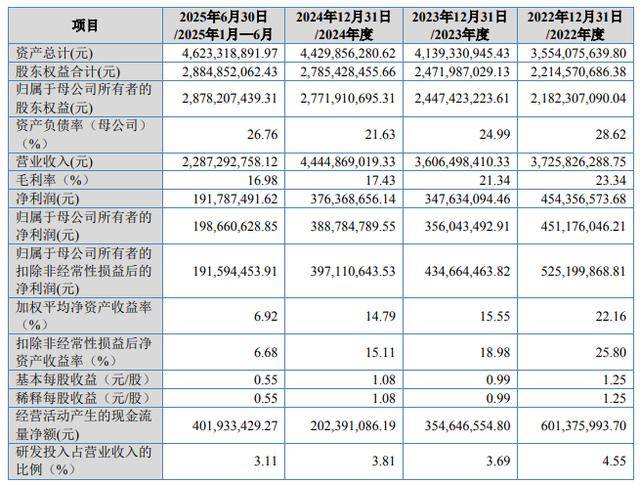
Core Viewpoint - Hubei Benxing New Materials Co., Ltd. plans to go public on the Beijing Stock Exchange, shifting from its initial plan to list on the Shenzhen Stock Exchange, with the aim of raising funds for various projects and expanding its operations in fine chemical products [1] Financial Performance - Revenue for the years 2022 to 2024 and the first half of 2025 is projected to be 3.726 billion, 3.606 billion, 4.445 billion, and 2.287 billion yuan respectively, while net profit for the same periods is expected to be 451 million, 356 million, 389 million, and 199 million yuan [1][2] - Total assets increased from approximately 3.554 billion yuan in 2022 to about 4.623 billion yuan by June 30, 2025, while total equity rose from approximately 2.215 billion yuan to about 2.885 billion yuan during the same period [2] - The company’s gross profit margin has been declining, recorded at 23.34%, 21.34%, 17.43%, and 16.98% over the respective years [3] Business Operations - Benxing New Materials specializes in the research, production, and sales of PVC heat stabilizers, pesticide active ingredients, and intermediates, with significant revenue derived from overseas markets, accounting for 44.21%, 30.24%, 28.30%, and 31.93% of total revenue during the reporting period [1][4] - The company’s main raw materials include tin ingots and various chemicals, with raw material costs significantly impacting the gross profit margin [3] Legal and Environmental Risks - The company is currently involved in a lawsuit concerning alleged commercial secret infringement, with potential damages of 160 million yuan, which could adversely affect its future operations [5] - Environmental risks are present due to the nature of the company’s products, which generate pollutants during production, although no significant incidents have been reported in the recent past [5][6]
沪主板撤单后换道深主板,年入逾44亿,IPO再转战北交所!国泰海通辅导
Sou Hu Cai Jing· 2025-07-22 12:10
Core Viewpoint - Benxing New Materials (犇星新材) has changed its plan from an initial public offering (IPO) on the Shanghai Stock Exchange to a public offering on the Beijing Stock Exchange, targeting unspecified qualified investors, with Guotai Haitong as the advisory institution [1] Company Overview - Established in 2004, Benxing New Materials specializes in the research, production, and sales of VC heat stabilizers, pesticide active ingredients, and intermediates, with key products including mercaptomethyl tin, pesticide active ingredients such as cyhalothrin, thiamethoxam, and prothioconazole, and is recognized as a national-level "little giant" enterprise [3] Financial Performance - The company's operating revenues for the years 2022, 2023, and 2024 are reported as CNY 3,734.29 million, CNY 3,601.52 million, and CNY 4,462.21 million respectively, while net profits are CNY 457.07 million, CNY 345.68 million, and CNY 379.16 million respectively [5] - The proportion of overseas sales revenue to total operating revenue for 2022, 2023, and the first half of 2024 is 44.10%, 29.92%, and 29.99%, with major overseas markets including North America, Europe, and India [5] Shareholding Structure - The company's controlling shareholder, Cao Haibing, holds 115.20 million shares, accounting for 32.00% of the total share capital, and together with Chairman Dai Baixiong, they control 51.00% of the company [5] Previous IPO Attempt - In June 2020, Benxing New Materials submitted an IPO application for the Shanghai Stock Exchange, with planned fundraising of CNY 2.1 billion for various projects, including the expansion of production capacity for mercaptomethyl tin and the establishment of a research and development center [6][7] - The IPO application was withdrawn in July 2022 due to changes in the capital market environment and the company's actual situation, leading to the termination of the review by the China Securities Regulatory Commission [8]