碳足迹管理体系

Search documents
粤港澳大湾区碳足迹联盟正式成立
Xin Lang Cai Jing· 2025-12-31 10:39
Core Viewpoint - The establishment of the Guangdong-Hong Kong-Macao Greater Bay Area Carbon Footprint Alliance marks a significant step towards promoting low-carbon transformation and building a green ecological bay area, aligning with various regional policies and development plans [1]. Group 1: Alliance Formation - The alliance was formed as a key action to implement the "Guangdong Province's Pilot Construction Plan for Product Carbon Footprint Certification" and the "Guangdong Province's Carbon Footprint Management System Construction Work Plan" [1]. - The alliance is led by the Guangdong Low Carbon Development Promotion Association and includes technical service institutions, industry associations, and key enterprises from the three regions [1]. - The alliance aims to establish a carbon footprint management system for key products and enhance the supply capacity of green low-carbon products and services [1]. Group 2: Objectives and Mechanisms - The alliance will promote international cooperation on carbon footprint recognition and accelerate the formation of beneficial experiences and institutional results [1]. - A regular communication mechanism will be established to facilitate the co-construction and mutual recognition of carbon footprint standards, update rules, and conduct capacity building [1]. - The first batch of alliance members includes over 60 institutions and enterprises from the Greater Bay Area, with plans to expand participation and deepen regional green low-carbon cooperation [1].
证券公司投资银行业务,在产业企业绿色低碳转型中的创新模式研究
Zhong Guo Zheng Quan Bao· 2025-08-21 04:33
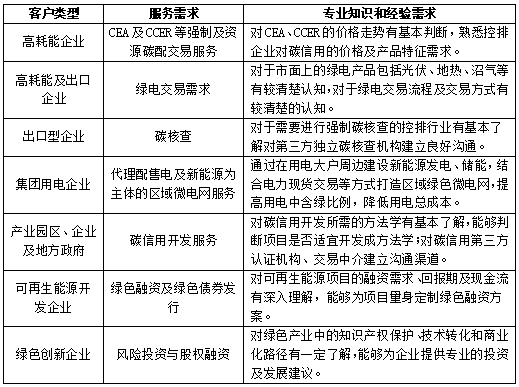
Group 1 - The article emphasizes the importance of financial support in achieving the "dual carbon" goals, highlighting the role of financial institutions in directing resources towards low-carbon technologies and innovative models [1][2] - The investment market for zero-carbon energy transition is expected to emerge in seven key areas: renewable resource utilization, energy efficiency improvement, electrification of end-use consumption, zero-carbon power generation technology, energy storage, hydrogen energy, and digitalization [1][2] - The broad definition of investment banking is expanding beyond traditional roles to include comprehensive services such as policy research, market analysis, strategic planning, and risk management, particularly in the context of green finance and sustainable development [3][4] Group 2 - The carbon market in China is in a rapid expansion phase, with new regulations being introduced to include more industries in carbon emissions reporting and verification, marking a significant step towards a more comprehensive carbon trading system [6][7] - Investment banks can provide carbon asset management services, including carbon emission assessments, reduction strategy design, and trading optimization, thereby helping companies navigate the complexities of carbon trading [9] - Green electricity trading is a system that integrates the trading of electricity value with renewable energy attributes, allowing for a more efficient connection between supply and demand in the renewable energy sector [12][13] Group 3 - Carbon asset development is crucial for converting carbon emissions rights into economically valuable assets, with various projects such as forestry carbon sinks and renewable energy generation being key avenues for generating carbon credits [14][15] - Investment banks are positioned to offer comprehensive solutions for companies facing new compliance requirements due to policies like the EU carbon border tax, including building carbon footprint management systems and providing ESG consulting services [16][20][24] - The transition to zero-carbon energy presents significant opportunities for investment banks to support renewable energy companies through equity investments, underwriting, and mergers and acquisitions, thereby enhancing their market presence and value [25]