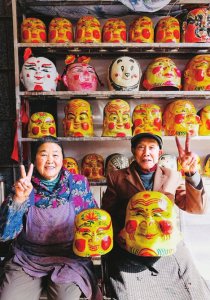
笑头和尚面具

Search documents
探访川西“笑头和尚”:期待被更多人看见
Xin Lang Cai Jing· 2026-02-23 19:42
Core Viewpoint - The article highlights the decline of traditional craftsmanship in making "Laughing Monk" masks in Dali County, Sichuan, as the fourth-generation craftsman, Huang Jiabang, reflects on the changes in demand and the challenges of preserving this cultural heritage [3][5][15]. Group 1: Traditional Craftsmanship - The "Laughing Monk" mask, made from handmade paper and natural rice paste, has been a significant cultural symbol in Sichuan for generations, once a staple during the New Year celebrations [5][7]. - Huang Jiabang has been practicing this craft for over 60 years, but the current demand has significantly decreased, with fewer customers and a more relaxed approach to production [5][15]. - The craftsmanship involves nearly twenty materials and multiple processes, taking anywhere from two to seven days to complete a mask, which contrasts with the fast-paced modern consumer culture [10][11]. Group 2: Market Dynamics - In the past, the masks were highly sought after, with Huang and his wife producing over a hundred masks daily during peak seasons, selling thousands each month [9]. - The current generation of children is less interested in traditional toys, leading to a shift in customer demographics, with many returning for nostalgic reasons rather than for new purchases [9][15]. - Efforts to modernize the masks and engage with social media have been made, but the actual sales remain low, indicating a disconnect between traditional craftsmanship and contemporary market trends [12][14]. Group 3: Cultural Preservation - Local authorities are taking steps to support the preservation of this craft, including assisting Huang with the application for intangible cultural heritage status [15]. - The article emphasizes the need for a systematic approach to cultural preservation that integrates market logic and cultural ecology, suggesting that the "Laughing Monk" masks could be revitalized through urban cultural initiatives [15]. - The presence of children visiting Huang's workshop during the New Year indicates a potential for rekindling interest in traditional crafts among younger generations [15].