
脑机接口注意力训练系统

Search documents
融资20亿!强脑科技传赴港上市,杭州六小龙已有四家冲上市
Nan Fang Du Shi Bao· 2026-01-29 08:46
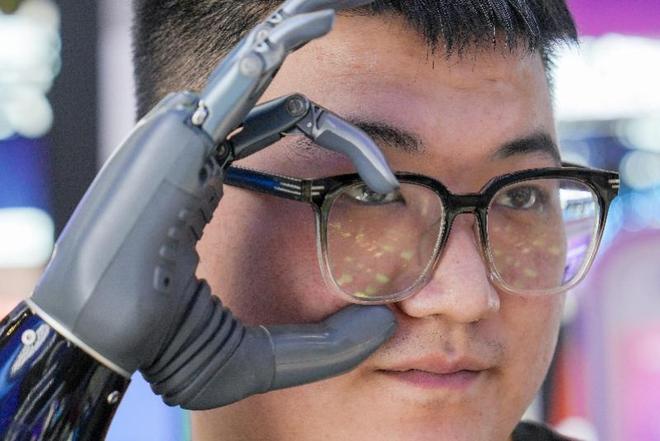
Core Viewpoint - Zhejiang Qiangnao Technology Co., Ltd. has reportedly submitted a confidential IPO application to the Hong Kong Stock Exchange, with CICC and UBS as joint sponsors, indicating a significant move towards public listing in the rapidly growing brain-computer interface (BCI) sector [1][3]. Company Overview - Founded in February 2015, Qiangnao Technology focuses on the development of non-invasive brain-computer interface technology, with products spanning smart bionics, health, and education [1]. - The company has launched several products, including a smart bionic hand, a brain-machine intelligent sleep device, and an attention training system [1]. Financing History - Qiangnao Technology completed a significant financing round in early January, raising approximately 2 billion RMB, marking it as the second-largest financing in the BCI field globally, after Neuralink [3]. - Since its inception, the company has completed six rounds of financing, including a notable $400 million Series A round in 2019 [3][4]. - The latest financing rounds include a $30 million Pre-B round and a $20 million Series B round in 2025 [4]. Market Trends - The BCI sector is experiencing rapid growth, with 26 financing events in 2025 totaling 1.778 billion RMB, a significant increase from 2024 [5]. - The global BCI market is projected to grow from approximately $2.6 billion in 2024 to $2.9 billion in 2025, with a further increase to $3.3 billion by 2026 [5]. - In China, the BCI market is expected to reach 3.8 billion RMB in 2025, up from 3.2 billion RMB in 2024 [5]. Policy Support - The Chinese government is actively promoting the BCI industry, with policies aimed at fostering innovation and establishing industry clusters by 2027 and 2030 [7]. - The national strategy includes BCI as a key area for economic growth, alongside other advanced technologies [7]. Industry Outlook - Analysts predict that the BCI industry is on the verge of significant growth, driven by commercial advancements and policy support [8]. - The transition from laboratory research to commercialization is expected to accelerate, particularly with the anticipated production scale-up by Neuralink [8].

行业周报:脑机接口发展加速,商业落地前景可期-2025-03-30
KAIYUAN SECURITIES· 2025-03-30 12:12
Investment Rating - The investment rating for the pharmaceutical and biotechnology industry is "Positive" (maintained) [1] Core Insights - The brain-computer interface (BCI) technology is experiencing rapid development and has promising commercial prospects, with a focus on diverse technical paths and applications in the medical field [5][6][32] - The BCI technology is categorized into invasive, semi-invasive, and non-invasive types, each with its own advantages in signal quality, safety, and operational difficulty [18][20] - The core technological barriers of BCI are concentrated in the upstream of the industry chain, including hardware (electrodes, chips), surgical procedures, and signal processing [25][28] Summary by Sections 1. BCI Development and Applications - BCI is a multidisciplinary technology that integrates neuroscience, computer science, and engineering to facilitate communication between the brain and external devices [15] - The medical application of BCI is predominant, accounting for 56% of the market in 2023, with potential in diagnosing and treating cognitive disorders, mental illnesses, and motor disabilities [33][36] 2. BCI Policy and Pricing - The National Healthcare Security Administration has established a pricing standard for BCI services, addressing the slow commercialization of BCI technology and creating a pricing framework that covers the entire service chain [40][42] 3. BCI Companies and Market Trends - Non-invasive BCI products are leading in commercialization, while invasive and semi-invasive products are still in clinical research stages [43] - Key companies in the BCI space include NeuroPace, BrainGate, Neuralink, and Paradromics, each focusing on various applications such as epilepsy treatment and motor function recovery [43]