
航天保险

Search documents
护航万亿商业航天市场,保险业“徐徐前行”
Zhong Guo Jing Ji Wang· 2026-02-10 03:38
Core Insights - The demand for commercial space insurance in China is experiencing explosive growth, driven by the rapid advancement of the commercial space industry, but companies face challenges such as high rates, low coverage, and pricing difficulties [1][2] Group 1: Market Growth and Demand - The value of China's commercial space industry is projected to grow from 1 trillion yuan to approximately 2.3 trillion yuan from 2020 to 2024, with a compound annual growth rate of 22.9%, and is expected to exceed 3 trillion yuan by 2026 [2] - In 2025, China is expected to execute 92 space launches, with commercial launches accounting for 50, marking the first time they exceed 50% of total launches [2] - The insurance demand is becoming more diverse, extending to product development and testing phases, as well as various types of insurance such as property, personnel safety, and cargo insurance [2] Group 2: Insurance Types and Challenges - Different stages of commercial space activities require corresponding insurance types, including pre-launch insurance, launch insurance, in-orbit life insurance, and third-party liability insurance [3] - The rates for launch insurance can vary significantly, ranging from 5% to 20% depending on the maturity of the launch vehicle, with new rockets facing rates above 20% for initial launches [3] - There is a notable gap in insurance coverage, with the estimated premium scale for space insurance in China around 800 million yuan by 2025, which does not align with the trillion-yuan commercial space industry value [2][3] Group 3: Pricing and Risk Assessment - The unique nature of space activities complicates risk assessment and pricing, as traditional statistical methods do not apply due to the limited historical data and rapid technological advancements [4][5] - The lack of qualified personnel in the field of space insurance further hampers the development of effective risk assessment and pricing models [5] Group 4: New Mechanisms and Initiatives - The establishment of the "Beijing Commercial Space Insurance Co-Insurance Body" aims to integrate multiple underwriting capabilities and professional resources to support the commercial space sector [6][7] - This co-insurance body has already provided risk coverage exceeding 8 billion yuan for 20 private commercial space launch projects, indicating its potential for broader application [7] - Policies encouraging commercial space activities, such as subsidies from the Beijing municipal government, are creating a favorable environment for the development of the space insurance market [7]
一个“三高”险种的平衡术:稀薄数据如何为航天风险定价?
Bei Jing Shang Bao· 2026-01-19 08:22
Core Viewpoint - The recent dual failures in China's space launches highlight the high risks associated with space exploration and bring attention to the critical role of commercial space insurance as a safety net for aerospace companies [1][2]. Group 1: Launch Failures - On January 17, 2023, two significant launch failures occurred: the Long March 3B rocket experienced an anomaly during its third stage, and the private commercial rocket, Ceres II, also failed during its first flight test [2]. - The failures underscore the inherent risks of space activities, prompting discussions about the necessity of insurance coverage for such high-stakes projects [4]. Group 2: Importance of Insurance - Insurance is essential for aerospace companies to mitigate the financial impact of launch failures, which can involve losses in the range of hundreds of millions [5]. - The insurance compensation can help maintain cash flow, allowing companies to continue research and development despite setbacks [5]. - The insurance industry faces challenges in pricing due to the high-risk nature of space projects, which often involve significant investments and complex risk factors [6][9]. Group 3: Insurance Market Dynamics - The Chinese space insurance market has evolved since the 1980s, with a stable demand primarily for commercial communication satellites and remote sensing satellites [6]. - Space insurance encompasses various types, including manufacturing insurance, pre-launch insurance, launch insurance, in-orbit life insurance, and third-party liability insurance [7]. - The pricing of space insurance is complex, influenced by both technical and market factors, including the limited number of launches and the unique risks associated with each mission [8][10]. Group 4: Challenges in the Insurance Sector - The "three high" characteristics of space insurance—high technology, high risk, and high coverage—pose significant challenges for insurers, particularly in terms of capital requirements and risk management [9]. - The cyclical nature of the insurance market can lead to increased premiums and reduced coverage availability following significant claims [9]. - Customization of insurance policies is often necessary, leading to higher management costs and complicating the underwriting process [9]. Group 5: Innovations and Future Directions - The establishment of the Beijing Commercial Space Insurance Consortium in 2025 aims to address the diverse risks and flexible coverage needs of emerging commercial space enterprises [12]. - The industry is encouraged to develop a comprehensive database and risk pricing models to enhance the accuracy of insurance pricing [13]. - Exploring innovative financial instruments, such as catastrophe bonds, could help transfer space risks to broader capital markets, expanding the capacity for risk coverage [13][14].
一个“三高”险种的平衡术:稀薄数据如何为航天风险定价?
Bei Jing Shang Bao· 2026-01-18 13:45
Core Viewpoint - The recent dual failures in China's space launches highlight the high risks associated with space exploration and bring attention to the crucial role of commercial space insurance as a safety net for aerospace companies [1][3]. Group 1: Launch Failures and Insurance Importance - On January 17, two significant launch failures occurred: the Long March 3B rocket and the private commercial rocket, Ceres II, both of which did not meet expectations [1][3]. - The failures underscore the necessity of insurance in the aerospace sector, as the losses from failed launches can be substantial, often exceeding billions [3][5]. - Insurance helps stabilize operations and fosters innovation within commercial space enterprises by mitigating the financial impact of launch failures [5][6]. Group 2: Types and Challenges of Space Insurance - Space insurance encompasses various types, including manufacturing insurance, pre-launch insurance, launch insurance, in-orbit life insurance, and third-party liability insurance [6][7]. - The unique characteristics of commercial space insurance include diverse policyholders, fluctuating insured amounts, complex coverage, and innovative insurance products [7][10]. - The pricing of space insurance is complicated due to the high-risk nature of the projects, limited historical data, and the need for customized policies [10][11]. Group 3: Market Dynamics and Future Directions - The commercial space insurance market faces challenges such as high volatility, with significant claims leading to increased premiums and potential market exits by insurers [10][12]. - The establishment of the Beijing Commercial Space Insurance Consortium aims to address these challenges by providing risk coverage for multiple launch projects [12][13]. - Future developments in space insurance may include the creation of a dedicated database for risk pricing, the use of innovative financial instruments, and government support for emerging commercial space enterprises [14][15].


2025年保险业核心关键词
Jin Rong Jie· 2025-12-31 12:02
Core Insights - The article emphasizes the importance of regulatory measures in the insurance industry, focusing on compliance, product innovation, and market adaptation to enhance consumer protection and industry stability. Regulatory Measures - The integration of insurance and banking is a key regulatory policy aimed at standardizing rates and managing costs, which is essential for curbing irrational competition in the market [1] - Compliance supervision has intensified, as evidenced by penalties against executives and companies like Evergrande Life, highlighting the regulatory authority's commitment to industry health [1] - The classification and tiered regulation optimize supervisory authority allocation, improving precision and efficiency in line with the diverse development of industry institutions [1] Product Innovation - Participating insurance products have become mainstream, with new policies accounting for over 40% of the market, reflecting consumer demand for wealth accumulation [1] - Health insurance is supported by policies that expand coverage, with the introduction of innovative drug lists, serving as a crucial growth engine for the industry [1] - Long-term care insurance has been fully implemented, covering 190 million people, addressing the long-term care protection gap and enhancing the multi-tiered social security system [1] Market Adaptation - Premiums for new energy vehicle insurance have increased by 41.44% year-on-year, indicating a shift towards independent operating models that align with the development of the new energy vehicle industry [1] - The insurance sector is responding to the aging population trend by strategically positioning itself in retirement finance, including profitable senior living communities with occupancy rates exceeding 80% [1] - Inclusive insurance products, such as home and education insurance, are expanding to cover broader demographics, reflecting the industry's social responsibility [1] Technological Integration - The integration of AI in insurance processes enhances underwriting, claims, and service delivery, driving the industry's digital and intelligent transformation [1] - Data security insurance is becoming increasingly relevant due to rising risks of data breaches and cyberattacks, with policies tailored to meet these emerging needs [2] Risk Management - The solvency ratio remains a core indicator for risk management in insurance companies, with ongoing regulatory assessments reinforcing the industry's ability to withstand risks [1] - Catastrophe insurance is being developed to address risks from natural disasters, filling gaps in traditional insurance coverage through a combination of policy guidance and market operations [2] Cross-Border Opportunities - International insurers like AIA and Allianz are increasing their presence in the Chinese market, showcasing the industry's openness and enhancing market supply through innovative cross-border medical insurance [2]
研判2025!全球及中国航天保险行业发展历程、市场现状及发展建议分析:保费整体规模较小,行业具备较大发展前景[图]
Chan Ye Xin Xi Wang· 2025-11-26 02:04
Core Insights - The article discusses the current state and future prospects of the aerospace insurance industry, highlighting a decline in premiums and the impact of recent launch failures on claims [1][7]. Group 1: Overview of Aerospace Insurance - Aerospace insurance provides coverage for satellites, spacecraft, and launch vehicles throughout their lifecycle, including pre-launch, launch, and in-orbit operations [2][3]. - The industry has evolved through three stages: initial phase (1965-1974), slow development phase (1975-2000), and diversified development phase (21st century onwards) [4][5]. Group 2: Market Status - In 2024, global aerospace insurance premiums are projected to be $540 million, a decrease of approximately 6.9% from $580 million in 2023 [1][7]. - A total of 303 satellites purchased launch insurance in 2024, representing about 10% of the total number of satellites, down from 17% in 2023 [1][7]. - The global claims amount for aerospace insurance reached nearly $1 billion in 2023, nearly double the annual revenue, indicating significant challenges for the industry [1][7]. Group 3: Claims and Events - Notable claims in 2025 include a $3 million loss from the Odin (Brokkr) asteroid mission and approximately $40 million from the MethaneSAT satellite loss of control [1][8]. - The article emphasizes the need for improved risk management and innovative business models to address the challenges faced by the aerospace insurance sector [10][11][12]. Group 4: Recommendations for Development - The industry should focus on standardization to enhance efficiency and risk management capabilities, which is crucial for sustainable development [10]. - There is a call for increased innovation in business models to cater to the unique needs of emerging commercial space enterprises [11]. - Strengthening risk management awareness within the commercial space sector is essential to stimulate demand for aerospace insurance [12].

支持商业航天发射活动,北京保险业护航“飞天梦”
Bei Jing Ri Bao Ke Hu Duan· 2025-06-16 02:02
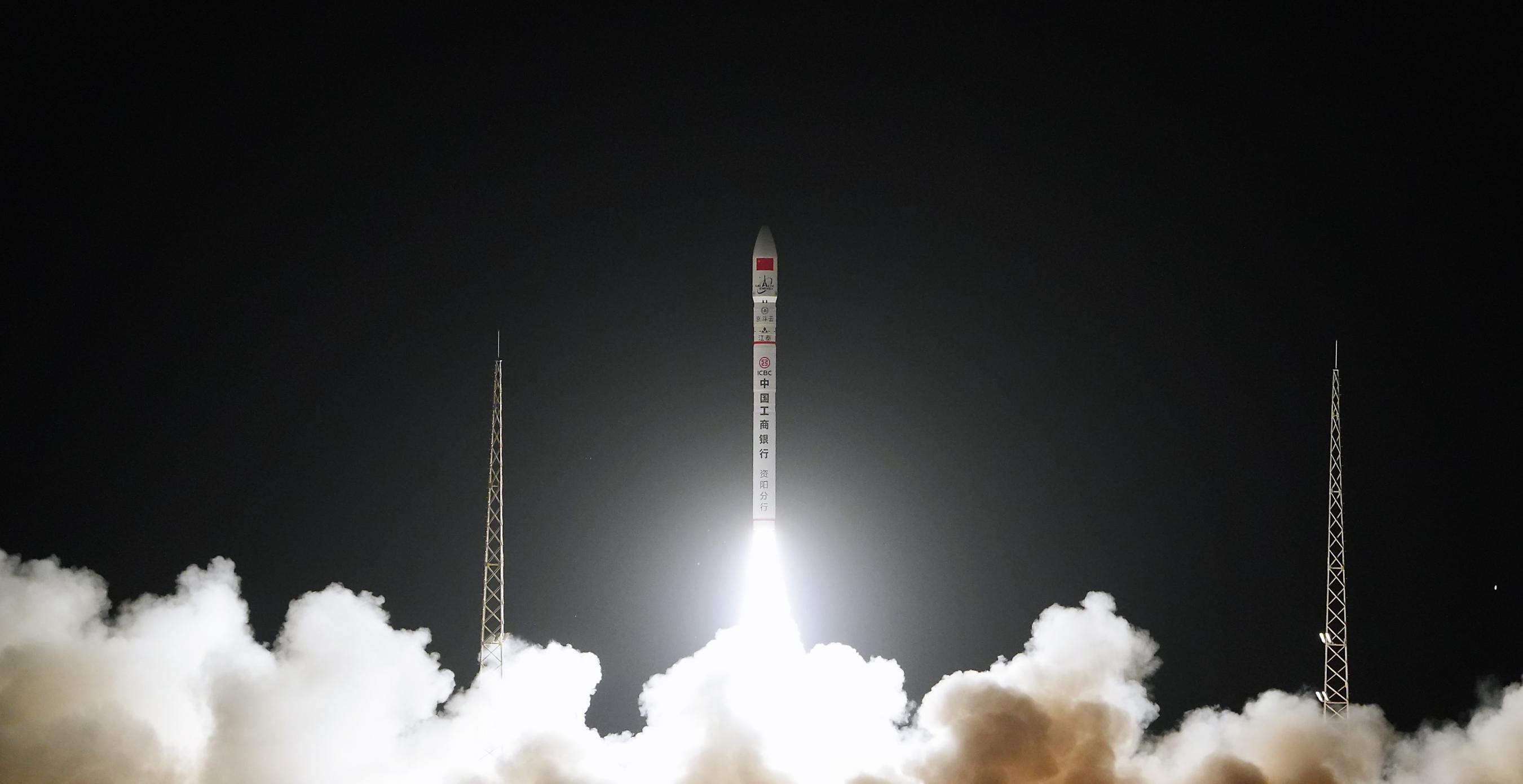
Core Viewpoint - The commercial space industry in China is experiencing rapid growth, with significant advancements in launch capabilities and insurance solutions, particularly through the efforts of Jiangtai Insurance Brokerage Company, which has played a crucial role in providing comprehensive insurance coverage for various space missions [4][5][6]. Group 1: Launch Achievements - The Long March 2D rocket successfully launched the electromagnetic monitoring satellite "Zhangheng-1" 02 into orbit on June 14, marking a successful mission [1]. - Starry Sky Power completed two successful launches of the Gushenxing-1 rockets within five days, setting a new record for high-frequency launches by private space companies in China [3]. - The Zhuque-2 rocket successfully launched six satellites on May 17, followed by the Lijian-1 rocket launching another six satellites just four days later, showcasing the efficiency of recent launch operations [4]. Group 2: Insurance Solutions - Jiangtai Insurance Brokerage organized domestic insurance companies to jointly underwrite launch insurance, satellite in-orbit insurance, and third-party liability insurance for space missions, while also securing reinsurance support from international markets [1][4]. - The company has developed a "bulk insurance" model for multiple rocket launches, allowing for better risk management and cost efficiency, which has significantly reduced insurance rates from over 20% to an average of 4-6% for mature projects [5]. - Jiangtai has provided insurance brokerage services for over 200 domestic commercial space insurance projects, including various types of satellites and launch vehicles, and has participated in more than 500 international space insurance projects [4][6]. Group 3: Market Development - The domestic space insurance market is gradually closing the gap with international markets, with improved underwriting capabilities and increased confidence in insuring space projects [6]. - Major insurance companies like China Life, Ping An, and China Pacific have participated in underwriting various rocket launch tasks, providing over 30 billion yuan in insurance coverage for nearly 30 commercial space enterprises in the Beijing area [6]. - The Beijing Financial Regulatory Bureau reported that local insurance institutions have underwritten over 50 launch missions in the past decade, supporting significant commercial space activities [6].
“保险+科技”助力航天强国建设 中国太保护航第十届中国航天日活动
21世纪经济报道· 2025-04-24 03:40
Core Viewpoint - The article highlights the significant role of China Pacific Insurance (China Taibao) in supporting China's space exploration through innovative risk management solutions and the application of satellite technology in insurance services [1][4][8]. Group 1: Event Overview - The 10th China Space Day event was held in Shanghai, focusing on the theme of "Peaceful Use of Outer Space and Building a Community with a Shared Future for Mankind" [1]. - China Taibao, as an official partner, provided comprehensive risk management solutions to ensure the success of the event [1]. Group 2: Historical Contributions - Since its establishment in 1991, China Taibao has been closely aligned with China's space endeavors, providing insurance for significant projects like the Asia-Pacific Communication Satellite [4]. - The company made a notable reputation by completing a $162 million payout within 50 days after the failure of the Asia-Pacific II satellite launch in 1995, ahead of international norms [4]. - As a core member of the China Aerospace Insurance Consortium (CAIP), China Taibao has provided insurance for major national projects, including Long March rockets and meteorological satellites [4]. Group 3: Support for Commercial Space - China Taibao has extended its innovative products to support the burgeoning commercial space sector, including exclusive insurance for 12 launches of the Kuaizhou rocket and coverage for various private space companies [5]. - The company has taken on complex tasks such as insuring the "Jilin-1" satellite constellation launch, covering the entire lifecycle of commercial satellites [5]. Group 4: Technological Innovations - China Taibao has innovatively applied satellite technology to reshape its risk management framework, creating an integrated risk management system that utilizes satellite remote sensing and GPS [7]. - The company employs advanced technologies like DInSAR for precise monitoring of ground deformation, enhancing risk assessment and management in large engineering projects [7][8]. - By integrating space technology into insurance scenarios, China Taibao has transitioned from being merely a risk bearer to a proactive risk manager, leveraging scientific tools for commercial applications [8]. Group 5: Future Aspirations - Looking ahead, China Taibao aims to build a leading insurance financial service group with international influence, continuously exploring the potential of satellite technology to empower various industries [8].


中国太保护航第十届中国航天日活动
Zhong Guo Xin Wen Wang· 2025-04-23 13:40
Core Viewpoint - The 10th China Space Day event will focus on the theme of "Peaceful Use of Outer Space and Building a Community with a Shared Future for Mankind," showcasing China's commitment to global space technology and its benefits to people's lives [1] Group 1: Company Involvement - China Pacific Insurance (China Taibao) has been closely aligned with China's space endeavors since its establishment in 1991, providing insurance support for various space exploration projects [2] - The company has played a significant role in the Chinese space insurance market, covering over 90% of domestic space projects and providing risk coverage amounting to 6.5 billion RMB [2] - China Taibao has innovatively supported commercial space ventures by offering unique insurance products for private companies, including coverage for multiple rocket launches and complex satellite constellation tasks [2] Group 2: Technological Integration - China Taibao has integrated satellite technology into its risk management framework, creating a comprehensive "space-ground integration" risk management system [3] - The use of satellite imagery has significantly improved claims processing efficiency, exemplified by a 300% increase in efficiency during the 2021 Henan flood disaster [3] - Advanced technologies such as DInSAR have been employed to monitor ground deformation with millimeter-level precision, enhancing risk management in construction projects and reducing potential losses by over 2 billion RMB in the past three years [3] Group 3: Future Aspirations - Looking ahead, China Taibao aims to build an internationally influential insurance financial service group, continuously exploring the potential of satellite technology to empower various industries [4] - The company seeks to merge technological innovation with financial services to provide robust risk protection for China's space initiatives and contribute to global sustainable development [4]