
航空温控集装箱

Search documents
填补空白!海尔生物医疗旗下青岛鸿鹄主导及参与的民航行业标准正式发布,抢占航空…
Zheng Quan Zhi Xing· 2025-08-01 03:07
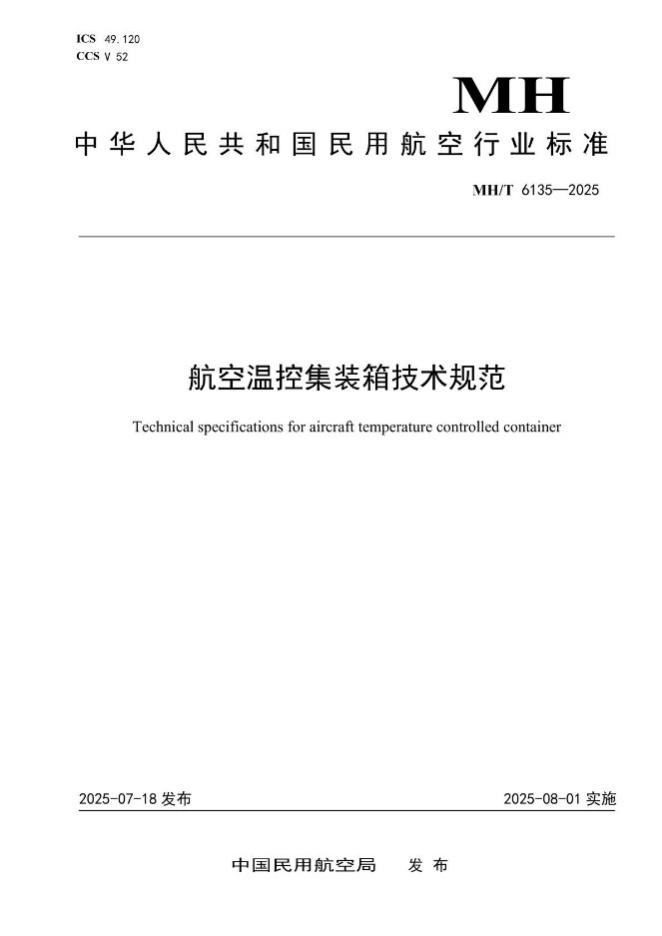
Core Insights - Haier Biomedical, through its subsidiary Qingdao Honghu Aviation Technology Co., has established itself as a leader in the global aviation temperature-controlled equipment sector by developing three key industry standards in just three years since the first flight of its temperature-controlled containers in 2022 [1][9]. Group 1: Industry Standards - The "Aviation Temperature-Controlled Container Technical Specification" outlines the technical requirements and testing methods for active and passive temperature-controlled containers, breaking the long-standing monopoly of European and American technologies [1]. - The "Temperature-Controlled Goods Public Air Transport Guarantee Operation Specification" addresses critical pain points in cold chain logistics, creating a comprehensive operational standard covering the entire supply chain from storage to transportation and unloading [3]. - The "Aviation Fireproof Container Technical Specification" fills a significant gap in the industry, providing authoritative guidelines for the production of high-end fireproof containers, particularly in response to the increasing demand for the air transport of high-value and high-risk goods like lithium batteries and precision electronics [6]. Group 2: Market Position and Growth Potential - The global aviation logistics market is evolving, with Asia's potential being unlocked, Europe and America upgrading, and emerging markets rising, creating a high-growth, billion-dollar aviation cold chain market [9]. - Haier Biomedical has leveraged over 20 years of expertise in low-temperature and ultra-low-temperature fields to strategically position itself in the aviation temperature-controlled sector, establishing Qingdao Honghu in 2021 [9]. - The company's ability to convert technological advantages into core competitiveness has allowed it to break the European and American monopoly in 2022, solidifying its leadership position in the strategic emerging sector of aviation temperature control [9].


填补空白!海尔生物医疗旗下青岛鸿鹄主导及参与的民航行业标准正式发布,抢占航空冷链产业制高点
Zheng Quan Zhi Xing· 2025-08-01 02:30
Core Insights - The recent release of three industry standards for aviation temperature-controlled containers marks a significant advancement in China's cold chain logistics, filling a gap in existing regulations [1][2][3][6][10] - The standards, led by Qingdao Honghu Aviation Technology Co., Ltd., include specifications for active temperature-controlled containers, public air transport operation protocols, and fire-resistant container standards, establishing a "Chinese benchmark" in the global market [1][2][10] Group 1: Industry Standards - The "Aviation Temperature-Controlled Container Technical Specification" is the first industry standard focusing on the performance of active temperature-controlled containers, outlining technical requirements and testing methods [2][10] - The "Temperature-Controlled Goods Public Air Transport Guarantee Operation Specification" addresses the entire logistics chain, ensuring traceability and risk management for temperature-sensitive goods like vaccines and biopharmaceuticals [3][10] - The "Aviation Fire-Resistant Container Technical Specification" provides guidelines for the production of high-end fire-resistant containers, crucial for the safe transport of hazardous materials such as lithium batteries [6][10] Group 2: Market Impact - The establishment of these standards is expected to reduce procurement and leasing costs for temperature-controlled equipment by over 30%, stimulating growth in strategic emerging industries like biomedicine and cross-border e-commerce [2][10] - The global aviation logistics market is evolving, with a projected growth into a trillion-dollar cold chain market, highlighting the strategic importance of temperature-controlled containers [9][10] - The successful completion of international commercial orders, such as the recent shipment from Japan to South Korea, signifies a critical leap for the company from localized success to global expansion [10]
